 Purerock
usage
Shilajit vs Tongkat Ali: What the Human Trials Show
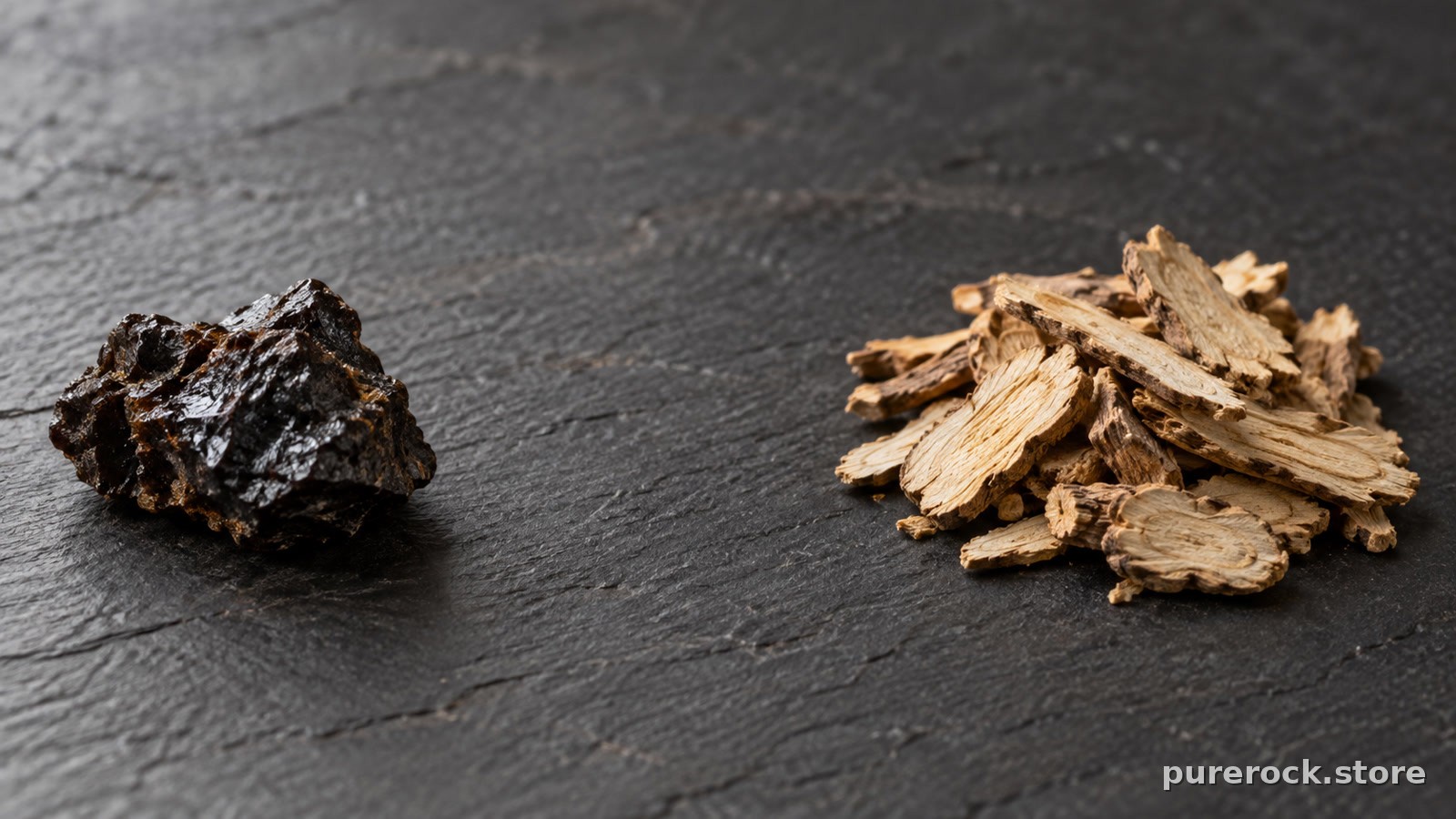
Shilajit and tongkat ali usually get sold together as “men’s vitality” supplements, often in the same capsule. The marketing treats them as interchangeable; the research says they aren’t. This guide lines up the human trials for each, outcome by outcome, and what’s known (very little) about taking both.
Key Takeaways
- Shilajit is a mineral-organic resin from mountain rock; tongkat ali (Eurycoma longifolia) is a root extract from a Southeast Asian tree. Their chemistry, research histories, and quality problems all differ.
- For testosterone, tongkat ali has more trials: several placebo-controlled studies and a 2022 meta-analysis. Shilajit’s evidence rests mainly on one 90-day randomized trial in men aged 45–55.
- Tongkat ali has one small placebo-controlled trial with stress hormones (salivary cortisol) as a primary outcome. We found no human shilajit trial with stress or cortisol as its main outcome.
- Both have fertility data only from uncontrolled studies, plus one placebo-controlled tongkat ali trial reporting semen changes as a secondary outcome.
- Most trials of both were small, enrolled men, used one manufacturer’s standardized extract, and were funded by that manufacturer.
- No trial has tested the two together, so any claim about the combination is a guess.
Two Very Different Substances
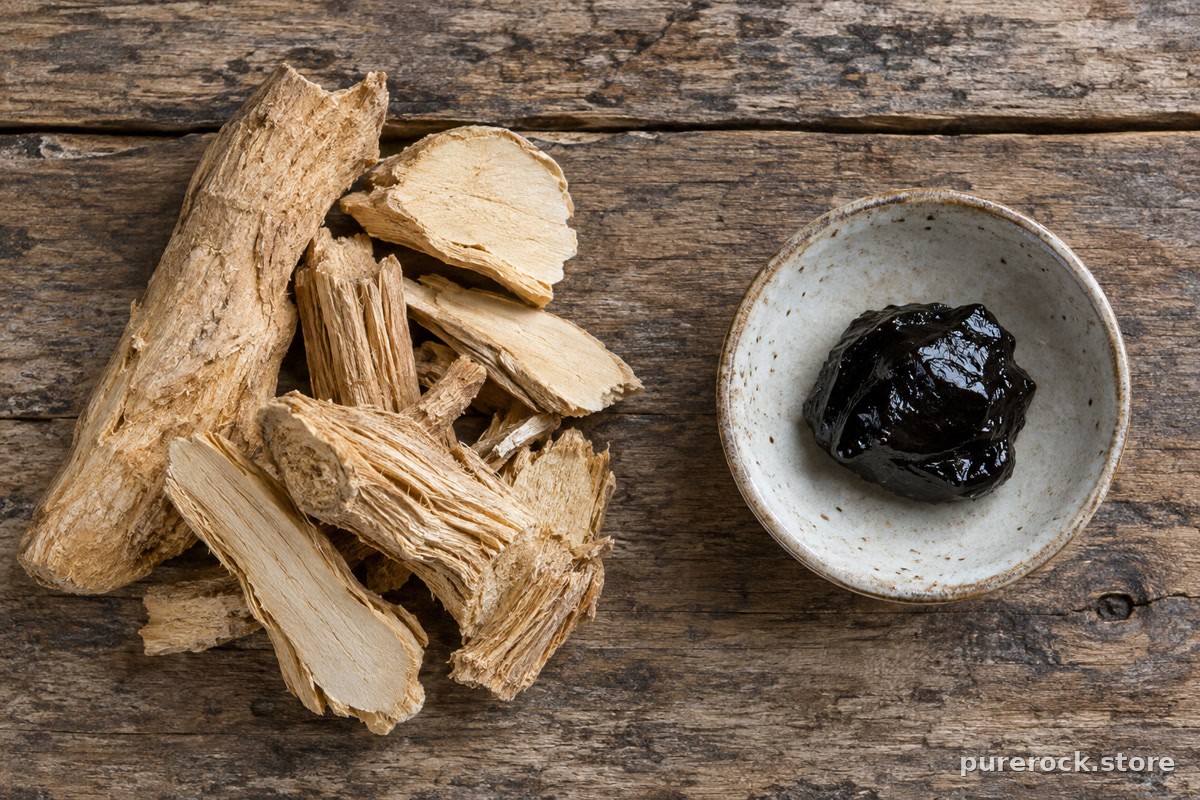
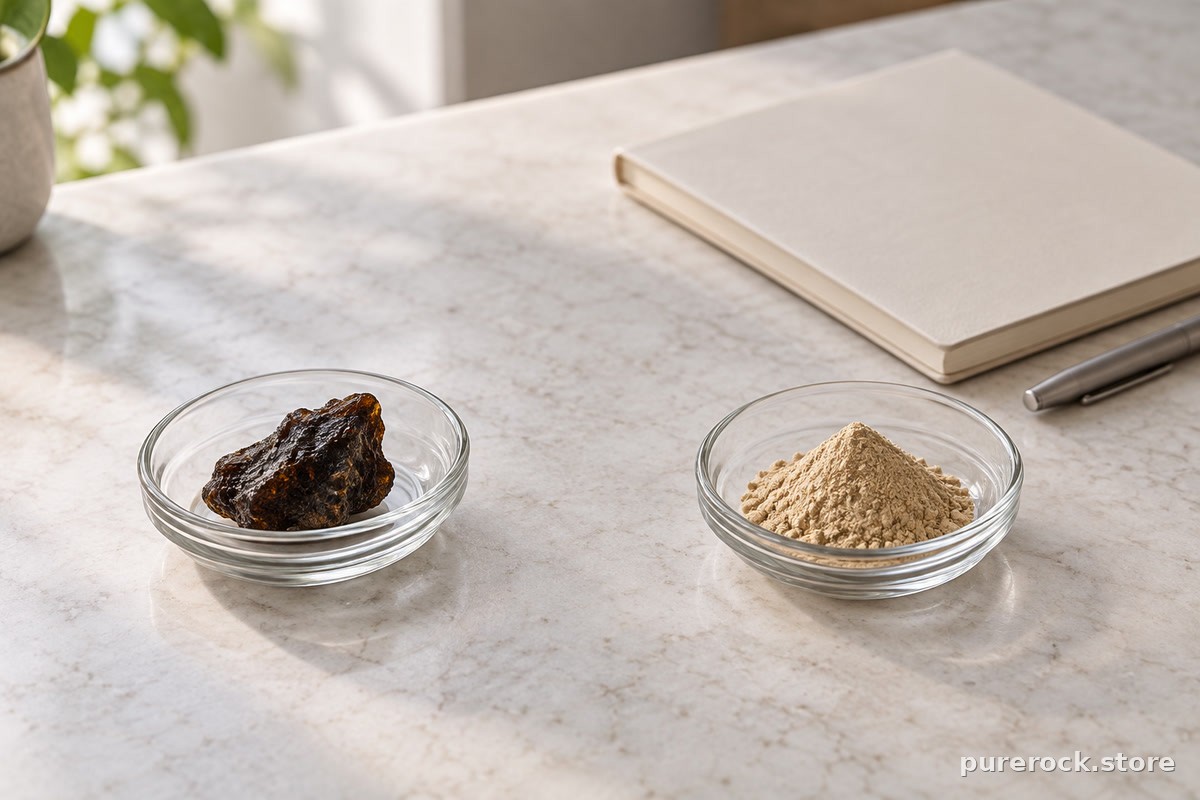
Shilajit is a sticky, dark exudate that seeps from rock in high mountain ranges and is rich in fulvic acid. Our evidence-graded look at whether shilajit is legit covers what it is and how strong each claim is.
Tongkat ali is a plant: the root of Eurycoma longifolia, a Southeast Asian tree sometimes called “Malaysian ginseng.” Trial extracts were mostly standardized root water extracts, with nothing mineral and no fulvic acid.
So a “shilajit + tongkat ali” label combines a geological material with a root extract, each with its own dose data, standardization markers, and failure modes.
Tongkat Ali vs Shilajit: The Evidence Table
“Evidence” here means what a human trial measured, not what a product page implies. Every row involves small numbers of participants.
| Outcome | Shilajit evidence | Tongkat ali evidence |
|---|---|---|
| Total testosterone, healthy middle-aged or older men | One RCT: 75 men aged 45–55 completed 90 days at 500 mg/day; total and free testosterone rose vs placebo (Pandit et al., 2016) | Several RCTs; a meta-analysis of 5 RCTs (232 men) showed an increase, with high heterogeneity (Leisegang et al., 2022) |
| Testosterone, men with low testosterone | No trial in men diagnosed with low testosterone | One 12-week RCT in 105 men aged 50–70 (Chinnappan et al., 2021); one uncontrolled study in 76 men (Tambi et al., 2012) |
| Stress hormones / mood | No human trial found | One 4-week RCT in 63 moderately stressed adults: salivary cortisol 16% lower vs placebo (Talbott et al., 2013) |
| Sperm or semen measures | Uncontrolled: 28 men with low sperm count, 90 days (Biswas et al., 2010) | Uncontrolled: 75 men completing 3 months (Tambi & Imran, 2010); secondary outcome in one RCT (Ismail et al., 2012) |
| Erectile function | No trial found | Meta-analysis of 2 RCTs (139 men): no significant overall effect; improvement only in men with lower baseline scores (Kotirum et al., 2015) |
| Strength / exercise | One RCT in 63 young men: strength retention after fatigue at 500 mg only, in the half of participants with higher baseline strength (Keller et al., 2019) | Limited: an uncontrolled 5-week pilot in 25 older active adults reported strength gains (Henkel et al., 2014) |
| Studied in women | Yes: a 48-week bone density RCT in postmenopausal women (Pingali & Nutalapati, 2022) | Few: women were included in the stress trial and the small pilot above |
One independent source grades both. A 2024 systematic review of “testosterone boosters” in the International Journal of Impotence Research (Morgado et al.) assessed 52 studies covering 27 ingredients and found most didn’t raise total testosterone. It rated tongkat ali “possibly effective” for men with late-onset hypogonadism and for healthy men, and a purified shilajit extract “possibly effective” for late-onset hypogonadism. That’s the most generous rating either gets, from a review that found most of the category didn’t work.
Testosterone: Where Each One Actually Stands
Testosterone is the main reason people compare these two, and it’s where the evidence gap is widest.
Shilajit. The key trial is Pandit et al. in Andrologia (2016): healthy men aged 45–55 were randomized to 250 mg of purified shilajit twice daily or a placebo for 90 days. Total testosterone, free testosterone, and DHEAS were significantly higher in the shilajit group, and LH and FSH stayed stable. It’s one trial at one site in India, the authors thank the manufacturer for financial support, and it hasn’t been replicated.
Tongkat ali. There’s more here. A 2022 systematic review and meta-analysis in Medicina (Leisegang et al.) found nine eligible studies; pooling the five randomized trials (232 men) showed a significant increase in total testosterone (standardized mean difference 1.35). The authors, who reported no external funding or conflicts, flagged the limits: high heterogeneity (about 87%), varied designs, doses, and lengths, and seven of the nine studies using the same commercial water extract.
One of the larger trials in that set, Chinnappan et al. in Food & Nutrition Research (2021), randomized 105 men aged 50–70 with testosterone below 300 ng/dL to 100 mg or 200 mg of a standardized root extract or placebo for 12 weeks. Total testosterone rose significantly versus placebo in both extract groups; free testosterone didn’t differ between groups. The manufacturer funded the study, and two authors worked for it.
A short trial in young men points the same way, with a twist. In Chan et al. (Andrologia, 2021), 32 healthy men averaging 24 years old took 600 mg a day or a placebo for two weeks. Testosterone and free testosterone rose, and so did estradiol; LH and FSH didn’t change.
The fair comparison: tongkat ali has more trials, a pooled estimate, and data in men with low testosterone. Shilajit has one well-designed but unreplicated trial in healthy middle-aged men. Neither substitutes for medical evaluation of low testosterone; these trials measured modest blood-level changes in small groups, not effects like testosterone therapy.
Stress and Cortisol: Tongkat Ali Only
Talbott et al., in the Journal of the International Society of Sports Nutrition (2013), screened adults for moderate stress and randomized them to 200 mg a day of a standardized tongkat ali root extract or placebo for four weeks. Of 63 people analyzed (32 men, 31 women), the extract group scored lower on tension (−11%), anger (−12%), and confusion (−15%) on a standard mood questionnaire. Salivary cortisol was 16% lower and salivary testosterone 37% higher than placebo.
The caveats: saliva, not blood; only four weeks; and manufacturer funding, with one author employed by it. It hasn’t been replicated and doesn’t show that tongkat ali “lowers cortisol” in people generally. Chinnappan et al. also reported a within-group cortisol drop at 200 mg, but only as a secondary outcome.
For shilajit, we found no human trial with stress, mood, or cortisol as its main outcome. Stress claims on shilajit labels come from its traditional status as a rasayana and from marketing.
Fertility and Sexual Function
Semen measures. Both have been studied in men with fertility concerns, and neither has a placebo-controlled fertility trial.
- Shilajit: Biswas et al. (Andrologia, 2010) gave 100 mg of processed shilajit twice daily for 90 days to men with low sperm counts. Of 35 enrolled, 28 completed; total sperm count rose about 61% from baseline, with no control group.
- Tongkat ali: Tambi and Imran (Asian Journal of Andrology, 2010) gave 200 mg a day of a standardized extract to male partners of couples with unexplained infertility. Of 350 men enrolled, only 75 completed a full three-month cycle; their semen measures improved, and 11 pregnancies were reported. There was no control group.
The one placebo-controlled data point is from tongkat ali. Ismail et al. (Evidence-Based Complementary and Alternative Medicine, 2012) randomized 109 men aged 30–55 to 300 mg a day or a placebo for 12 weeks. Among several endpoints, the extract group reported better sperm motility and semen volume. The manufacturer funded the trial, and two authors were its employees.
Erectile function. A 2015 meta-analysis in Complementary Therapies in Medicine (Kotirum et al.) pooled two tongkat ali RCTs (139 men) and found no significant overall difference from placebo on the standard erectile function score, with modest improvement only in men who started with lower scores. We found no shilajit trial measuring erectile function.
Studied Doses and Durations, Side by Side
These are amounts used in trials, not recommendations, and they apply to specific standardized extracts, not any jar with the same name.
| Shilajit (purified extract) | Tongkat ali (standardized root water extract) | |
|---|---|---|
| Daily amounts in trials | 200 mg (Biswas, as 100 mg twice daily); 250–500 mg (Keller, Pandit, Pingali) | 100–400 mg in most trials; 600 mg in one 2-week study |
| Typical trial length | 8 weeks to 90 days; one 48-week trial | 2 to 12 weeks in most trials; one uncontrolled fertility study ran semen checks for up to 9 months |
| Standardized for | Fulvic acid and dibenzo-alpha-pyrones | Root marker compounds such as eurycomanone or eurypeptides |
| Main populations | Men 45–55, young active men, men with low sperm count, postmenopausal women | Men 30–70, men with low testosterone, infertile men, stressed adults |
Two practical points follow. A 500 mg serving of untested resin isn’t the same as 500 mg of the standardized extract in Pandit et al. And tongkat ali potency varies so much between raw root powder and a concentrated water extract that label milligrams mean little without the extract ratio. Our dosage guide covers shilajit ranges by format; how long shilajit takes to work lays out trial durations.
Who Was Actually Studied
The tongkat ali testosterone meta-analysis covers men only, and seven of its nine studies used one manufacturer’s extract. Women appear only in the Talbott stress trial and a small uncontrolled pilot.
Shilajit’s testosterone and fertility trials were run in India. Its one long trial in women, Pingali and Nutalapati’s 48-week study in 60 postmenopausal women, measured bone density, not hormones or sexual function.
So if you aren’t a man in the age ranges studied, the testosterone and fertility findings weren’t tested in people like you. That’s especially true for women, where raising androgens isn’t a neutral goal; shilajit’s female-specific evidence deserves its own look.
Quality Problems: Each One Goes Wrong Differently
Tongkat ali: heavy metals, substitution, and spiking.
- Mercury. A 2004 study in the International Journal of Toxicology (Ang et al.) tested 100 tongkat ali preparations sold in Malaysia: 36% exceeded the country’s 0.5 ppm mercury limit for traditional medicines (0.52 to 5.30 ppm). A 2006 follow-up of 100 more products (Ang & Lee, Food and Chemical Toxicology) found 26% over the limit.
- Lead. A 2003 study in Human & Experimental Toxicology (Ang et al.) found 8 of 100 herbal preparations over Malaysia’s lead limit (10.64–20.72 ppm), and all eight products named were tongkat ali or Eurycoma preparations.
- Wrong or missing plant. A 2018 DNA-barcoding study in Pharmaceutical Biology (Abubakar et al.) confirmed tongkat ali in only 37% of the herbal products tested; 27% were adulterated. Chemical analysis also found one product with the right plant DNA but not the expected marker compound.
- Hidden drugs. A 2014 study in Food Chemistry (Said et al.) screened ten tongkat ali products and found spectral evidence of a sildenafil analogue in two bought online. Undeclared erectile-dysfunction drugs are a known problem in “male enhancement” supplements, and they carry real interaction risks.
These studies are older and from Malaysian markets, so they show the kinds of failure that happen, not how common they are today.
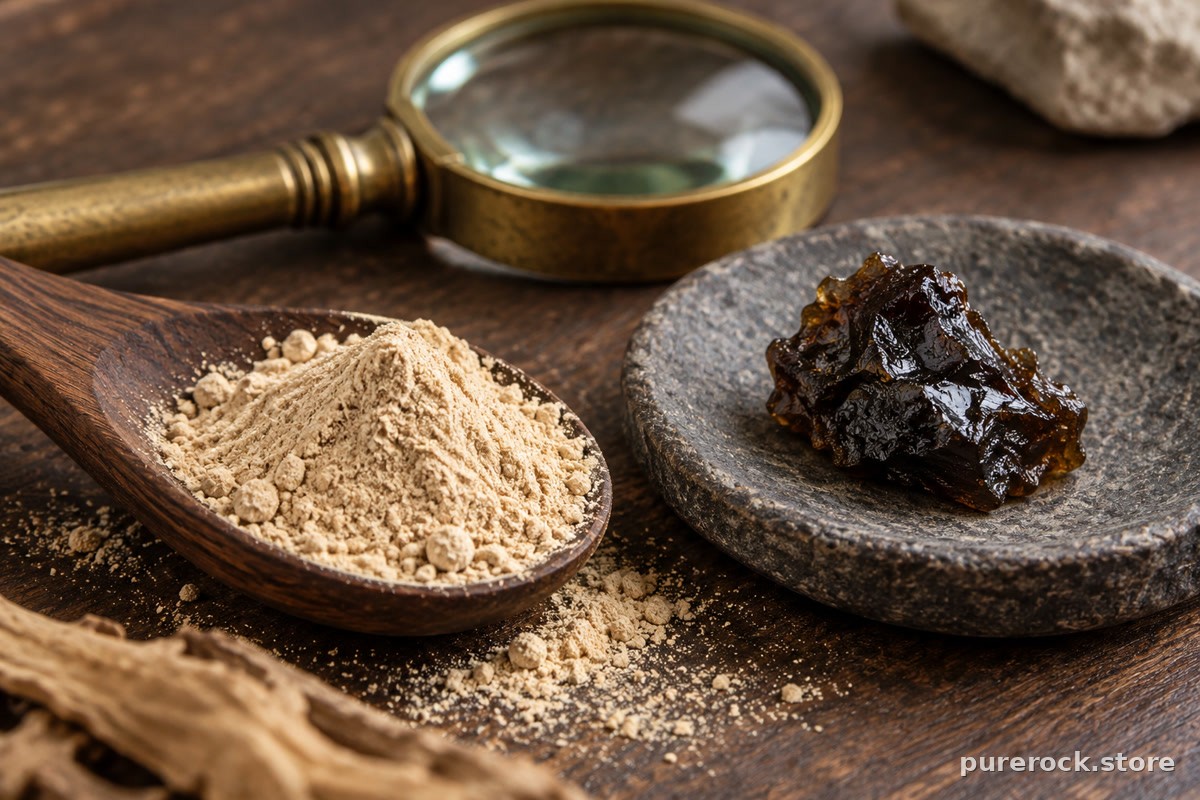
Shilajit: composition and contaminants. Shilajit’s problems are variable fulvic acid content, fake or diluted resin, and trace-metal contamination, including thallium in some samples; the scam section of our legitimacy review covers them. The same rule applies to both: ask for a recent third-party certificate of analysis with a heavy-metal panel, and for tongkat ali, identity testing that confirms the species.
A combined capsule doubles the verification problem: both ingredients must be genuine, at meaningful amounts, and uncontaminated.
Can You Take Shilajit and Tongkat Ali Together?
The honest answer starts with a gap: no published human trial has tested shilajit and tongkat ali in combination, for testosterone, stress, fertility, or safety.
So claims that the two “work synergistically” aren’t findings. What can be said:
- The individual safety data is short-term. Most trials of each ran 12 weeks or less in screened, healthy participants and reported few adverse events. Leisegang et al. noted only one tongkat ali trial reporting side effects linked to the extract (gastrointestinal symptoms and itching).
- Hormone-sensitive conditions. Both have been studied for raising testosterone-related hormones, and tongkat ali also raised estradiol in one short trial. Anyone with a hormone-sensitive condition (including prostate conditions), on testosterone or other hormone therapy, or trying to conceive should raise this with their doctor before taking either, let alone both.
- Medications. A small crossover study in the Journal of Clinical Pharmacy and Therapeutics (Salman et al., 2010) gave 14 healthy young men propranolol, a blood pressure drug, with or without 200 mg of tongkat ali extract. With tongkat ali, propranolol’s bioavailability fell by 29% and its peak level by 42%. We found no formal interaction studies for shilajit, which isn’t evidence it’s safe with medications. If you take any prescription medicine, talk to your prescriber or pharmacist first, and don’t change how you take it because of a supplement.
- Heart symptoms. A 2025 case report in Cureus (Ali) described a 71-year-old man who developed atrial flutter after starting tongkat ali. One case can’t establish cause, but report new palpitations or dizziness after starting any supplement to a doctor.
- One change at a time. If you and your doctor decide to try either, starting both at once makes it impossible to tell which caused any effect or side effect.
FAQ
Is tongkat ali stronger than shilajit for testosterone? More evidence isn’t the same as stronger. Tongkat ali has several placebo-controlled trials and a 2022 meta-analysis showing an increase in total testosterone; shilajit has one 90-day randomized trial. No study has compared them head to head.
Can you take shilajit and tongkat ali together? No trial has tested the combination, so there’s no evidence on how it works or how safe it is over time. Talk to a doctor first, especially if you take medication or have a hormone-sensitive condition.
Does tongkat ali lower cortisol? One four-week trial in 63 moderately stressed adults found salivary cortisol 16% lower than placebo with 200 mg a day of a standardized extract. It was manufacturer-funded and hasn’t been independently replicated.
Are “shilajit + tongkat ali” combination products worth it? That depends on what’s inside, and blends often disclose the least. Check each ingredient’s amount against studied doses, and look for third-party heavy-metal testing and, for tongkat ali, species identity. Small “proprietary” amounts of each are unlikely to match anything that was studied.
Related Guides
- Shilajit and ashwagandha: comparison and combining.
- Shilajit and testosterone: the actual trials, without the hype.
- Shilajit benefits for men: what studies in men measured.
Bottom Line
Shilajit and tongkat ali aren’t two versions of the same supplement. On testosterone, tongkat ali has the larger body of trials, while shilajit has one solid but unreplicated study. Only tongkat ali has a human trial with stress hormones as a primary outcome. Neither has placebo-controlled fertility trials, and both evidence bases are small, mostly male, and mostly manufacturer-funded.
The combination sold in so many capsules has never been tested in a trial. If you’re weighing either one, verify the specific product, keep expectations to what was measured, and talk to your doctor first, particularly if medications or hormone-related conditions are involved.