 Purerock
usage
Shilajit and Ashwagandha: Together or Separate?
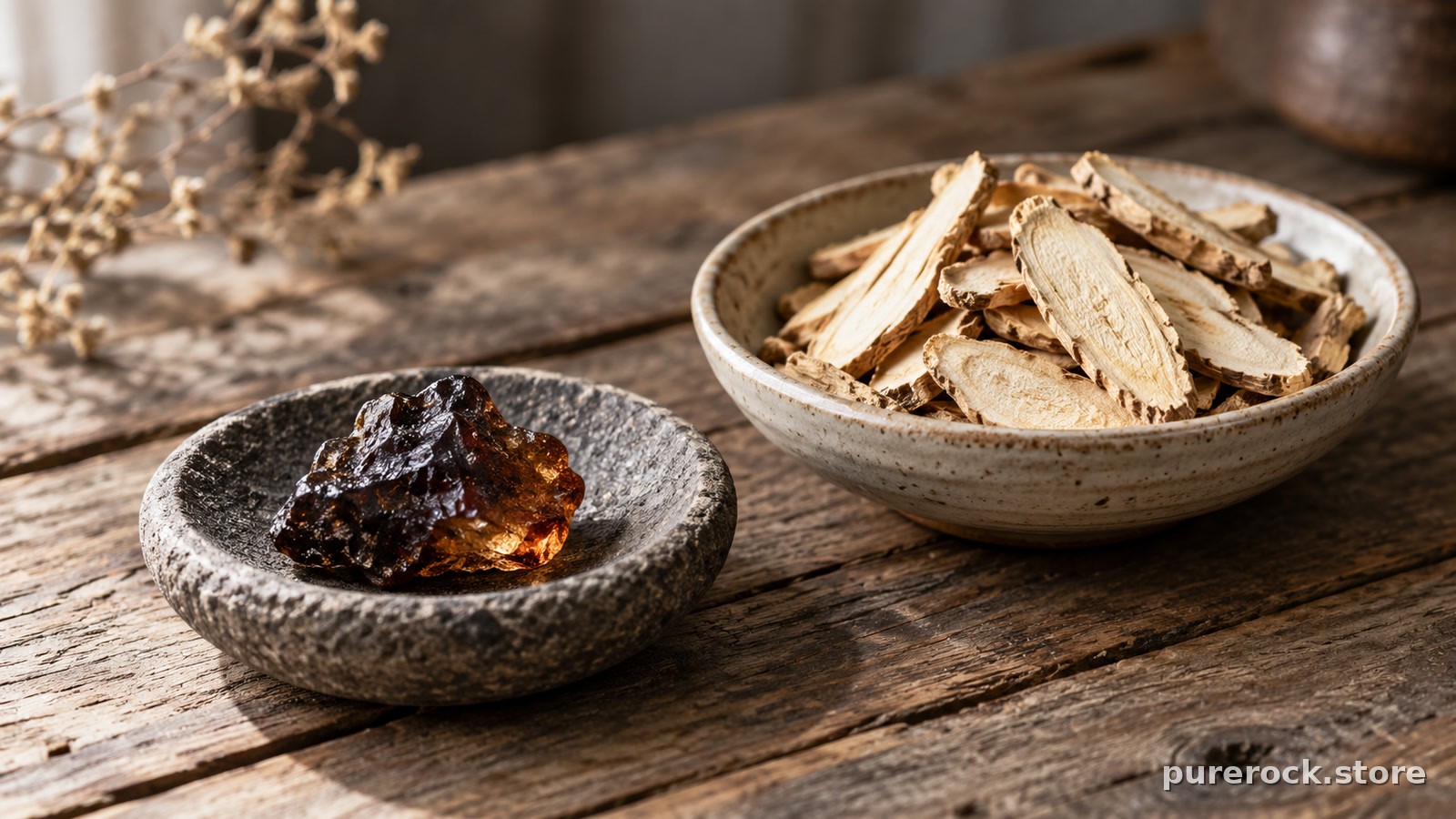
Shilajit and ashwagandha are two different things that get sold together because both come from Ayurvedic tradition and both are linked to stress and vitality. Ashwagandha has the larger human trial record, mostly on stress and cortisol. Shilajit’s trials are fewer, smaller, and mostly in men. We found no published human trial of the two combined, so “can you take them together?” has no direct evidence either way, only a cautious answer.
Key Takeaways
- Ashwagandha is a root extract from a shrub (Withania somnifera). Shilajit is a mineral-rich rock exudate. They share a tradition, not a chemistry or a mechanism.
- Ashwagandha has more randomized trials and several meta-analyses on stress, anxiety and cortisol, though one meta-analysis rated the certainty as low and the trials are heterogeneous.
- Shilajit’s human trials are mostly small and focus on male hormones, fatigue and bone, often with industry-linked extracts.
- A PubMed search turned up no human trial of shilajit plus ashwagandha. Only a few animal studies used both.
- Each has its own risks: liver injury case reports and thyroid effects for ashwagandha, contaminant variability for shilajit.
- If you want to try both, add one at a time, a few weeks apart, and talk to a doctor first if you take thyroid, sedative or immune-suppressing medication.
What Each One Actually Is
Ashwagandha is a plant. Supplements are made from the root (sometimes the leaf) of Withania somnifera, and the extracts used in trials are usually standardized to a percentage of withanolides, the plant’s characteristic compounds. Because it is a single plant species, products are comparable in a way shilajit products often are not.
Shilajit is a mineral-organic exudate that seeps from rock in high mountain ranges. It is mostly humic substances, including fulvic acid, plus dibenzo-α-pyrones and trace minerals. Its composition depends on where it was collected and how it was processed, which is why how to spot fake shilajit is a real question and “which ashwagandha is real?” mostly is not.
That difference shapes how much any trial result transfers to the bottle you buy. An ashwagandha trial using a branded extract at a stated withanolide dose is relatively easy to match. A shilajit trial using a purified, standardized extract tells you little about a raw resin of unknown composition.
What the Ashwagandha Evidence Shows
Most ashwagandha research concerns stress, and the human evidence here is the deepest of the two supplements.
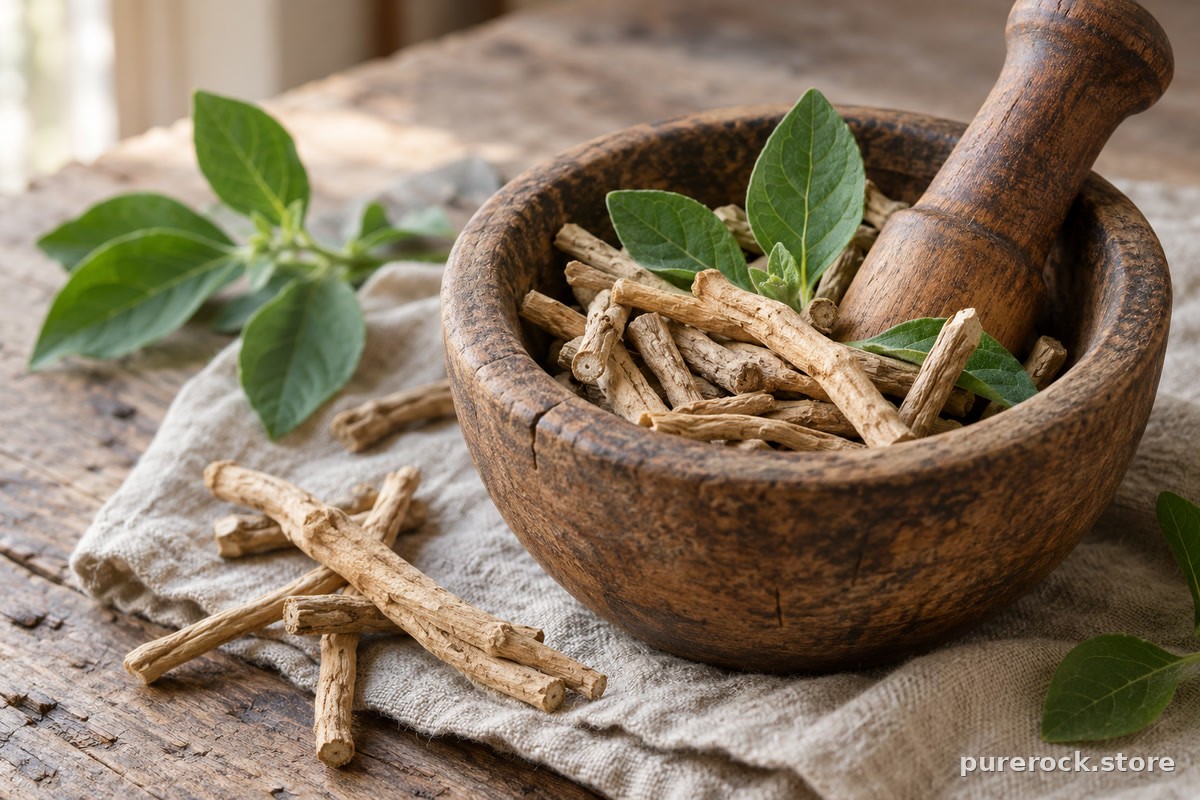
Stress and anxiety. In a 2012 randomized, double-blind, placebo-controlled trial in the Indian Journal of Psychological Medicine (Chandrasekhar et al.), 64 adults with a history of chronic stress took 300 mg of a full-spectrum root extract twice daily for 60 days. The ashwagandha group scored significantly lower on stress scales and had lower serum cortisol than placebo. The authors reported mild adverse effects comparable between groups.
A 2022 systematic review and meta-analysis in Phytotherapy Research (Akhgarjand et al.) pooled 12 randomized trials with 1,002 participants and reported reductions in both anxiety and stress versus placebo. The same authors rated the certainty of evidence as low for both outcomes, and heterogeneity was very high (I² of 93.8% for anxiety). In plain terms, the direction is consistent, but the size of the effect is uncertain.
Cortisol. A 2026 systematic review and meta-analysis of 23 randomized trials (1,706 participants) in Planta Medica (Fornalik et al.) found that ashwagandha reduced cortisol versus placebo, with possible dose-response effects tied to withanolide content. The authors also warned that heterogeneity and limited data on some outcomes call for more standardized trials.
Testosterone. This is where the two supplements get compared most often. In a 60-day randomized trial of 60 stressed adults (Lopresti et al., 2019, Medicine), 240 mg a day of a standardized extract was associated with lower morning cortisol and DHEA-S than placebo. Testosterone rose over time in men but the difference from placebo was not statistically significant. A separate 16-week crossover trial of 57 overweight men aged 40 to 70 (Lopresti et al., American Journal of Men’s Health) reported a 14.7% greater testosterone increase and an 18% greater DHEA-S increase than placebo after 8 weeks, but no significant between-group differences in fatigue, vigor, or sexual well-being. The 2026 meta-analysis above reported higher testosterone in men (mean difference 57.43 ng/dL) and not in women.
Both Lopresti trials used the same branded extract, and the trials were not designed to show that a hormone change translates into anything a person would notice. For the shilajit side of the testosterone question, see our page on shilajit and testosterone.
What the Shilajit Evidence Shows
Shilajit’s human evidence is thinner and more concentrated on a few outcomes.
Testosterone and related hormones. A 2016 randomized, double-blind, placebo-controlled trial in Andrologia (Pandit et al.) gave purified shilajit, 250 mg twice a day for 90 days, to healthy volunteers aged 45 to 55. Total testosterone, free testosterone and DHEA-S rose significantly versus placebo, and LH and FSH were maintained. An earlier open-label study of 35 men with low sperm counts, 28 of whom completed treatment (Biswas et al., 2010, Andrologia), used processed shilajit at 100 mg twice daily for 90 days and reported higher sperm counts and testosterone. That study had no placebo group, so it can only suggest.
Fatigue-induced strength loss. A 2019 randomized trial in the Journal of the International Society of Sports Nutrition (Keller et al.) gave 63 recreationally active men placebo, 250 mg, or 500 mg of a standardized shilajit extract daily for 8 weeks. The high dose was associated with less decline in strength after a fatiguing test, but only in the subgroup with higher baseline strength, and the low dose was no different from placebo.
Bone. A 48-week randomized trial in 60 postmenopausal women with osteopenia (Pingali et al., 2022, Phytomedicine) reported that daily 250 mg or 500 mg of an aqueous shilajit extract was associated with attenuated bone mineral density loss compared with placebo. It is one trial of modest size in one population.
Many of these trials used proprietary, standardized extracts, and several were supported or authored by people with a commercial link to the extract. That does not make the results wrong, but it limits how far they extend to an unregulated resin. Our side-effects guide covers what is known about tolerability.
Shilajit vs Ashwagandha, Side by Side
| Factor | Shilajit | Ashwagandha |
|---|---|---|
| What it is | Mineral-rich rock exudate; humic and fulvic substances, dibenzo-α-pyrones | Root extract from a single plant species, standardized to withanolides |
| Traditional role | Ayurvedic rasayana (rejuvenative tonic) | Ayurvedic adaptogen / rasayana |
| Most-studied outcomes | Testosterone (men), fatigue-related strength, bone density | Stress, anxiety, cortisol, sleep, some hormone outcomes |
| Typical trial doses | 250 to 500 mg/day of standardized extract (Pandit: 250 mg twice daily) | 240 to 600 mg/day of root extract in the trials above |
| Trial length | 8 to 48 weeks in the trials above | 8 weeks to 60 days in the trials above |
| Depth of human evidence | A handful of RCTs, mostly small, several extract-sponsor linked | More RCTs and multiple meta-analyses, though one rated certainty as low |
| Known risks | Contaminant variability (metals such as lead and thallium have been measured in products); product quality | Liver injury case reports; effects on thyroid tests; possible interactions |
| Product consistency | Highly variable between resins, powders and extracts | More consistent when a standardized root extract is used |
Trial doses are what the studies gave their participants, not recommendations. For how doses are discussed in shilajit trials, see the dosage guide.

The Honest Comparison Problem
“Shilajit vs ashwagandha” implies you are picking a winner on one outcome. You cannot, because the trials measured different things in different people.
Ashwagandha trials largely enrolled stressed adults and measured stress scales and cortisol. Shilajit trials largely enrolled men and measured hormones and strength. Even where they overlap on testosterone, the populations, doses and extract types differ, and neither trial design compared the two directly. Any “X beats Y” claim comes from the seller, not from head-to-head data.
For a comparison where at least the goal overlaps, see shilajit vs tongkat ali, though the same caveat about missing head-to-head trials applies there.
Can You Take Shilajit and Ashwagandha Together?
There is no human trial that tested the combination. A PubMed search for shilajit combined with ashwagandha returned only a few animal studies, for example one on alcohol-related behavior in mice, which says nothing about people. So nobody can tell you from evidence that the pair is safe, unsafe, additive or redundant.
What we can say is limited and practical:
- The two work through different (and not fully understood) routes, so there is no known direct chemical clash, but “no known” is not the same as “tested.”
- Their side-effect and risk profiles are separate. Stacking means you carry both sets at once, and if something goes wrong you will not know which one caused it.
- Both have been linked to changes in some of the same hormone markers in trials (testosterone, DHEA-S), so overlapping effects on lab results are plausible, though this has not been tested for the combination.
Many people do take both, and plenty of products blend them. That popularity is not evidence. If you decide to try both, the way to keep it interpretable is the one-at-a-time method below.
Risks to Know Before You Add Either
Ashwagandha and the liver. A case series from Iceland and the US Drug-Induced Liver Injury Network (Björnsson et al., 2020, Liver International) described five people with liver injury attributed to ashwagandha-containing supplements. All developed jaundice 2 to 12 weeks after starting, the injury was cholestatic or mixed, and liver tests normalized in four of the five within 1 to 5 months (one patient was lost to follow-up). Four of the five were also taking other supplements. Five cases do not show how common this is, but they are why anyone with liver disease, or who drinks heavily or takes hepatotoxic drugs, should ask a clinician first. Yellow skin or eyes, dark urine, or itching are reasons to stop and seek care.
Ashwagandha and the thyroid. In a small 8-week trial of 50 people with subclinical hypothyroidism (Sharma et al., 2018), 600 mg a day was associated with changes in TSH, T3 and T4 versus placebo. The 2026 meta-analysis found a modest T4 increase. The practical point is that ashwagandha can move thyroid labs. If you take thyroid medication or have thyroid disease, that is a conversation to have before starting, not after your next blood test.
Shilajit and contaminants. Because shilajit comes from rock, heavy metals and other trace elements are a real concern. Independent testing described in our legitimacy review found common metals below levels of concern in tested products, yet a 2025 study measured thallium in raw and commercial samples. Batch-specific third-party lab reports matter more for shilajit than for a standardized plant extract.
Interactions and special groups. Monographs for both commonly advise caution with sedatives or sleep medication, immunosuppressants, thyroid drugs and diabetes or blood pressure medication, and advise against use in pregnancy and breastfeeding because safety data are lacking. We did not independently verify each interaction claim against a clinical database, so treat this as a checklist for your pharmacist or doctor rather than a complete list.

How to Run a One-at-a-Time Test
If you want to try both without losing the ability to tell what is doing what, use a simple sequence.
- Pick your reason first. Write down one outcome you care about (sleep quality, afternoon energy, gym recovery) and how you will track it, for example a 1-to-5 rating each evening.
- Get a baseline. Track for one to two weeks with no new supplements.
- Start one supplement alone. Use a dose range from the trials and our dosage guide, or your clinician’s advice, and keep the time of day fixed.
- Hold everything else steady. No other new supplements, no big caffeine or alcohol change.
- Give it a fair window. Trials ran 8 weeks or more, and our page on how long shilajit takes to work explains why early impressions mislead.
- Stop and note. If you are going to compare, stop it, let it wash out for a couple of weeks, then repeat with the second supplement.
- Only then consider both. If you add the second on top of the first, do it at a low dose and watch for new symptoms.
This takes months, which is the point. A stack started on day one cannot tell you what worked, or what caused the headache.
FAQ
Is shilajit or ashwagandha better for stress?
Ashwagandha has far more human data on stress, anxiety and cortisol, including several meta-analyses, although one rated certainty as low. Shilajit has no comparable stress trials that we found. If stress is your goal, ashwagandha has the larger evidence base, with the liver and thyroid cautions above.
Is shilajit or ashwagandha better for testosterone?
Both have trials reporting hormone changes in men, but neither has been compared with the other, and neither shows that a lab change leads to noticeable benefit. The ashwagandha meta-analysis pooled more trials. The shilajit trials are fewer and smaller.
Can I take them at the same time of day?
No trial tested the combination, so there is no evidence-based schedule. If you do try both, starting them weeks apart helps you tell which one causes any reaction. For shilajit timing, see best time to take shilajit.
Who should avoid ashwagandha?
Anyone with liver disease or liver symptoms, thyroid disease, or who is pregnant or breastfeeding should speak to a clinician before using it. People on sedatives, immunosuppressants, or thyroid, diabetes or blood pressure medicines should do the same.
Do blended shilajit and ashwagandha products make sense?
A blend hides the one-at-a-time information and gives you two sets of risk in one dose. It also makes the dose of each less clear, so it is hard to compare with what trials used.
Bottom Line
Ashwagandha has the deeper human evidence, mostly on stress and cortisol, with a documented liver-injury signal and thyroid effects. Shilajit has fewer and smaller trials, with quality and contaminant variability as its main practical risk. Nobody has tested them together in people, so combining them is a judgment call, not an evidence-backed protocol. If you try both, go one at a time, track one outcome, and check with a doctor if you take thyroid, sedative or immune-related medication.