 Purerock
dosage
Shilajit Dosage: Commonly Cited Ranges by Format, Explained
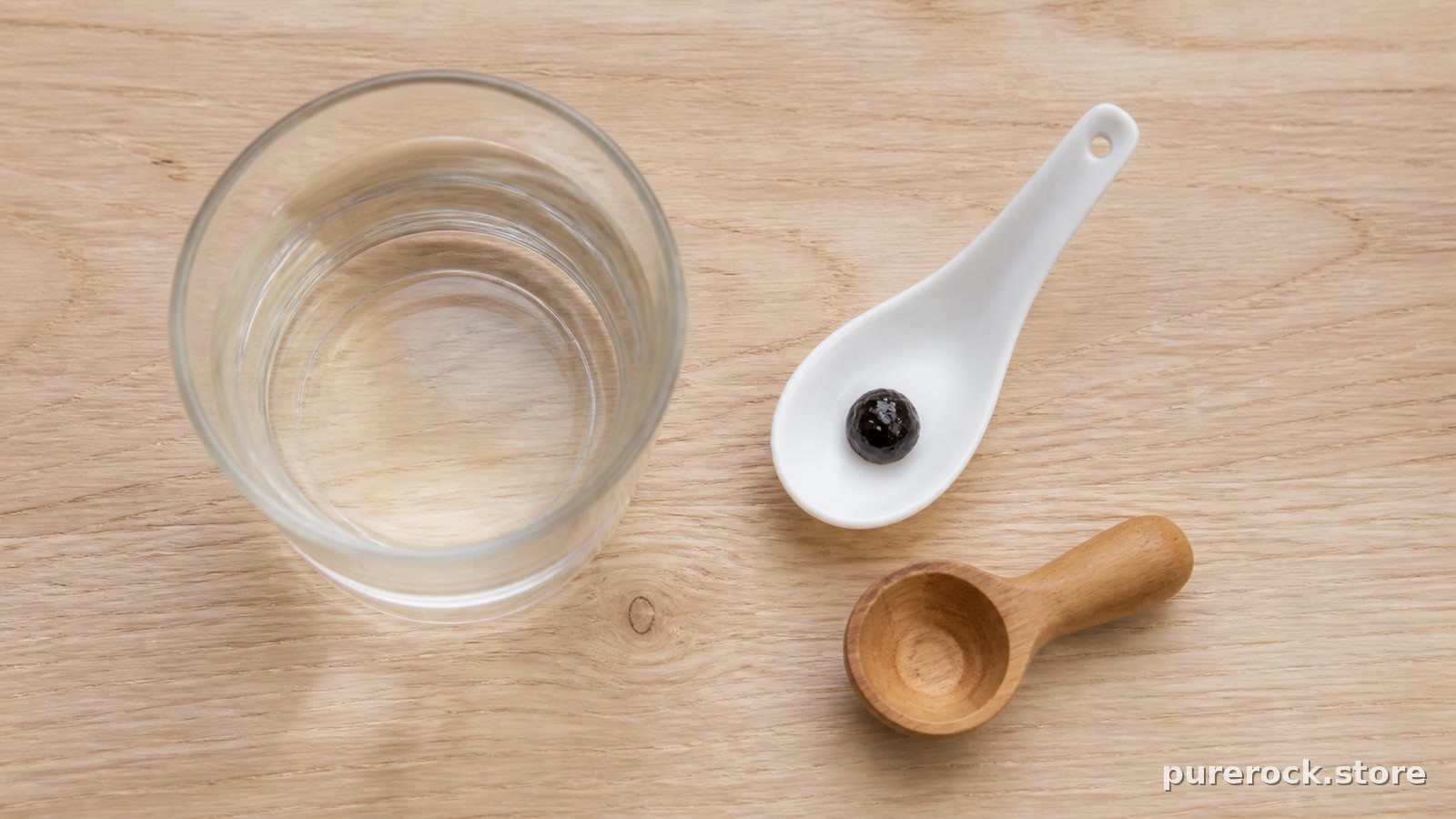
“How much shilajit should I take?” is the single most common question people ask before trying it — and it’s also the question with the least standardized answer. Unlike a pharmaceutical with a fixed, regulator-approved dose, shilajit is sold across wildly different formats, concentrations, and purification methods, so the amount that shows up on one brand’s label can look nothing like another’s.
This page pulls together the dosage ranges that show up most often across shilajit research summaries and product labeling, organized by format, so you have a reference point before you buy or open a jar. It is not a personal recommendation, and it isn’t a substitute for talking to a healthcare provider — especially if you’re on medication, pregnant, nursing, or managing a health condition. Think of this as a map of what’s commonly cited, not a prescription for what you specifically should do.
Key Takeaways
- There is no universal shilajit dose — commonly cited ranges differ by format, brand, and extract concentration, so the label on your specific product is the most reliable reference point.
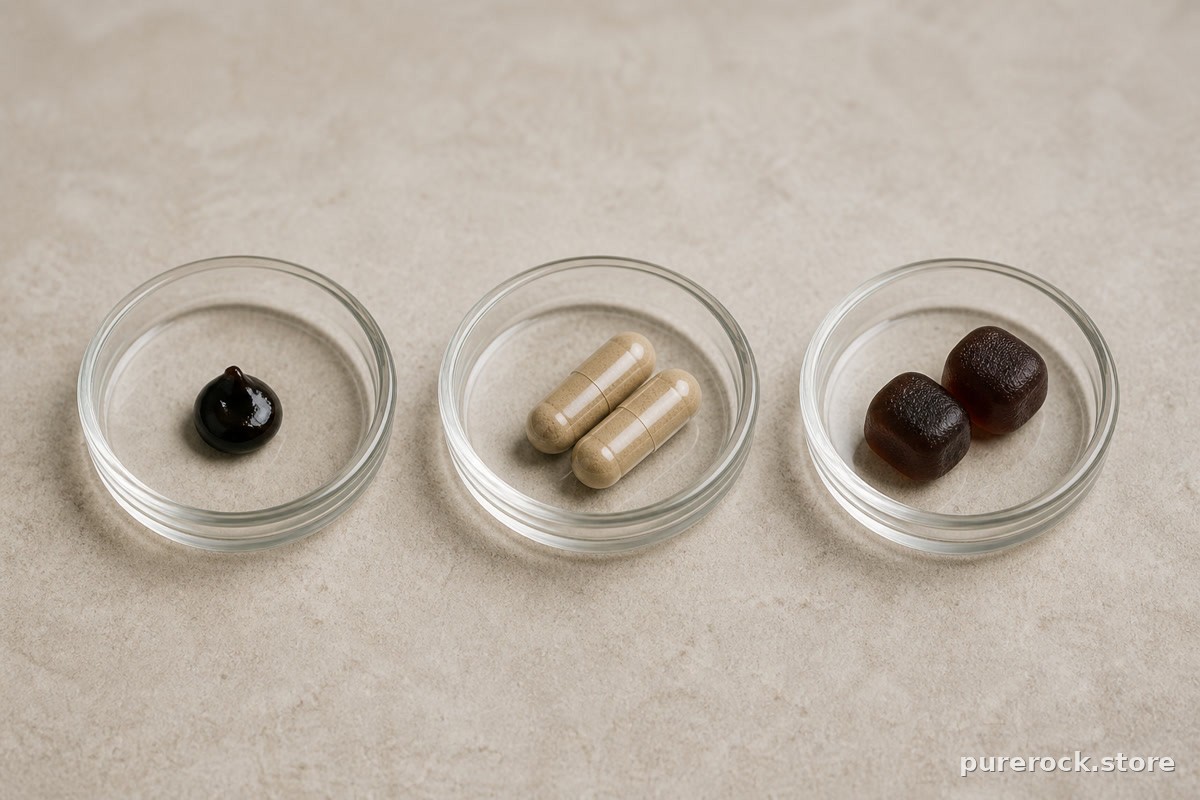
- Resin: roughly a pea-sized amount, commonly cited as 300–500 mg, once or twice daily.
- Capsules: commonly cited as 250–500 mg per capsule, with one to two capsules daily.
- Gummies: commonly cited as one to two gummies per day, with concentration varying by brand.
- Start below the label’s suggested serving and increase gradually over one to two weeks rather than beginning at a full dose.
- This is not medical advice. Talk to a healthcare provider before starting shilajit, especially if you’re pregnant, nursing, on medication, or managing a health condition.
Why There’s No Single “Correct” Dose
Shilajit isn’t a single standardized compound — it’s a mineral-rich substance exuded from rock in high-altitude ranges, then processed and purified to varying degrees before it reaches a bottle. That variability matters for dosage in a few concrete ways:
- Fulvic acid content varies by source and processing. Two resins labeled “pure shilajit” can differ meaningfully in concentration, which is part of why label-recommended amounts aren’t identical across brands.
- Format changes potency per unit. A gram of raw resin is not equivalent to a gram of capsule filler, because capsules are typically standardized extracts with fillers added, while resin is closer to the unprocessed exudate.
- Regulatory status differs by country. In some regions shilajit is sold as a dietary supplement with loosely enforced labeling; in others it’s positioned closer to a traditional Ayurvedic preparation (rasayana) with its own historical dosing conventions. Neither is a clinical dosing standard in the way a drug monograph would be.
Because of this, the most reliable single instruction is the one that sounds unsatisfying: follow the label on the specific product you bought, and treat any range you read online — including this one — as a starting-point reference, not an instruction.
Commonly Cited Ranges by Format
Resin
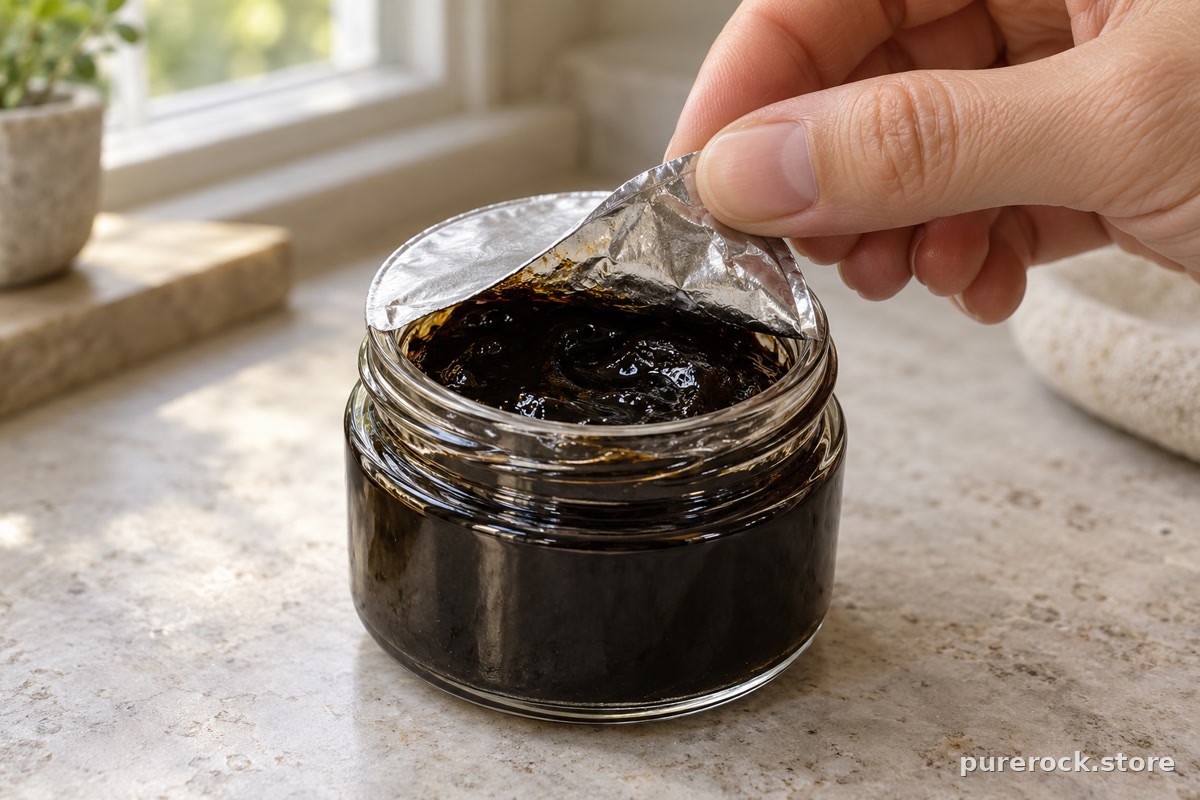
Resin is the most concentrated and least standardized format, which is exactly why “pea-sized amount” became the informal shorthand across product labels and forums. Commonly cited reference ranges for resin are:
- A pea-sized amount, roughly 300–500 mg, is the range most frequently cited on resin product labels and in general reference material.
- Some labels cite a slightly wider window, up to around 500 mg per serving, once or twice daily.
- Resin is typically dissolved in warm water, milk, or tea rather than eaten directly, partly because of its strong taste and sticky texture.
Because resin potency varies more than capsules or gummies (see our resin buying guide for what affects that), it’s the format where sticking closely to the specific product’s label — rather than a general internet range — matters most.
A few practical notes that come up repeatedly around resin dosing specifically: many people find it easier to measure a consistent amount by using the same small spoon or scoop each time rather than eyeballing a “pea-sized” portion from a jar, since resin’s stickiness makes it easy to under- or overestimate by feel alone. Temperature also matters for the experience, if not strictly for the dose — resin generally dissolves more completely in warm liquid than lukewarm or cold, and undissolved clumps can make a serving feel stronger or weaker than intended even when the measured weight was correct. Because resin is sold in bulk (by the jar rather than pre-portioned), it’s also the format most prone to serving-size drift over time, so periodically re-checking your amount against a scale, rather than relying purely on visual habit, is a reasonable practice for anyone using it regularly.
Capsules
Capsule products are pre-measured and standardized by the manufacturer, so the dose is usually easier to identify — but it still varies by brand and extract concentration:
- Commonly cited capsule doses range from 250 mg to 500 mg per capsule, with many labels recommending one to two capsules daily.
- Some capsule products use standardized extracts (e.g., a stated percentage of fulvic acid), which changes the effective dose even at the same milligram weight — always check the extract standardization on the label, not just the capsule size.
- Capsules are generally the most consistent format for repeat dosing, since resin measuring can vary person to person.
For a fuller comparison of how capsules stack up against resin and gummies on convenience, taste, and absorption considerations, see our capsules vs. resin vs. gummies comparison.
Capsule labeling conventions vary more than the milligram number alone suggests. Some brands list the weight of the whole capsule fill (including any inert fillers or the capsule shell itself), while others list only the weight of the standardized shilajit extract inside — two capsules with an identical “500 mg” front-label claim can contain meaningfully different amounts of actual shilajit extract once you read the supplement facts panel closely. This is a common point of confusion, and it’s one more reason the specific product’s panel, not a general capsule range, should guide how many you take.
Gummies
Gummies are the newest and most consumer-friendly format, generally dosed per-gummy rather than by weight:
- Labels commonly cite one to two gummies per day as the reference serving.
- Because gummies include sweeteners, flavorings, and binding agents, the concentration of active shilajit per gummy is typically lower than an equivalent-looking capsule — always check the per-serving milligram amount on the panel, not just the serving-count instruction.
- Gummies are often marketed as an easier entry point for people who find resin’s taste or texture off-putting, but “easier to take” doesn’t necessarily mean “more potent” — check the label.
Because gummies are dosed by count rather than by weight or scoop, they’re also the format where it’s easiest to unintentionally exceed a label’s suggested serving — a second or third gummy can feel like a small, low-stakes decision in a way that measuring out a second scoop of resin doesn’t. Treating the “1–2 gummies” range as a real upper bound, the same way you would treat a capsule count, is worth keeping in mind precisely because the format makes overconsumption feel casual.
How Dosage Differs by Format: Quick Reference Table
| Format | Commonly Cited Serving | Typical Frequency | Notes |
|---|---|---|---|
| Resin | ~300–500 mg (pea-sized) | 1–2x daily | Most concentrated; potency varies most by brand/source |
| Capsules | 250–500 mg per capsule | 1–2 capsules daily | Check extract standardization, not just mg |
| Gummies | 1–2 gummies | 1–2x daily | Check per-serving mg on label; sweeteners dilute concentration |
This table is a synthesis of commonly cited reference points, not a comparative recommendation of one format over another for your situation — for that framing, our format comparison guide walks through the practical tradeoffs.
Timing Basics Alongside Your Dose
Timing recommendations vary by source, and there isn’t a single settled answer, but a few patterns show up repeatedly across product labels and traditional use descriptions:
- Morning use is the most commonly cited timing, often paired with the idea that shilajit is taken to start the day rather than to wind down.
- Empty stomach is frequently recommended on resin labels specifically, with the reasoning that it may support absorption — though this is a commonly repeated convention rather than something with settled clinical consensus.
- With warm liquid — water, milk, or tea — is the most common delivery method regardless of time of day, mainly because resin doesn’t dissolve well in cold liquid.
- Some people split a daily amount into a morning and early-afternoon serving rather than taking it all at once; this shows up as an alternative on some labels but isn’t universal.
If a product’s own label gives specific timing instructions, that label supersedes any general pattern described here. For a deeper look at morning vs. night, pre-workout timing, and spacing shilajit from coffee, minerals, and medications, see our guide to the best time to take shilajit.
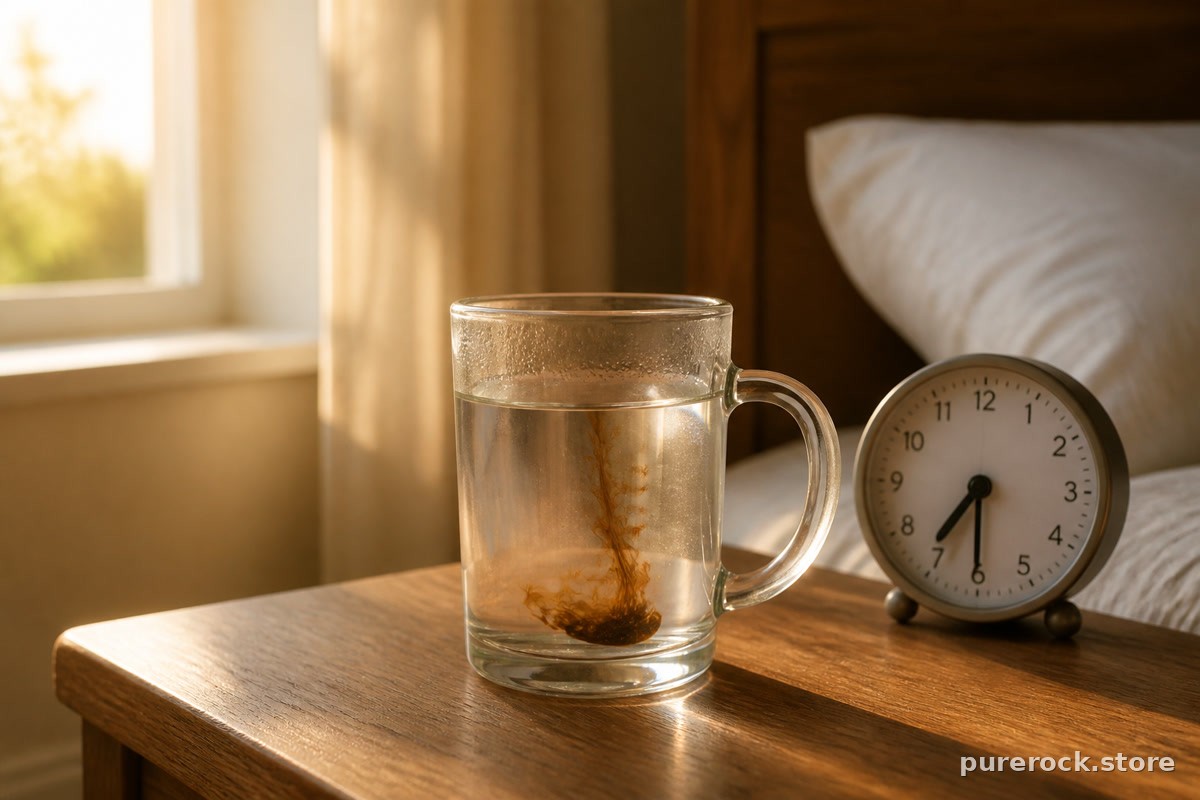
Consistency in timing tends to matter more than the specific hour chosen. Taking shilajit at roughly the same point in your daily routine — for example, always right after waking, or always with breakfast — makes it easier to notice how you respond over days and weeks, compared to taking it at scattered, unpredictable times. This is a general habit-forming principle that applies to most supplements, not something unique to shilajit, but it’s worth calling out because dosage tracking and timing tracking tend to go hand in hand: if you’re trying to evaluate whether a given amount feels right for you, holding timing constant removes one variable from that assessment.
Start Low and Adjust Slowly
Across nearly every format, the most consistent piece of general guidance is to start below the commonly cited range and increase gradually rather than beginning at a full serving:

- A common starting-point convention is to begin at roughly half the label’s suggested serving for the first several days to a week.
- This isn’t a formal clinical protocol — it’s a widely repeated, common-sense approach for introducing any new supplement, and it gives you a chance to notice how your body responds before reaching a full dose.
- If a product doesn’t specify a “starting dose” separately from a “maintenance dose,” treating the lower end of its range as your starting point is a reasonable general approach.
Increasing to a full serving over one to two weeks, rather than immediately, is the pattern most often described in general supplement-use guidance — again, not a clinical protocol specific to shilajit.
Factors That May Affect an Appropriate Range
Several variables are commonly mentioned as reasons an individual’s appropriate amount might land differently within (or outside) a cited range. None of these translate into a specific personal number — they’re context for why ranges exist and why a healthcare provider’s input matters more than a generic chart:
- Body weight. General supplement guidance often scales suggested amounts loosely with body size, though shilajit labels themselves rarely specify weight-based dosing the way medications do.
- Purpose of use. People report using shilajit for a range of different goals (general wellness, energy, recovery support, among others), and anecdotal use patterns sometimes differ by goal — this is not the same as clinical evidence supporting different doses for different goals.
- Format potency. As covered above, resin, capsules, and gummies are not interchangeable milligram-for-milligram, so a “dose” from one format doesn’t map cleanly onto another.
- Individual sensitivity. Like any supplement, individual response varies, which is exactly why the start-low approach is so consistently recommended across sources.
- Concurrent medications or conditions. This is the single biggest reason a general chart can’t replace a conversation with a healthcare provider — shilajit’s mineral content and potential interactions are relevant considerations a doctor is positioned to evaluate for your specific situation, which a blog post is not.
If you’re specifically researching considerations for women, see our dedicated shilajit for women page, which covers some format and use-case questions that come up more often in that context.
Another commonly cited factor is how long someone has been using shilajit consistently. General supplement-use guidance sometimes distinguishes between a “starting” phase — the first one to two weeks at a lower amount — and a “maintenance” phase once a person has established that the lower amount is well tolerated. This distinction shows up more as an informal convention across wellness content than as a formally defined protocol specific to shilajit, but it lines up with the broader start-low principle covered above: the appropriate amount for week one and the appropriate amount for month three aren’t necessarily assumed to be identical in the general guidance that discusses this.
Signs You May Be Taking Too Much
Commonly cited signs that an amount may be too high for an individual include digestive discomfort, headache, or general unease after use. These are the kinds of general “reduce or stop and reassess” signals cited alongside many supplements, not a diagnostic list specific to shilajit. If you experience any concerning symptoms after taking shilajit, stop use and contact a healthcare provider — don’t try to self-adjust your way through a symptom that concerns you.
It’s also worth noting that “more is better” doesn’t hold for supplements generally, and shilajit is no exception in the sources that discuss it — exceeding a label’s suggested range isn’t described anywhere as conferring extra benefit, only extra risk of discomfort.
A Note on Sourcing and Why This Matters for Dosage
A dosage range is only meaningful if the product itself is what it claims to be. Unpurified or contaminated shilajit — a real risk in an unregulated global supply chain — introduces variables that no dosage chart can account for, including heavy metal content that has nothing to do with the fulvic acid concentration a label describes. If you haven’t already vetted a product for purity, that step logically comes before worrying about exact milligrams; see our guide on how to identify pure shilajit and spot fakes before you settle on a dosing routine with any specific product.
FAQ
Is there a maximum safe dose of shilajit? There isn’t a single clinically established maximum that applies across all products, because concentration varies so much by format and brand. The most consistent general guidance is to stay within the specific product’s labeled serving range rather than looking for a universal ceiling number, and to treat exceeding that range as something with no established added benefit — only added risk of digestive discomfort. If you’re unsure what an appropriate upper limit looks like for your situation, that’s a question for a healthcare provider, not a milligram chart.
Can I take shilajit every day? Daily use is the most commonly described pattern in product labeling and general reference material, generally at the lower end of a product’s cited range rather than the upper end for ongoing daily use. As with any supplement taken regularly, checking in with a healthcare provider — particularly if you’re taking it alongside medication or managing a health condition — is a reasonable practice rather than a one-time decision made when you first opened the jar.
What happens if I miss a dose? Commonly cited general supplement guidance suggests simply resuming your normal serving at the next planned time rather than doubling up to “catch up.” This isn’t shilajit-specific advice so much as a general principle that applies to most non-prescription supplements — missing an occasional serving is not typically described as a concern in the sources that discuss shilajit use patterns.
Do men and women need different doses? There’s no separate clinically established dosing standard by sex in the commonly cited ranges covered on this page — the format-based ranges (resin, capsules, gummies) are the primary variable discussed in general reference material, not sex-specific milligram charts. Some product lines are marketed toward specific audiences with formulation differences beyond dosage; if that’s relevant to you, our shilajit for women page covers some of those format and use-case questions in more depth.
Should I take shilajit with food or on an empty stomach? Both patterns show up across product labels, with empty-stomach use cited somewhat more often for resin specifically. Neither is presented as a settled clinical requirement — it’s more of a repeated convention. If a product’s own label specifies one or the other, that instruction should take precedence over the general pattern described here.
Is it normal to feel nothing at the commonly cited starting dose? Individual response varies, and general guidance around starting doses is designed to be conservative rather than to guarantee a noticeable effect on day one. Some people report needing to reach the higher end of a label’s range, taken consistently over one to two weeks, before noticing anything — this is consistent with the start-low, increase-gradually pattern described throughout this page, and it isn’t a signal on its own that something is wrong with the product or your use of it.
Related Guides
- Shilajit side effects and safety: documented versus theoretical risks.
- Does shilajit work?: a trial-by-trial verdict.
- Shilajit FAQ: quick answers on pronunciation, shelf life and more.
Bottom Line
There is no single, universally correct shilajit dosage — only a set of commonly cited reference ranges that differ by format, and general starting-low guidance that applies across all of them. Resin: roughly a pea-sized amount, 300–500 mg. Capsules: 250–500 mg per capsule, one to two daily. Gummies: one to two per day, checking the per-serving milligram amount on the label. Start at the low end, increase gradually, and pay attention to how you feel.
None of this replaces the label on the specific product in front of you, and none of it replaces a conversation with a healthcare provider — particularly if you’re pregnant, nursing, managing a health condition, or taking medication. This page is a reference for understanding what’s commonly discussed, not a personal recommendation for what you should take.