 Purerock
usage
Does Shilajit Work? A Trial-by-Trial Verdict
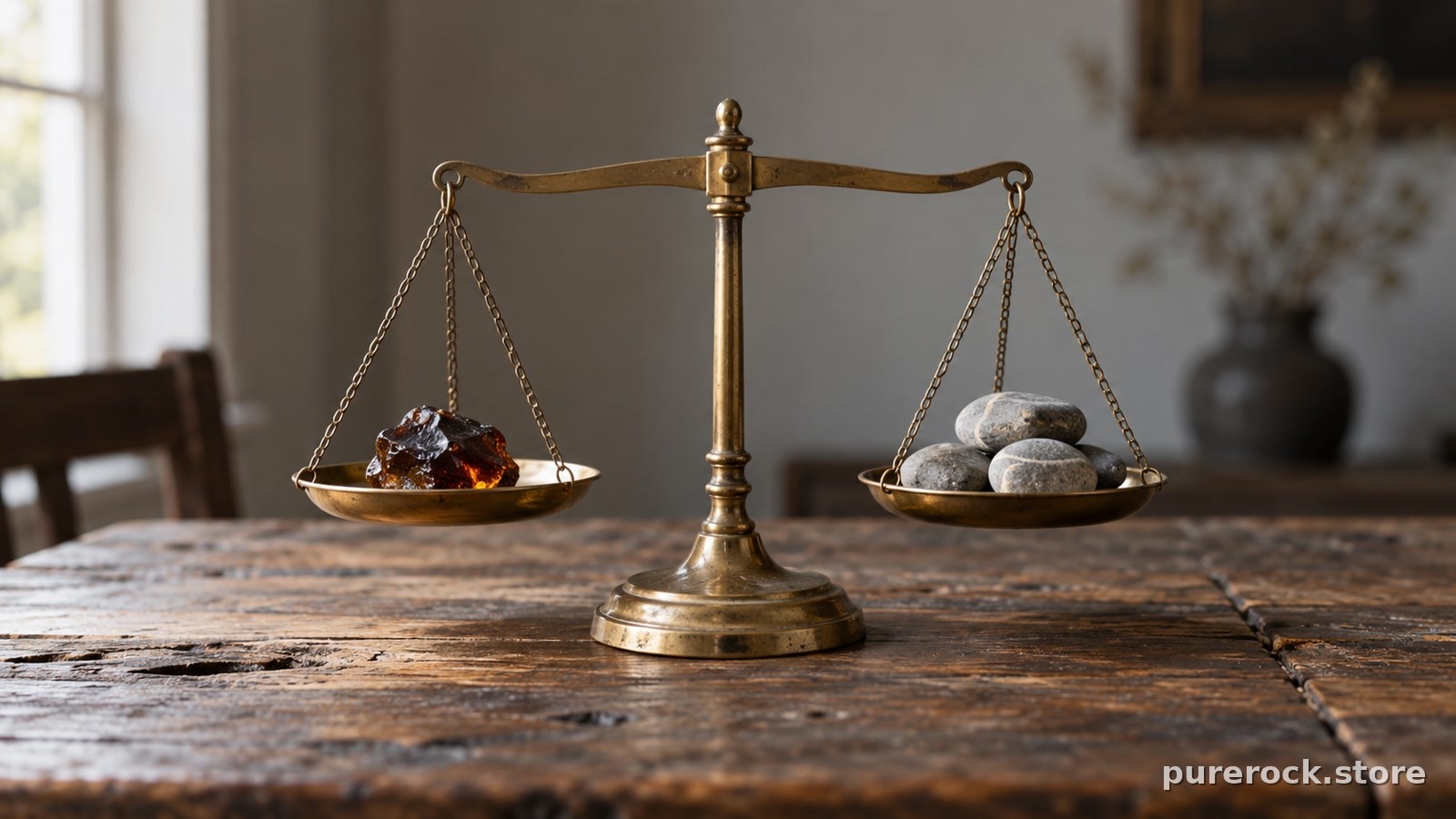
Does shilajit work? For a few narrow outcomes, small trials report measurable changes. For the general energy, vitality and “feel better” promises, nobody has run the kind of study that could show it. This page lists every human trial we could find, with sample size, dose, duration and funding, then explains what “work” should mean and how to test it on yourself fairly.
Key Takeaways
- Randomized, placebo-controlled trials exist for testosterone, strength retention after exercise, bone density, a collagen marker and fracture healing. Each has 35 to 160 participants and we found no independent replication.
- The effects reported are specific and modest. None of these trials tested the claims most marketing makes: more energy, better mood, “detox,” or results within days.
- Several trials used one manufacturer’s standardized extract and some were manufacturer-funded. A random jar of resin is not that extract.
- Before-and-after photos and testimonials cannot show that shilajit works, because placebo effects, regression to the mean and product variance produce the same stories.
- A fair personal test needs a clear target, a baseline, enough time and a way to blind yourself. Most people skip all four.
The Trial-by-Trial Table
These are the human studies we found in PubMed and verified. “Design” matters most: only randomized, placebo-controlled trials can separate shilajit from expectation. For a claim-by-claim map that includes animal and lab work, see our shilajit benefits page.
| Study | Design | n | Dose, duration | Main outcome | Sponsor or conflict |
|---|---|---|---|---|---|
| Pandit 2016 | Randomized, double-blind, placebo-controlled | Not in abstract | 250 mg twice daily, 90 days | Total and free testosterone and DHEAS higher than placebo; LH and FSH maintained | Not stated in abstract |
| Biswas 2010 | Open-label, no control | 35 enrolled, 28 completed | 100 mg twice daily, 90 days | Sperm count +61.4%, testosterone +23.5% vs own baseline | Not stated in abstract |
| Keller 2019 | Randomized, placebo-controlled | 63 young men | 250 or 500 mg/day, 8 weeks | Less strength loss after fatiguing exercise at 500 mg, in higher-baseline half only | Funded by the extract’s manufacturer; authors declared no competing interests |
| Das 2016 | Single-group trial, no placebo | Not in abstract (adults with overweight or class I obesity) | 250 mg twice daily, 8 weeks | Muscle gene activity changes; no change in glucose or lipids | Manufacturer-employed co-authors |
| Das 2019 | Randomized trial in women | 45 (15 per group) | 125 or 250 mg twice daily, 14 weeks | Skin blood flow improved at the higher dose | NIH grant plus a grant and supplies from the extract’s maker |
| Neltner 2024 | Randomized, placebo-controlled | 35 young men | 500 or 1,000 mg/day, 8 weeks | Serum collagen marker rose (d = 1.2 to 1.3) vs none for placebo | Not stated in abstract |
| Pingali 2022 | Randomized, double-blind, placebo-controlled | 60 women with osteopenia | 250 or 500 mg/day, 48 weeks | Bone density decline smaller than placebo, dose-dependent | Not stated in abstract |
| Sadeghi 2020 | Randomized, double-blind, placebo-controlled | 160 with tibial fractures | Two 500 mg capsules, 28 days | Union at 129 vs 153 days (p < 0.049) | Not stated in abstract |
| Yadav 2026 | Open-label pilot, no control | 25 men | 500 mg/day resin, 28 days | Fatigue score -32%, strength and endurance up vs baseline | Authors declare no funding, but four of six are affiliated with the branded resin’s maker |
| Martinez 2025 | Randomized, placebo-controlled, combination | 166 enrolled, 109 completed | 6 to 12 mg shilajit with chromium and amla, 12 weeks | Mixed cardiometabolic markers | Funded by a supplement ingredient company |
| Sharma 2003 | Double-blind, placebo-controlled (per full text) | 30 (20 shilajit, 10 placebo) | 2 g/day, 45 days | Lower triglycerides and cholesterol, higher HDL | Not stated in abstract |
Two notes on gaps. Wherever neither the abstract nor an open full text gave a number, we left it out rather than guess. The Das 2019 and Sharma 2003 figures come from their open full texts.
What “Work” Should Mean
“Does it work” is really three questions.
Is the effect bigger than placebo? A placebo group is the only way to find out. Open-label pilots like Biswas 2010 and Yadav 2026 tell you people changed over time, not that shilajit caused it. In a fatigue study especially, people who expect to feel better often report feeling better.
Is the effect big enough to notice? Statistical significance is not the same as a difference you could feel. Take Keller 2019: in the half of participants with higher baseline strength, the 500 mg group lost about 9% of maximal strength after the fatiguing protocol versus about 16% for placebo. That is a measurable gap in a lab test. It does not tell you what happens to a normal workout. In Neltner 2024, the collagen marker moved a lot (an effect size, Cohen’s d, above 1), but it is a blood marker, not a tendon you could test.
Is it the outcome you care about? A rise in testosterone (Pandit 2016) is a hormone result. The trial was not built to measure libido, mood or muscle. A bone-density result (Pingali 2022) is a surrogate; it did not count fractures. When someone says “it worked,” ask which outcome, measured how.
By those three tests, the fairest verdict is: shilajit has been reported to produce measurable, specific changes against placebo in a handful of small trials, and has not been shown to deliver the broad “feel better” effects most people buy it for.
What the Trials Do Not Show
Seven gaps sit behind most of the confusion online.
- No trial measured general energy or mood against placebo. The fatigue data are a rat study and the uncontrolled Yadav pilot.
- No trial tested results in days. The shortest ran 28 days.
- Women were studied twice, in bone and skin research, and not at all for cycles, menopause symptoms or pregnancy.
- Everyone was screened. Trial participants were healthy or had one defined condition, so results say little about people with complicated health histories.
- Doses and extracts differ. 250 mg of a purified standardized extract is not 250 mg of resin from an unknown source.
- Replication is missing. The testosterone result, the best-known one, comes from a single research group.
- Long-term data are thin. Nothing here covers years of daily use.
Realistic Expectations and Timelines
Matching expectations to the trials looks like this.
- Weeks 1 to 4. The only study measuring effects this early, Yadav 2026, was uncontrolled. Anything you feel here is as likely to be expectation as shilajit. Sadeghi 2020 used a 28-day course, but bone union was assessed over months.
- Weeks 8 to 12. Where controlled results first appear: eight weeks in Keller and Neltner, 90 days in Pandit and Biswas, 12 weeks in Martinez.
- Months 6 to 12. Only Pingali 2022 ran this long, at 48 weeks, in women with osteopenia.
For a closer look at what each timeline can and cannot show, see how long shilajit takes to work. For the doses these trials used and how they map to resin, powder and capsules, see the dosage guide.
Why Before-and-After Photos and Testimonials Mislead
Searches for “shilajit before and after” and “shilajit results” return photos and posts that feel convincing and prove very little. Four reasons.
Placebo and expectation. If you pay for a supplement and believe it will help, you tend to notice and report improvement. Placebo response is strongest for subjective outcomes like energy, mood and sleep, which are exactly what shilajit is sold on.
Regression to the mean. People start a supplement when they feel at their worst: a bad month, low motivation, poor sleep. Most of those dips improve on their own. If you begin shilajit at a low point, you will probably feel better a month later whether or not you took it.
Everything changes at once. People who buy shilajit often start lifting, sleeping better, cutting alcohol or dieting in the same weeks. A before-and-after photo cannot say which change did what. Lighting, angle, time of day and a flexed pose change a photo more than most supplements change a body.
Product variance and survivorship. ConsumerLab testing in 2024 reported fulvic acid ranging from about 7 mg to over 2,000 mg per serving across eight products, so two people “taking shilajit” may be taking very different things. And the posts you see are the ones people chose to share.
None of this means every testimonial is false. It means a testimonial can’t tell you whether shilajit was the cause. For a broader verdict on the substance versus the sellers, see is shilajit legit.
A Fair Personal Test
If you decide to try it, you can do better than guessing. This design will not give you trial-grade proof, but it removes the biggest traps.
- Pick one target. “More energy” is too vague. Choose something you can measure: a standard fatigue rating each morning, a lift you already track, or a lab value your doctor already orders.
- Collect a baseline first. Two to four weeks of tracking before you start, so you know your normal range and its natural ups and downs.
- Change nothing else. Keep sleep schedule, training, diet and other supplements steady. If you can’t, write down what changed and when.
- Match the trials. Use a verified, lab-tested product and a dose and duration inside what the studies used. Eight to twelve weeks is the shortest window with controlled data.
- Blind yourself if you can. Have a partner prepare matching capsules, some with shilajit and some without, in a pattern you don’t know, then check against the log at the end. Resin cannot be blinded easily, which is one reason capsules suit this test.
- Judge against your own baseline. Ask whether the change is bigger than the normal swings you recorded, not whether you “feel” better.
- Involve your doctor. If you take medication, have a medical condition, or plan to track a lab value, tell your doctor before starting.
If the result is inside your normal variation, the honest conclusion is that it did nothing detectable for you. That is a valid outcome and it will save you money.

Safety Context
A test is only useful if the product is clean. Heavy metals, including thallium, have been found in some supplements, and the trials above used screened, standardized material. See how to spot fake shilajit before buying, and shilajit side effects for who should avoid it.
FAQ
Does shilajit actually work?
For specific outcomes in small randomized trials, it has reported measurable changes against placebo: testosterone in men aged 45 to 55, strength retention at 500 mg/day, bone density in postmenopausal women and fracture healing time. For general energy or vitality, no controlled trial has tested it.
Does shilajit really work for energy?
It is not established. The evidence is a rat model of chronic fatigue and one 28-day open-label pilot with no placebo group. Both suggest a hypothesis. Neither shows that shilajit raises energy in people compared with placebo.
How reliable are shilajit before-and-after results?
Not very. Placebo response, regression to the mean, other lifestyle changes and photo conditions can all create a convincing “after.” Only a controlled comparison can show what shilajit itself does.
How big are the effects in the trials?
Modest and specific. Examples include a strength-loss gap of about 9% versus 16% after a fatiguing test, and a bone-density decline that was smaller than placebo. Sizes are not comparable across trials because the outcomes differ.
Should I take shilajit to test whether it works for me?
That is a personal decision to make with a doctor, especially if you take medication or have a medical condition. If you try it, use the personal test above with a verified product, and treat a result within your normal variation as no effect.
Bottom Line
Shilajit has narrow, early evidence of measurable effects: a handful of small trials, several tied to one standardized extract, reported measurable differences against placebo for testosterone, post-exercise strength, a collagen marker, bone density and fracture healing. It has not been shown to work for the broad energy and vitality promises that sell it, and photos and testimonials cannot settle the question. If you test it yourself, set a target, record a baseline, give it at least eight weeks and judge against your own variation.