 Purerock
purity
Pure Shilajit: How to Spot Fake or Adulterated Resin
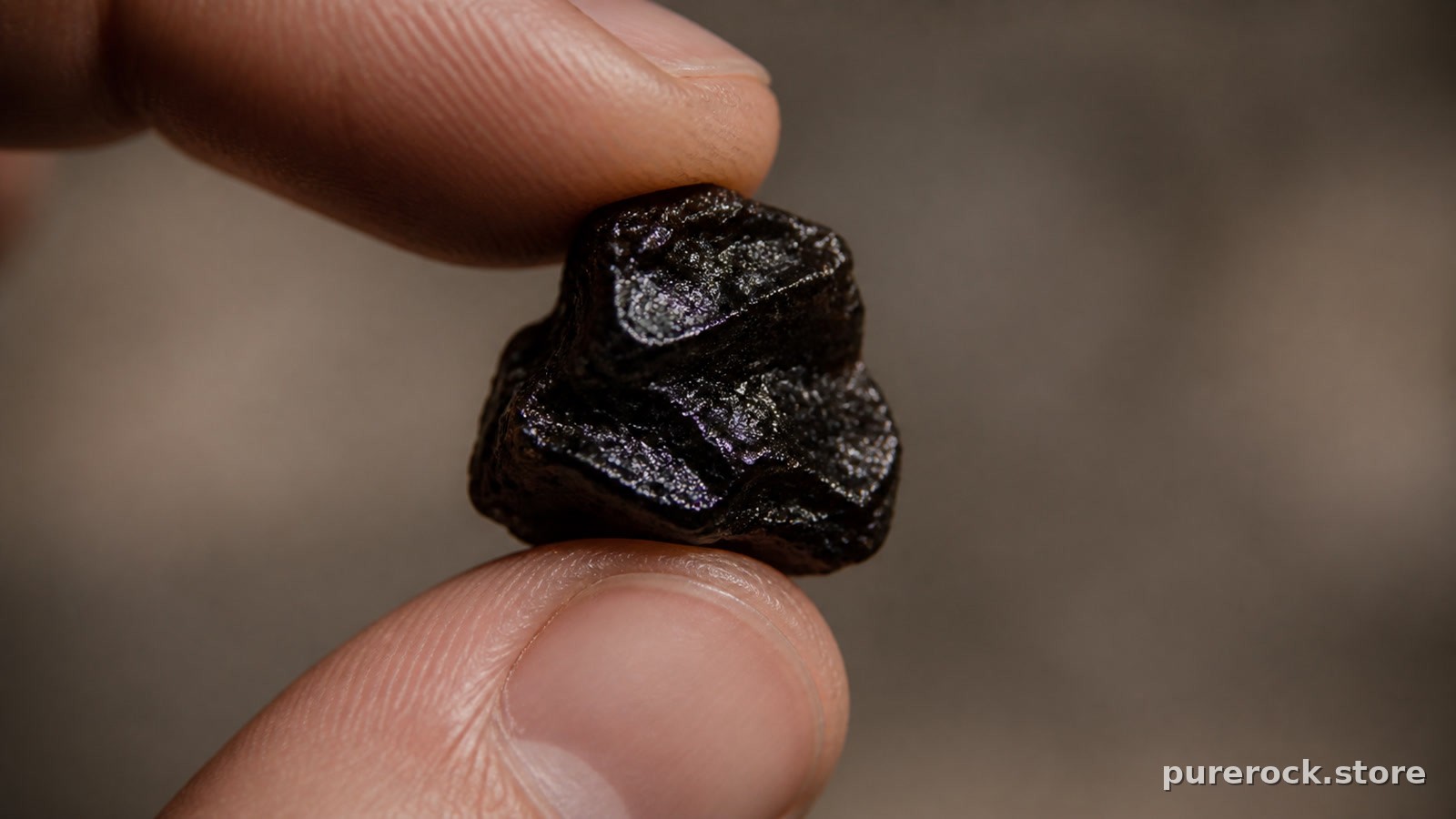
Shilajit has moved from niche Ayurvedic pharmacies to mainstream wellness shelves in the span of a few years, and supply has scrambled to keep up. That speed creates an obvious problem: a resin that’s genuinely rare — scraped from high-altitude rock seams, sun-purified over weeks — is being sold at a volume that raw supply can’t plausibly support. Somewhere between the mountain and the jar, a lot of what’s labeled “pure shilajit” gets diluted, synthesized, or cut with fillers that mimic its look and smell.
This isn’t a guide to scare you off the category. It’s a guide to the physical, sensory, and documentary checks you can actually run before or after you buy, so you’re not relying on a brand’s marketing copy to tell you what’s in the jar.
Key Takeaways
- Genuine shilajit is a mineral-rich geological exudate, not a manufactured compound — slight batch-to-batch variation in color and smell is a sign of authenticity, not inconsistency.
- No single home test (texture, dissolve, flame, or smell) is conclusive on its own; combine at least two or three before drawing a conclusion.
- The dissolve test is the most reliable kitchen-level check: real resin softens and dissolves gradually into amber-brown water, rather than dyeing it instantly black or floating as an intact lump.
- A batch-specific Certificate of Analysis (COA) — naming an accredited lab, a lot number, and a test date — is the single most reliable purity signal a buyer can request.
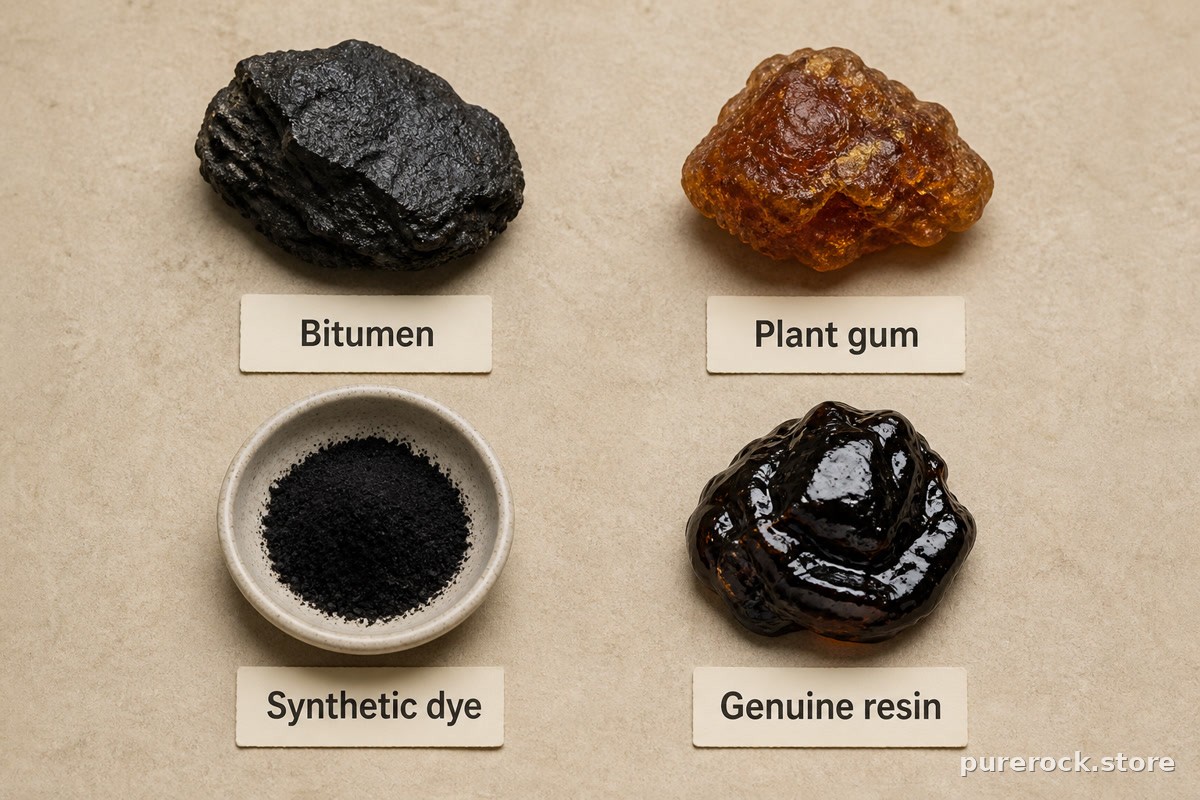
- Common adulterants include bitumen/asphalt, isolated humic acid, plant gums, rubber or wax binders, and synthetic dyes — all chosen because they mimic shilajit’s color or dissolve behavior cheaply.
- “Purified” and “Himalayan” are both loosely used marketing terms; neither guarantees authenticity without a disclosed process or a named region backed by documentation.
What Pure Shilajit Actually Is
Shilajit is a mineral-rich exudate that seeps from rock strata in mountain ranges — primarily the Himalayas, but also the Caucasus, Altai, and parts of South America — during warmer months. It forms over centuries from the slow decomposition of plant matter compressed under rock, combined with mineral leaching from the surrounding strata. The result is a dense, tar-like substance whose main components are humic substances, including fulvic acid — one review puts them at around 60–80% of the total nutraceutical compound (Carrasco-Gallardo et al., 2012) — along with dozens of trace minerals. Actual fulvic acid content varies widely between products, which is why a tested figure on a lab certificate matters.
Because it’s a geological and biological byproduct rather than a manufactured compound, no two batches are chemically identical. That’s actually one of the tells of authenticity: real shilajit varies slightly in color, aroma, and mineral profile between harvests and regions, while synthetic or heavily standardized “shilajit” products tend to look suspiciously uniform batch to batch.
Traditional processing — sun-drying, filtering through cloth, and slow evaporation of excess moisture — is what Ayurvedic texts call “purification” (shodhana). It removes insoluble rock debris and organic contaminants without adding anything synthetic. That distinction matters, because “purified” on a modern label doesn’t always mean the same thing (more on that below).
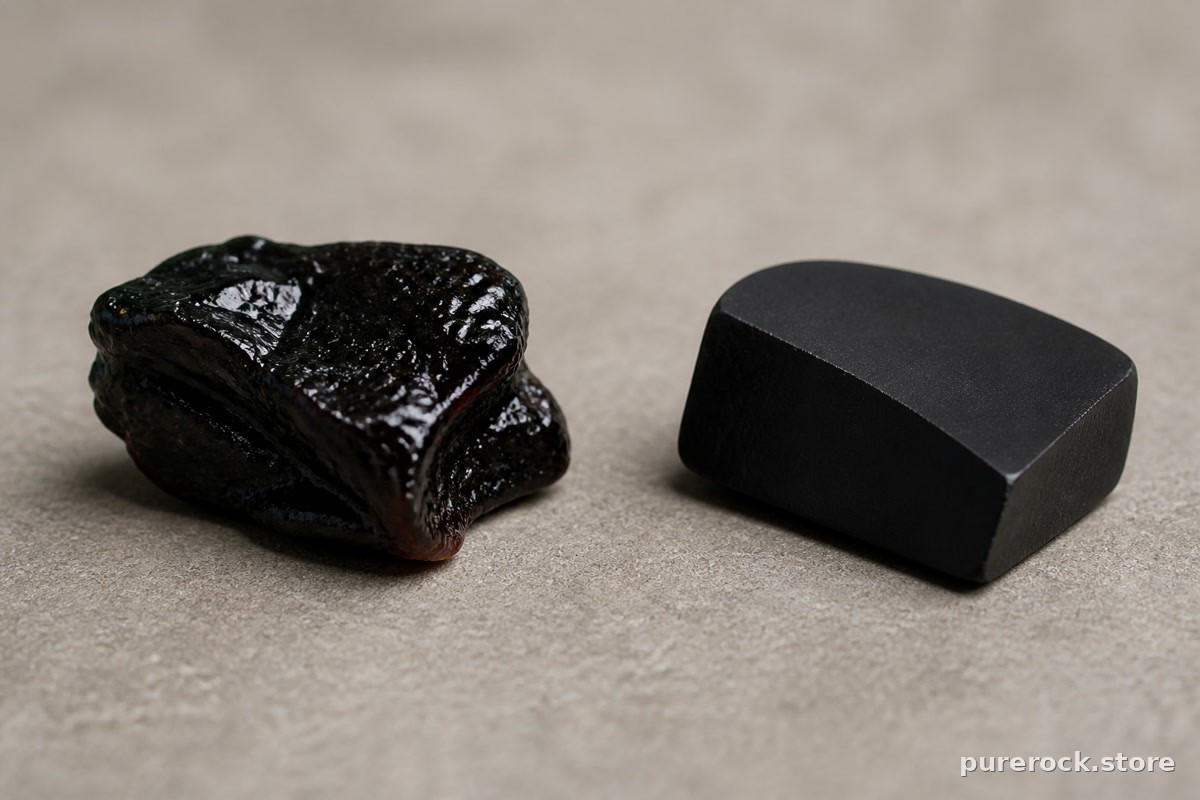
Color alone tells you less than most buyers assume. Raw resin can range from a deep reddish-brown to almost black, depending on mineral content and how long it’s been sun-cured; a sample that looks slightly lighter isn’t automatically lower quality, and one that’s jet black isn’t automatically purer. What’s more consistent across genuine batches is a certain translucency at thin edges — hold a small piece up to light and you should see faint reddish-brown translucence at the thinnest point, rather than an opaque, uniform black straight through.
It’s also worth understanding what shilajit is not. It isn’t a single isolated compound the way, say, creatine or magnesium glycinate is — it’s a complex mixture of fulvic acid, humic acid, dibenzo-alpha-pyrones, trace minerals (commonly including iron, zinc, copper, and manganese), and smaller organic acids, all in ratios that vary by source. That complexity is exactly why standardized, single-number purity claims (“95% fulvic acid” printed on a label with no method disclosed) deserve more scrutiny than they usually get — a legitimate lab report will specify how that number was derived, not just state it.
The Physical Tests You Can Run Yourself
None of these tests are definitive on their own — adulterators know about most of them and design around the obvious ones — but together they’re a reasonable first filter.
| Test | What genuine shilajit does | What a fake or cut product often does |
|---|---|---|
| Texture | Firm but pliable; softens and turns slightly sticky within 1-2 minutes of finger pressure | Stays brittle/hard, feels waxy or plasticky, or crumbles like dry powder |
| Dissolve | Softens gradually over 5-10 minutes, water turns amber-brown with light sediment | Dyes water instantly and uniformly black, or floats as an intact lump that never breaks down |
| Flame | Softens and smolders slowly near a flame; faint mineral smell | Flares up and burns brightly, often with a petroleum or rubber smell |
| Smell | Earthy, mineral, faintly smoky — similar to damp soil or iron | No smell at all, or a sweet/chemical/solvent odor |
| Lab COA | Batch-specific, named accredited lab, dated, quantitative fulvic acid % | Missing entirely, generic/undated, or shows suspiciously round numbers |
Treat the table as a quick-reference summary, not a replacement for reading the fuller explanation of each test below — the “why” behind each result is what lets you interpret an ambiguous result correctly instead of just pattern-matching a pass/fail.
1. The Texture Test
Authentic resin shilajit should be firm but pliable at room temperature, similar in consistency to a soft tar or thick honey that’s been slightly chilled. Press a small piece between your fingers: it should soften and become slightly sticky from body heat within a minute or two, without fully melting into a liquid or feeling gritty and crumbly like a compressed powder.
- Too hard and brittle: often a sign of excess resin or plant-gum binders added to bulk up weight.
- Gritty or sandy: usually undissolved mineral or rock debris that wasn’t properly filtered — a sign of poor processing rather than outright fakery, but still a quality flag.
- Waxy or plasticky: can indicate synthetic binders standing in for the natural resin matrix.
2. The Dissolve Test
This is the most commonly cited home test, and for good reason — it’s simple and reasonably diagnostic. Drop a pea-sized piece of resin into a glass of warm (not boiling) water and watch what happens over 5-10 minutes without stirring.
Genuine shilajit should slowly soften, then dissolve almost completely, leaving the water tinted amber to dark brown, with at most a small amount of fine sediment at the bottom. It shouldn’t float indefinitely as an intact lump, and it shouldn’t dissolve instantly into a uniform, ink-like black the way a cheap synthetic dye would.
What tends to go wrong with fakes:
- Instant, uniform coloring with no gradual dissolve suggests a soluble dye or humic-acid extract with little else in it.
- A lump that never breaks down, or that sits on top of the water like a wax pellet, suggests bitumen, rubber-based binders, or a resin substitute.
- Foaming or a soap-like film can indicate added surfactants used to mimic shilajit’s natural slight foaming when stirred.
3. The Flame Test
This one is more folk-remedy than lab science, but it’s widely used in sourcing regions. A small piece held near (not in) a flame should soften and start to smolder slowly rather than catch fire and burn brightly. Real shilajit has a high mineral content that resists rapid combustion; if a sample flares up and burns like a candle or produces a strong petroleum smell, that points toward bitumen or asphalt-based fakes — a known adulterant because raw bitumen shares shilajit’s dark, tarry appearance.
Treat this as a rough screen, not a certificate — it’s easy to get a false read depending on moisture content and how the flame is applied, and it shouldn’t be your only check.
4. The Smell Test
Authentic shilajit has a distinctive earthy, mineral smell — often described as similar to damp soil, iron, or a faint smokiness. It should not smell sweet, chemically sharp, or like nothing at all. A resin with no discernible odor is a red flag for a heavily processed or synthetic product; one with a strong chemical or solvent smell may have been processed with additives not intended for the final product.
Lab Testing and Certificates
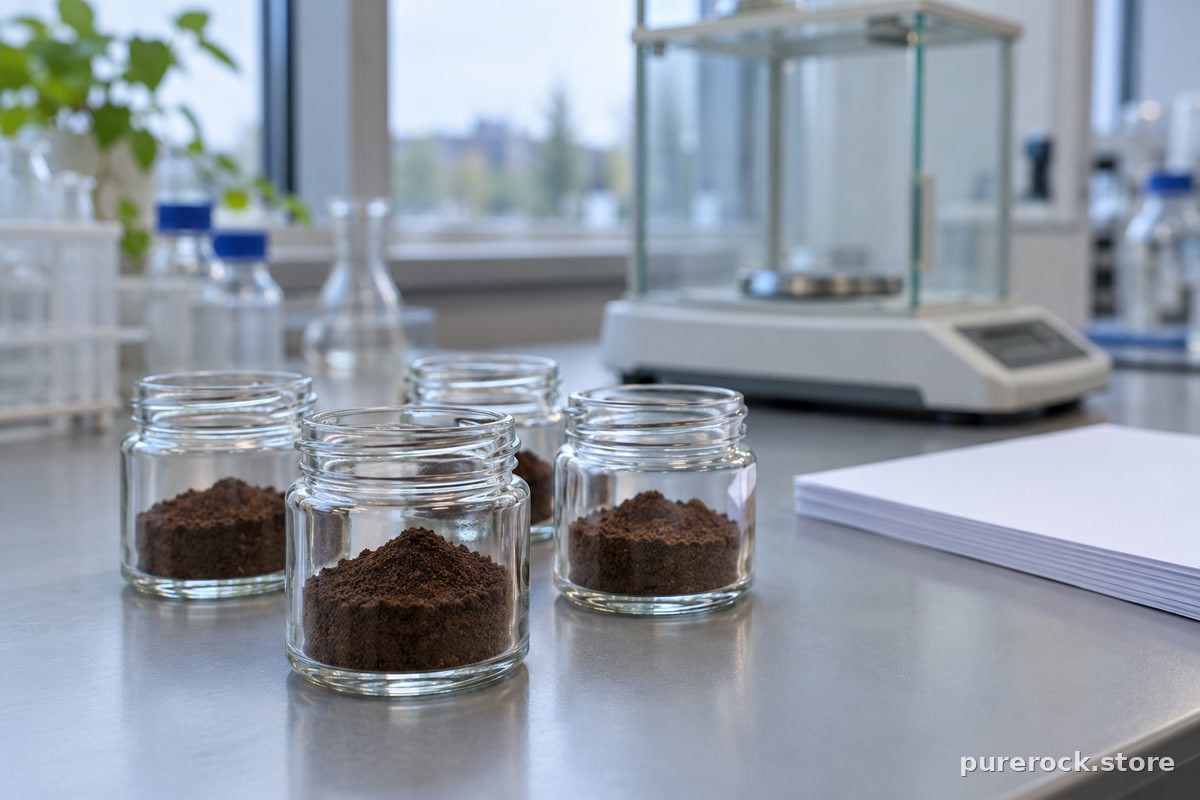
Sensory tests get you partway there, but they can’t detect heavy metals, microbial contamination, or precise fulvic acid concentration. That’s where third-party lab testing comes in, and it’s the single most reliable thing to look for when evaluating a brand rather than a single piece of resin.
What a Legitimate Certificate of Analysis (COA) Should Include
- Heavy metal panel: lead, arsenic, mercury, and cadmium levels, tested against a recognized limit (commonly USP <232>/<233> or a regional pharmacopeia standard). Shilajit’s mineral-rich origin means trace heavy metals are common even in authentic product — the question isn’t “zero,” it’s “within safe limits.”
- Fulvic acid percentage: a quantitative figure (not a marketing range), ideally tested via HPLC or a comparable method, not just “high in fulvic acid” as unverified prose.
- Microbial testing: especially relevant for raw resin, which can harbor mold or bacteria if improperly dried or stored.
- Testing lab name and accreditation, a batch or lot number tying the certificate to the specific product you’re holding, and a test date.
A generic PDF with no lab name, no batch number, and numbers that look suspiciously round should be treated as decorative rather than evidence. If a brand can’t produce a batch-specific COA on request, that’s a meaningful gap — not necessarily proof of fraud, but a real question mark.
When you do get a COA, it’s worth checking a few practical details beyond just “does one exist.” Confirm the lab name is searchable and that it actually offers the testing methods listed (some labs specialize in food safety and don’t run HPLC fulvic acid panels at all). Cross-check that the batch or lot number on the certificate matches a number printed somewhere on the product packaging — a COA that can’t be tied to the specific unit in your hand is only marginally more useful than no COA at all. And be skeptical of certificates dated far in the past relative to the product’s manufacture date; shilajit doesn’t need retesting every purchase, but a COA from three years ago attached to a “new batch” listing is a mismatch worth asking about directly.
Independent Research Context
Peer-reviewed research on shilajit’s mineral and fulvic acid composition — including work published in journals like the Journal of Ayurveda and Integrative Medicine — has documented substantial variability between geographic sources and processing methods. That variability is itself part of why standardized, batch-level testing matters more for shilajit than for many single-compound supplements: there’s no single reference profile a synthetic product can simply replicate, and no shortcut that substitutes for direct testing of the batch in front of you.
Common Adulterants and Fillers
Knowing what’s typically used to cut or fake shilajit makes the physical tests above easier to interpret.
- Bitumen and asphalt residues: dark, tar-like, and visually close to real resin, but geologically and chemically distinct (and a genuine safety concern given industrial contaminants).
- Humic acid extracts alone: humic and fulvic acids are related but not identical; some products use isolated humic acid (often derived from peat or lignite) to mimic shilajit’s dissolve behavior and color without the full mineral and trace-compound profile.
- Plant gums and resins (e.g., guggul or other tree resins): used to bulk up weight and firm up texture cheaply.
- Rubber or wax binders: added to control texture in low-quality processing, sometimes present in resin that started out partially genuine but was stretched with filler.
- Synthetic dyes: added to darken a paler or diluted base to match the deep brown-black color buyers expect.
None of these are things you can rule out with 100% confidence from a kitchen test — that’s exactly why sourcing transparency and lab documentation matter as much as the physical checks.
Adulteration also isn’t always all-or-nothing. It’s common for a product to be a blend — genuine shilajit stretched with a filler to increase yield from a limited harvest, rather than a 100% synthetic substitute sold under the same name. That distinction matters for how you interpret test results: a resin that mostly dissolves but leaves an unusually large residue, or that smells right but tests slightly off on a lab panel, may be a diluted product rather than an outright fake. Either way, it’s not delivering what the label implies, but recognizing the “partially cut” category helps explain why some products pass some checks and fail others instead of cleanly failing everything.
Sourcing and Altitude Claims
Marketing copy loves to cite specific altitudes (“harvested above 16,000 feet”) because it signals authenticity, but altitude alone isn’t verifiable from a label and isn’t the only variable that matters. What’s more informative:
- Named region, not just “Himalayan.” Legitimate suppliers are usually willing to name a mountain range or country of origin (Nepal, Kashmir, Tibet, Altai) rather than relying on “Himalayan” as an unverifiable catch-all.
- Harvest season disclosure. Traditional harvesting happens in warmer months when the resin softens and seeps from rock; a brand that can describe its harvest window (even loosely) is more likely sourcing directly rather than reselling an opaque supply chain.
- Direct relationships vs. broker chains. Shorter, more transparent supply chains generally correlate with less opportunity for dilution or substitution along the way, though this isn’t something a buyer can verify directly — it’s a reasonable heuristic, not proof.
Altitude itself is often cited as a proxy for purity or potency, but the mechanism behind that claim is worth understanding rather than just accepting on faith. Shilajit forms in rock crevices at high elevation partly because the temperature swings and lower oxygen levels at altitude slow microbial decomposition of the trapped organic matter, which is thought to preserve more of the fulvic-acid-forming compounds over the long decomposition process. That’s a plausible mechanism, not a guaranteed outcome — a poorly processed batch from 18,000 feet can still end up lower quality than a well-processed batch from a lower elevation. Altitude claims are a mild positive signal at best, and one a buyer has no way to independently confirm from a label.
What “Purified” Actually Means on a Label
“Purified shilajit” is one of the most inconsistently used phrases in the category, and it’s worth understanding the range of what it can mean before trusting it as a quality signal on its own.
At the traditional end, purification (shodhana) refers to sun-drying and filtration that remove rock particulates and unwanted organic matter, though some classical methods also process the resin in herbal decoctions, which adds material: in a 2012 study, shodhana with Triphala decoction increased the resin’s weight by 51% (Pathak et al.). At the industrial end, some products described as “purified” have been through solvent extraction, heat processing, or reconstitution from a powdered extract — methods that can meaningfully change the fulvic acid profile and trace mineral content compared to traditionally processed resin, even though the end product still gets labeled “purified” or “pure.”
Neither approach is automatically better or worse for every use case, but they aren’t interchangeable, and a label that says only “purified” without describing the method is giving you a marketing term, not a process description. If purification method is disclosed at all, it’s usually in fine print or an FAQ — worth checking directly on the product page rather than assuming from the front-of-package copy.
Putting the Checks Together
No single test here — texture, dissolve, flame, smell, or even a COA — is fully conclusive in isolation. A confident purity assessment comes from combining several: does the resin behave the way it should physically, does the seller disclose sourcing specifics rather than vague claims, and is there a batch-matched lab certificate backing up the fulvic acid and heavy-metal numbers on the label. When two or three of those line up, you’re on much firmer ground than trusting any single data point.
FAQ: How to Know Shilajit Is Pure
Does pure shilajit dissolve completely in water? Mostly, yes — a genuine sample should soften and largely dissolve in warm water over several minutes, leaving the water darkened and only a small amount of fine sediment. Instant, uniform dye-like coloring or a lump that never breaks down are both signs of a low-quality or fake product.
Is dark color alone a sign of purity? No. Color is one of the easiest things to fake with additives or dyes. It’s a supporting signal at best, not a standalone indicator — treat it as one data point among several, not a pass/fail test.
Does a lab certificate guarantee the product is authentic? It significantly raises confidence, especially for heavy metal safety, but only if the certificate is batch-specific, names an accredited lab, and includes a test date. A generic or undated PDF proves much less than it appears to.
Can pure shilajit still contain heavy metals? Yes, and that’s expected given its mineral origin — the relevant question is whether the levels fall within recognized safety limits (commonly referenced against USP or regional pharmacopeia standards), not whether trace metals are present at all.
Is “Himalayan shilajit” always genuine? Not automatically. “Himalayan” is used loosely as a marketing descriptor and isn’t independently verifiable from a label alone. A named region, disclosed harvest process, and lab documentation are more informative than the word “Himalayan” by itself.
Should texture or smell alone be enough to trust a product? No single physical test is conclusive on its own — adulterants are specifically designed to mimic the most obvious sensory cues. Use texture, dissolve behavior, and smell together as a first-pass filter, and treat lab documentation as the more decisive check for safety-related concerns like heavy metals.
This article is for educational purposes and does not constitute medical advice. Consult a qualified healthcare provider before adding any new supplement to your routine.
Related Guides
- How to choose the best shilajit: a brand-free checklist.
- What is in shilajit: minerals, fulvic acid and lab variability.
- How to read shilajit reviews: what reviews can and can’t tell you.