 Purerock
audience
Shilajit Gummies for Men: Reading the Label, Not the Hype
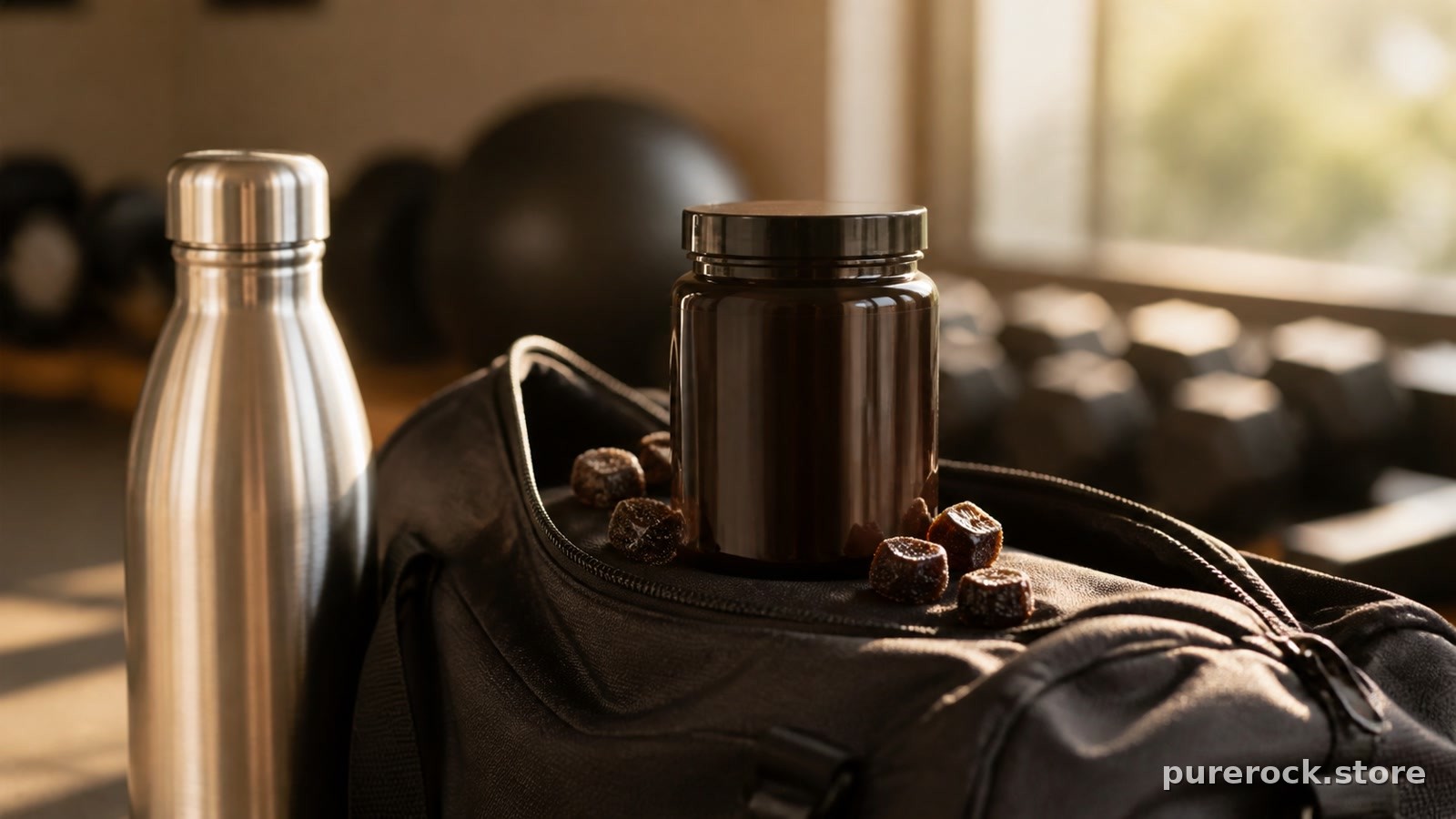
Search “shilajit gummies for men” and you’ll land on a wall of nearly identical product pages promising vitality, drive, and gym performance in gummy form. What almost none of them explain is what “for men” actually changes about the product sitting in the jar — is the formulation genuinely different, or is it the same base gummy with different label copy and maybe a slightly higher dose? This guide answers that question directly, then walks through how to evaluate a men’s shilajit gummy on its actual merits: what’s in it, how much of it you’re getting per piece, and whether the format itself suits how men typically want to take a supplement.
Key Takeaways
- “For men” on a shilajit gummy label usually means a higher per-gummy dose, an added ingredient stack, or nothing at all beyond packaging — rarely a physiologically distinct formulation.
- The shilajit extract itself (fulvic acid content, sourcing, purification) doesn’t change based on which audience a product is marketed to.
- The numbers that actually matter are milligrams of extract per gummy, fulvic acid percentage, and the stated serving size — not the color of the jar.
- Gummies solve a real adherence problem for men with gym or travel-heavy routines, but added sugar and flavoring make it easy to under-dose relative to resin or capsules.
- A short label checklist (extract dose, fulvic acid %, individually-dosed add-ins, third-party testing) separates a genuinely differentiated men’s product from a relabeled general-audience gummy.

What “For Men” Usually Means on a Label
In most cases, “for men” on a shilajit gummies label signals one of three things, and it’s worth knowing which one you’re looking at before you buy:
- A higher per-gummy dose. Some brands sell a “men’s formula” with 500–750mg of shilajit extract per gummy against a 300–400mg “general” or “women’s” version. This is a real, measurable difference — but it’s a dosing decision, not a different ingredient.
- An added ingredient stack. Many men’s gummies pair shilajit with other herbs commonly marketed toward male performance and vitality — think adaptogenic roots, amino acids, or zinc — without any shilajit-specific research behind the combination. The shilajit is doing whatever shilajit does; the rest of the blend is marketed separately and shouldn’t be assumed to work synergistically just because they’re in the same gummy.
- Nothing at all. The single most common pattern is a brand selling the identical base formulation under two labels — one blue packaging, one pink — with no difference in the shilajit extract, dose, or supporting ingredients. The “for men” framing is purely a marketing and shelf-positioning choice.
None of these is inherently deceptive on its own, but conflating them is where labels get misleading. A gummy that’s genuinely higher-dose is a legitimate reason to pay more. A gummy that’s identical to the “unisex” version at a markup because it has a different color scheme is not.
Is There a Real Physiological Case for Men’s-Specific Shilajit?
The honest answer is: not really, at least not in the way marketing implies. Shilajit’s most-cited research areas — mitochondrial energy support, fulvic acid’s role in mineral absorption, and a small number of studies on testosterone markers in men — are not evidence that men need a structurally different formulation of shilajit itself. The testosterone-related research (a frequently cited small study in Andrologia looked at shilajit supplementation and testosterone levels in healthy men over 90 days) is about the substance’s effect in male physiology generally, not about any special “men’s blend” version of it. Shilajit as a compound isn’t reformulated for sex differences the way, say, a multivitamin might adjust iron content for women who menstruate. The active constituent — fulvic acid and the trace minerals it carries — is the same molecule regardless of who’s taking it.
Where a legitimate difference can exist is dosage tolerance and typical body mass, which is a reasonable (if rarely stated outright) justification for why some men’s products run a higher per-serving dose than general-audience versions. That’s a defensible design choice. It’s just usually not explained that plainly on the packaging.
Gummies for Men vs. Women: Is There Really a Formulation Difference?
This is worth addressing directly, because it’s the most common point of confusion between men’s and women’s shilajit gummy lines. Comparing typical men’s and women’s shilajit gummy products side by side, the differences that show up are almost always one or more of:
- A different per-gummy dose (often higher in men’s versions, though not universally)
- Different companion ingredients — women’s versions more often pair shilajit with iron or ingredients marketed around cycle-related energy dips; men’s versions more often pair it with ingredients marketed around performance or testosterone support
- Different flavoring and packaging design
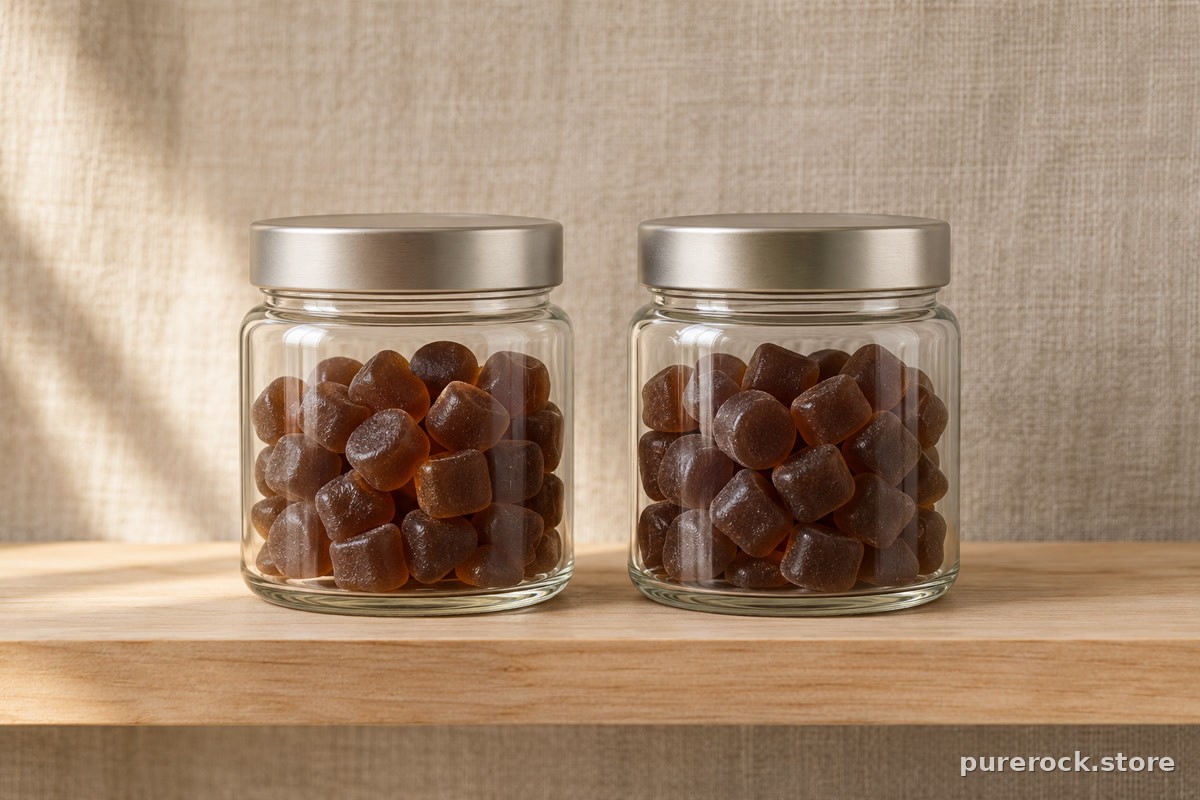
What you generally will not find is a difference in the shilajit extract itself — its sourcing, purification, or fulvic acid percentage doesn’t change based on which audience the product is marketed to. So the honest, hedged answer is: usually not a physiologically distinct formulation, mostly a dosing and ingredient-pairing decision wrapped in gendered marketing. That doesn’t make either version wrong to buy — it just means the “for men” or “for women” label shouldn’t be the deciding factor. The per-gummy dose and the ingredient list should be.
Dosage-Per-Gummy Math for Men
Commonly cited general adult shilajit dosage ranges (as covered in more detail in our full dosage guide) run roughly 250–500mg of resin-equivalent per day for most adults, though ranges vary by source and product concentration, and there’s no single studied “optimal” dose. For gummies specifically, translating that into a real serving requires knowing three numbers a label should give you:
- Milligrams of shilajit extract per gummy (not total blend weight — extract weight)
- The extract’s concentration or fulvic acid percentage, since a “300mg extract at 50% fulvic acid” delivers meaningfully more than “300mg extract” with no concentration listed
- The brand’s recommended serving size — how many gummies constitute “one dose”
A men’s gummy sold at 600mg extract per gummy with a one-gummy serving is delivering roughly double what a 300mg-per-gummy product needs two gummies to match — but the sticker price and “strength” often don’t scale in an obvious way, so doing this arithmetic yourself before comparing prices per bottle is the only way to know what you’re actually paying per milligram of active extract. Skipping this step is the single easiest way to overpay for a lower-dose product marketed with bigger, bolder “for men” branding.
The Convenience Case: Gym, Travel, and Daily-Habit Formation
Setting the marketing angle aside, gummies solve a real practical problem that matters disproportionately for men who take supplements around a gym or travel-heavy routine: resin requires a scale or a measuring spoon, a clean surface, and a few minutes of dissolving it in warm water or milk — not something most people are doing from a gym bag or a hotel room. Capsules solve the portability problem but still require swallowing a pill with water, which some men find easier to skip when rushed. A gummy needs nothing but your hand and a few seconds of chewing, which is a meaningfully lower barrier to actually taking it consistently.

That lower barrier is genuinely useful for adherence — supplement research consistently shows that ease of use predicts whether people actually stick with a routine, regardless of the substance involved. If the choice is between a resin dose you skip three days a week because it’s inconvenient and a gummy you take reliably every day, the gummy is very plausibly the better real-world choice for you, even if resin theoretically delivers a “purer” dose per gram. Consistency beats theoretical potency you don’t actually take.
The tradeoff is taste-driven habit formation cuts both ways: added sugar and flavoring make gummies easy to over-rely on as a treat rather than a supplement, and it’s worth treating your daily gummy serving with the same discipline you’d apply to a pill — a fixed number at a fixed time, not “however many taste good today.”
Timing is worth thinking through deliberately rather than defaulting to “whenever I remember.” Some men take their gummy dose first thing in the morning, alongside breakfast, on the logic that a habit anchored to an existing routine (coffee, breakfast, the walk to the gym) survives busy weeks better than one that floats. Others prefer splitting a two-gummy serving between morning and early afternoon, reasoning that steadier intake avoids a single large dose sitting on an empty stomach. Neither approach has strong dedicated research behind it specifically for the gummy format — most of the timing guidance floating around is inherited from general shilajit dosing discussions — but anchoring the dose to an existing daily habit is a well-supported adherence strategy in behavioral research generally, independent of the specific substance.
Storage is a smaller but genuinely practical consideration that gym-and-travel-focused marketing rarely mentions. Gummies are more temperature- and humidity-sensitive than resin or capsules; a jar left in a hot car or a gym bag through a summer afternoon can soften, clump, or degrade faster than the label’s shelf-life estimate assumes. If your routine involves carrying gummies in a bag for hours at a time, a small resealable container or keeping the dose count low enough to finish a jar within a few weeks is a simple way to avoid quietly taking a degraded product.
Taste, Texture, and Why It Matters More Than It Sounds
Raw shilajit resin has a strong, mineral-forward, faintly bitter taste that a meaningful number of people find unpleasant enough to affect whether they keep taking it. Gummies exist largely to solve that problem, masking the taste with fruit flavoring and a chewy, candy-like texture. For men specifically, marketing often leans into “no aftertaste” or “actually tastes good” messaging precisely because taste aversion is one of the most commonly cited reasons people abandon resin or unflavored capsules within the first few weeks. If taste is the reason you haven’t stuck with shilajit before, a well-made gummy genuinely addresses that — but it’s worth being aware that heavier flavoring sometimes correlates with a smaller proportion of the gummy being active extract versus sweetener and gelatin, which loops back to the dosage-math point above.
There’s also a texture and manufacturing-quality dimension that’s easy to overlook. Poorly made gummies can be gritty (undissolved extract particles), overly sticky (humidity exposure or under-set pectin), or have an inconsistent bite from batch to batch — none of which are dangerous, but all of which are reasonable signals about a manufacturer’s quality control more broadly. A brand that’s careful about texture consistency is more likely to also be careful about extract sourcing and dosing accuracy, though that correlation is circumstantial, not a guarantee. If a product’s texture varies noticeably jar to jar, it’s worth treating that as a mild flag alongside the label checklist below, not a standalone reason to avoid a brand.
Reading a Men’s Shilajit Gummy Label Critically: A Checklist
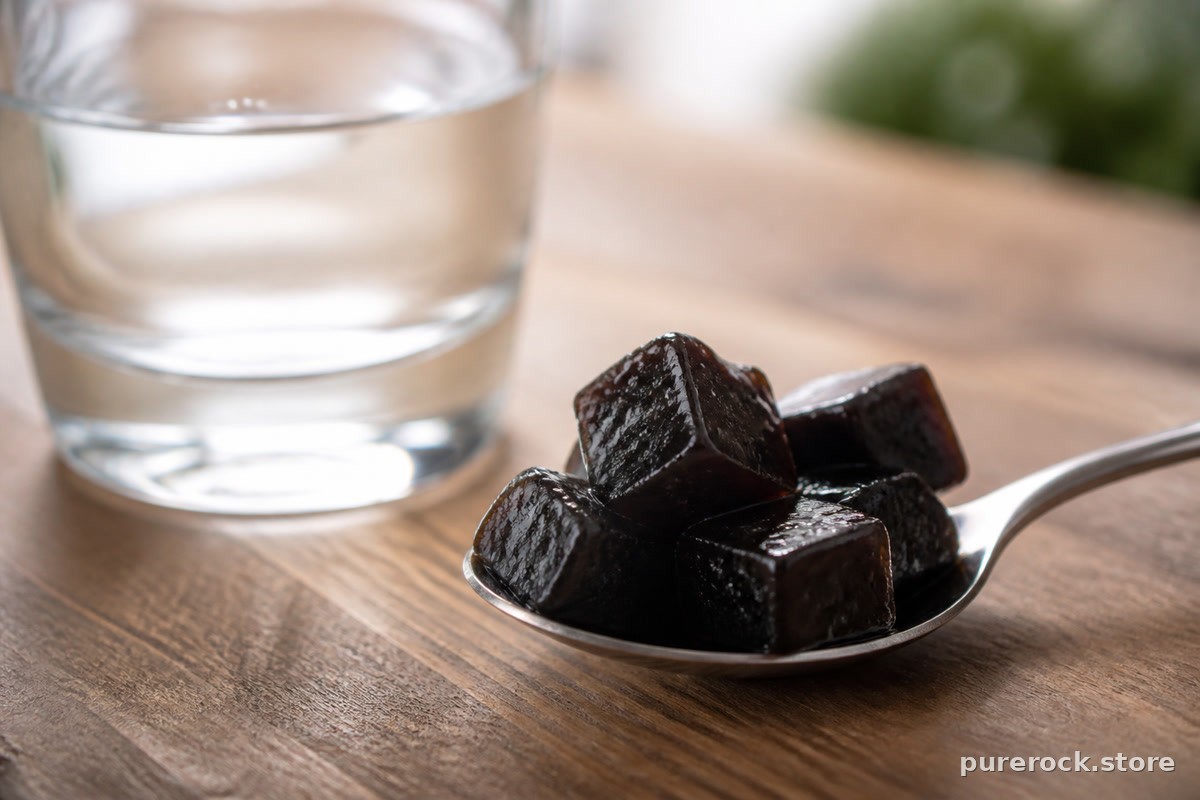
Before buying a shilajit gummy marketed specifically for men, it’s worth running the label through a short checklist rather than trusting the front-of-package copy:
- Does the label state milligrams of shilajit extract per gummy, or only a vague “proprietary men’s blend” total?
- Is a fulvic acid percentage or concentration listed, or just a raw milligram figure with no context for potency?
- Are added ingredients broken out individually with their own doses, or bundled into the blend total where you can’t tell how much of anything you’re actually getting?
- Is there a third-party Certificate of Analysis verifying the extract’s purity and heavy-metal testing, independent of the brand’s own claims?
- Does the “for men” framing correspond to an actual stated difference (higher dose, specific added ingredient) or is it purely branding with no ingredient-level explanation?
If a product can’t answer most of these clearly, the “for men” label is doing more marketing work than formulation work, and that’s fine to know going in — it just means your buying decision should rest on the extract dose and testing, not the packaging color.
FAQ
Are shilajit gummies for men actually stronger than regular shilajit gummies? Sometimes, but not by default. Some men’s-labeled products do carry a higher milligram-per-gummy dose than the same brand’s general or women’s version, but plenty of “for men” products are identical in dose to the unisex version and differ only in packaging and flavoring. Check the stated milligrams of extract per gummy rather than assuming the label implies strength.
Do shilajit gummies for men actually boost testosterone? Some small studies have looked at shilajit supplementation and testosterone markers in healthy men, with modest reported changes over several months, but this research is limited in scope and not specific to the gummy format or to any “men’s formula” blend. Treat testosterone-related marketing claims on gummy packaging as based on shilajit generally, not on evidence for that specific product.
Can women take a shilajit gummy marketed for men, or vice versa? Yes, in most cases. Since the underlying shilajit extract is typically identical between men’s and women’s versions, the main practical differences are dose per gummy and any added companion ingredients (some women’s versions include iron, for example). Check the ingredient list for anything specifically relevant to your own health needs rather than relying on the gendered label.
How many shilajit gummies should a man take per day? This depends entirely on the milligrams of extract per gummy and the concentration, not on a universal number of gummies. A useful approach is to calculate the total daily resin-equivalent milligrams the label implies at the stated serving size and compare that to general adult dosage ranges discussed in a dedicated dosage guide, rather than assuming “two gummies” is a safe default across different brands and concentrations.
Is it safe to take a shilajit gummy every day long-term? Most available safety data on shilajit is based on shorter supplementation periods (weeks to a few months) rather than years of continuous daily use, and long-term safety data specific to the gummy format is limited. If you plan to take a shilajit gummy daily on an ongoing basis, periodic breaks and a conversation with a doctor — particularly if you’re on medication, have a chronic condition, or are managing iron levels — is a reasonable precaution rather than an overreaction.
The Bottom Line
Shilajit gummies marketed for men aren’t a scam, but they’re also not usually a distinct physiological formulation — they’re most often a dosing and ingredient-pairing decision dressed in gendered branding. The format itself has a real, defensible case: better adherence, easier travel and gym use, and a taste profile that solves a genuine reason people quit resin or capsules. Whether a specific product is worth buying comes down to the same fundamentals as any shilajit gummy — extract dose per gummy, verified fulvic acid content, transparent labeling, and third-party testing — not whether the jar says “for men” on the front. As always, talk to a doctor before adding any new supplement to your routine, particularly if you’re on medication or managing an existing health condition.
Related Guides
- Shilajit benefits for men: what studies in men measured.
- Shilajit and testosterone: the actual trials, without the hype.
- Shilajit gummies: do they work?: the umbrella guide to the format.