 Purerock
format
Best Shilajit Gummies: How to Judge Quality Before Buying
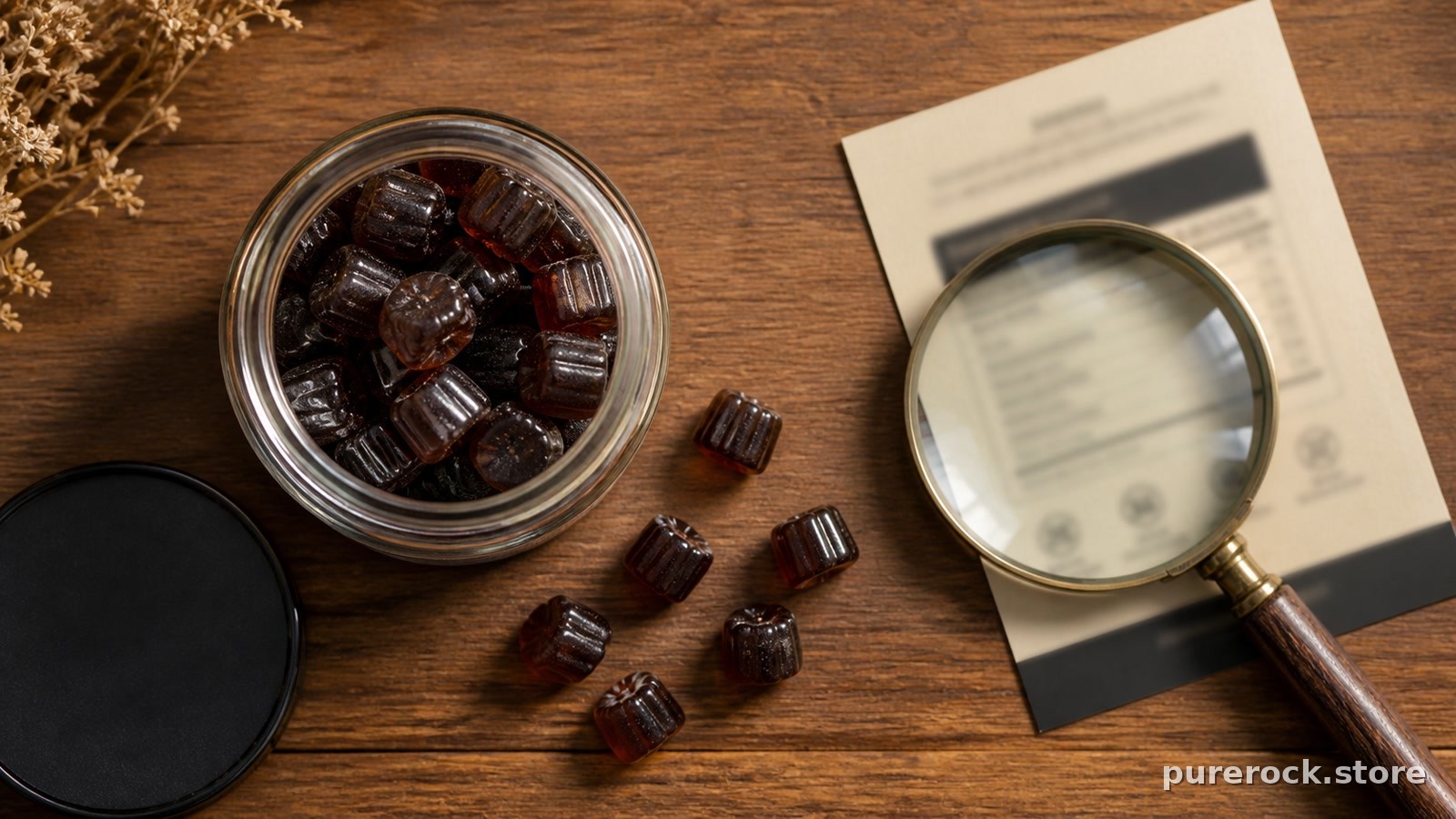
Shilajit gummies are the fastest-growing format in the category, and for an obvious reason: nobody wants to chip a tarry resin off a jar with a butter knife every morning. But “gummy” is a delivery mechanism, not a quality guarantee, and the format’s convenience makes it unusually easy to hide a weak or diluted product behind good packaging. This guide isn’t a ranked list of brands — it’s a framework for reading a gummies label the way a skeptical buyer should, so you can evaluate any product you’re considering on your own terms.
Key takeaways
- A gummy hides everything you’d normally use to sanity-check resin quality — color, smell, dissolution — so the label and lab documentation carry the entire burden of proof.
- A third-party Certificate of Analysis covering heavy metals, fulvic acid content, and microbial testing is the single most useful signal a brand can provide.
- The milligram amount of shilajit extract per gummy, plus its fulvic acid percentage, matters far more than the total “proprietary blend” weight printed on the front of the label.
- “Proprietary blend” language on a multi-ingredient gummy is the most common way a weak formulation gets obscured — always look for the individual ingredient breakdown.
- Added sugar, gelatin vs. pectin, and artificial colors are worth checking even when the shilajit dosing itself looks solid, since a gummy is nutritionally still a gummy.
- Gummies trade some potency, processing purity, and dose flexibility for convenience — that trade-off is legitimate, but only if you go in aware of it.
Why gummies are harder to evaluate than resin
Raw shilajit resin is, in a strange way, more honest than a gummy. You can see it, smell it, dissolve it in water and watch how it behaves. A gummy hides the shilajit inside a matrix of gelatin or pectin, sweeteners, citric acid, and flavoring — which means almost everything you’d use to sanity-check quality (color, smell, dissolution, mineral residue) is no longer available to you. You’re relying entirely on what the label and any supporting documentation tell you. That shift in the burden of proof is the single most important thing to understand before shopping for gummies.
Start with the certificate of analysis, not the marketing copy
The most reliable signal of a credible shilajit gummies brand is a third-party Certificate of Analysis (COA) — a lab report, from a lab independent of the manufacturer, that verifies what’s actually in the product. Look for:
- Heavy metal testing (lead, arsenic, mercury, cadmium) — shilajit is a mineral-derived substance sourced from mountainous rock exudate, and unprocessed or poorly purified source material can carry contaminants. A COA showing results below recognized safety thresholds is the baseline, not a bonus feature.
- Fulvic acid content, ideally expressed as a percentage or a per-gummy milligram figure, tested by the lab rather than just stated by the brand.
- Microbial testing for gummies specifically, since the moisture content and sugar in a gummy matrix can support microbial growth if manufacturing isn’t clean.
- A recent test date and a lab name you can verify, not a stock graphic of a beaker or a report with no lab letterhead.
If a brand doesn’t publish a COA at all, or only shows a screenshot with no lab name or date, treat that as a real gap — not necessarily proof the product is bad, but a real reason to look elsewhere or ask before buying.
It’s also worth knowing what a COA can’t tell you. A lab report verifies what was in the specific batch tested — it doesn’t guarantee every batch since is identical, and it doesn’t verify manufacturing hygiene on an ongoing basis the way a facility audit or GMP certification does. A COA is necessary, but a brand that pairs it with a stated manufacturing standard (cGMP-compliant facility, for instance) and a visible batch or lot number on the packaging is giving you a more complete picture than a COA alone. If you can’t match the lot number on your jar to the lot number on the report you’re reading, you don’t actually know that the report applies to the product in your hand.
Fulvic acid content per gummy — the number that actually matters
Fulvic acid is generally treated as the marker compound for shilajit’s identity and processing quality (it isn’t the only active constituent — shilajit also contains dibenzo-alpha-pyrones and trace minerals — but it’s the most commonly reported one). The problem with gummies specifically is that the active shilajit extract is often a small percentage of a much larger gummy base of sugar, gelatin or pectin, and flavoring.
When comparing gummies, look for the milligram amount of shilajit extract per gummy, and ideally the fulvic acid percentage of that extract. A gummy that lists “500mg proprietary shilajit blend” without specifying the fulvic acid percentage is telling you less than it appears to. Two products can both say “500mg shilajit” and differ by an order of magnitude in actual fulvic acid delivered, because “shilajit” in that context can mean anything from a standardized high-fulvic extract to a thin, low-potency filler.
Standardization language is worth reading closely, too. Terms like “standardized to 20% fulvic acid” or “50% fulvic acid extract” describe the concentration of the extract itself, not necessarily the percentage of fulvic acid in the finished gummy — the extract is then diluted further into the gummy base. A gummy using 100mg of a 50%-fulvic extract is delivering roughly 50mg of fulvic acid before any losses from processing; a gummy using 500mg of a 4%-fulvic extract is delivering roughly 20mg, despite the larger headline number. When two labels report different units — one as extract weight, one as a percentage, one as an absolute milligram figure for fulvic acid — convert them to the same unit before comparing, or the larger number will simply look more impressive without actually being so.
The “proprietary blend” red flag
“Proprietary blend” is a legal label category, not automatically a scam — but on a gummies label it’s the single most common way to obscure a weak formulation. If a label lists a blend total (say, 600mg) covering shilajit extract plus other ingredients like ashwagandha, cordyceps, or B vitamins, without breaking out how much of that 600mg is shilajit, you have no way of knowing whether you’re getting a meaningful dose or a token amount designed to let the ingredient appear high on the list.
Other marketing patterns worth treating with skepticism:
- Claims that use disease or cure language (“treats,” “cures,” “reverses”) rather than the more measured, evidence-hedged language used in the research literature.
- “Ancient Himalayan secret” framing with no sourcing specifics (region, altitude, purification method).
- Testimonials or influencer claims presented as substitutes for lab data.
- A “clinically proven” claim that doesn’t cite a specific study, dose, or population.
None of these automatically disqualify a product, but each one shifts the burden back onto you to verify the underlying claim independently.
A related pattern worth naming explicitly: stacking shilajit with several other trending ingredients (ashwagandha, maca, tongkat ali, cordyceps) inside one proprietary blend can be a legitimate formulation choice, but it also multiplies the ways a label can obscure a weak shilajit dose. If a brand wants credit for the research behind shilajit specifically, it should be willing to disclose the shilajit dose specifically — a blend total is not a substitute for an ingredient-level breakdown, no matter how many well-researched ingredients are named on the front of the label.
Added sugar, fillers, and sweeteners
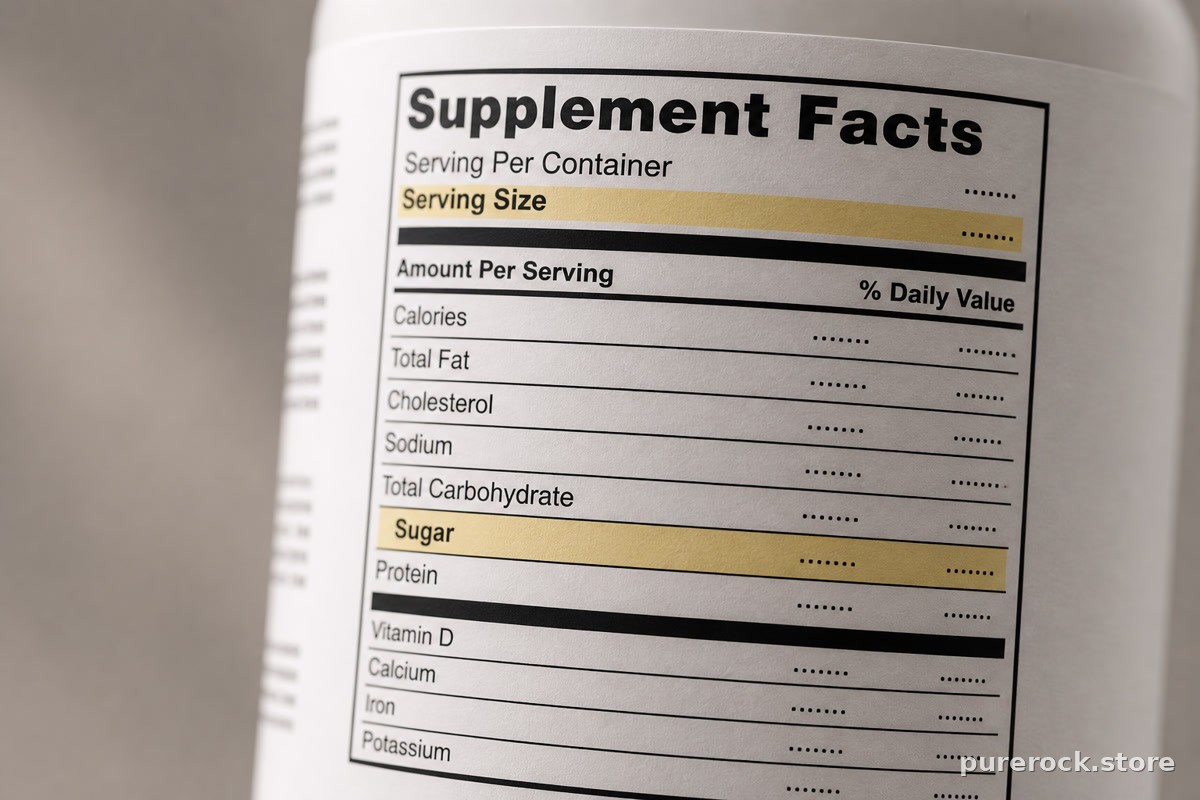
A shilajit gummy is, nutritionally, still a gummy. Check the supplement facts panel for:
- Added sugar per serving — some brands use tapioca syrup or cane sugar as the primary gummy base; others formulate with sugar alcohols or lower-glycemic sweeteners. Neither is inherently wrong, but if you’re managing sugar intake, the difference across brands can be meaningful across a daily-use product.
- Gelatin vs. pectin — gelatin-based gummies are not vegan or vegetarian; pectin-based (or agar-based) gummies typically are. This is stated inconsistently across labels, so check explicitly rather than assuming.
- Artificial colors and flavors — not a safety issue at typical doses for most adults, but worth knowing if you prefer to avoid them.
- Preservatives appropriate for a moisture-containing gummy matrix (citric acid, potassium sorbate are common and generally unremarkable).
- Serving size vs. “per gummy” figures — some labels report actives per single gummy, others per a multi-gummy serving (two or three gummies). Read the serving size line first, or you’ll misjudge both the dose and the sugar content by whatever multiple the label uses.
If you’re taking a gummy daily as part of a broader supplement or diet routine, the added sugar figure is worth totaling across your full stack rather than evaluating in isolation — a few grams from one product looks trivial until it’s added to several other gummy-format supplements taken the same day.
Doing the dosage math yourself
Traditional and modern clinical use of purified shilajit resin commonly cites daily doses in the range of roughly 300–500mg of resin (see our dosage guide for the full breakdown and the caveats around it). Gummies rarely map cleanly onto that figure because the “500mg” on a gummy label is usually the weight of the gummy or the blend, not necessarily a resin-equivalent dose.
A useful exercise: take the per-gummy shilajit content the label claims, multiply by the fulvic acid percentage if given, and compare the resulting fulvic acid milligrams against what a serving of a fulvic-acid-standardized resin or capsule would deliver. If the brand won’t give you enough information to run that calculation, that itself is useful information about how transparent the product is.
Worked example: suppose a gummy label states “400mg shilajit extract per gummy, standardized to 15% fulvic acid,” with a recommended serving of two gummies. That’s 800mg of extract per serving, delivering roughly 120mg of fulvic acid — a figure you can now compare directly against a resin product that discloses, say, 65% fulvic acid in a 300mg daily dose (roughly 195mg of fulvic acid). Running this once for any gummy you’re considering takes under a minute and turns a marketing comparison into an actual numbers comparison. If a label doesn’t give you the two inputs needed — extract weight and fulvic acid percentage — you can’t run the calculation at all, which is itself the point: incomplete labels aren’t neutral, they default in the brand’s favor.
Gummies vs. raw resin: what you lose in convenience
It’s worth being honest about the trade-off, because gummies marketing rarely states it directly. Compared to raw resin, a gummy format typically involves:
- A diluted delivery matrix. Resin is (ideally) purified shilajit and little else; a gummy is mostly sugar, gelling agent, and flavoring, with shilajit extract as a minority ingredient by weight.
- An extra processing step. Turning purified resin into a stable, shelf-safe gummy requires additional heat and processing, which can affect heat-sensitive compounds depending on the manufacturing method — something reputable brands should be able to speak to, even if the research on exactly how much is degraded during commercial gummy processing is still limited.
- Less room for full dose flexibility. Resin can be measured in small, precise amounts (a pea-sized piece is a common informal reference); gummies come in fixed per-unit doses, so titrating your intake up or down means splitting gummies or changing how many you take, which is a coarser adjustment.
- A meaningfully lower bar for verifying quality yourself, as covered above — you can’t smell, dissolve, or visually inspect a gummy’s contents the way you can raw resin.
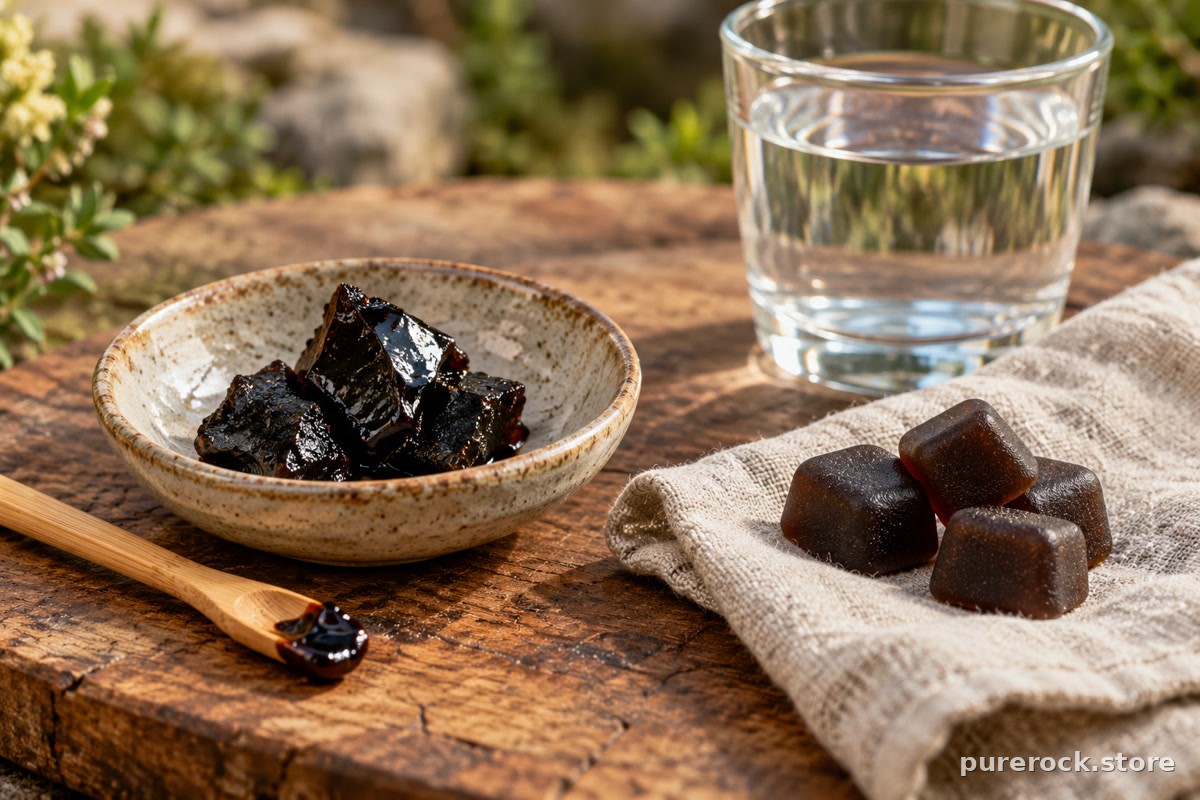
What you gain is real, too: no bitter taste, no measuring, easy travel dosing, and a format that’s simply more likely to actually get used consistently — which matters, because a supplement taken inconsistently delivers none of the benefit of one taken as directed regardless of its lab report. If you’re weighing the format decision more broadly rather than just evaluating gummies specifically, our capsules vs. resin vs. gummies comparison covers the full trade-off across all three formats.
So, do shilajit gummies work?
This is the honest, hedged answer: the evidence base for shilajit itself — mostly studied as purified resin or standardized extract in small clinical trials — suggests some effects on markers like testosterone levels in specific populations and, in one 8-week trial in recreationally active men, less loss of muscle strength after a fatiguing exercise protocol at the higher dose. Research on shilajit and fatigue more broadly has so far been in animals — for example, a 2012 study in rats — not people. The research is still limited in scale and much of it comes from a small number of research groups. That evidence was generated using specific, often high-purity, high-fulvic-acid preparations — not gummies as a category.
Whether a given gummy product delivers a comparable effect depends almost entirely on whether it delivers a comparable dose of the same active compounds, which circles back to everything above: fulvic acid content, dose transparency, and independent lab verification. A well-formulated gummy with a real COA and a disclosed fulvic acid content per serving is plausibly delivering the same active compounds studied in the literature, just in a different vehicle. A gummy with an undisclosed “proprietary blend” and no lab testing is, at best, an unknown.
It’s also reasonable to expect a lag between when a supplement becomes popular and when the research specific to that exact delivery format catches up — gummies as a shilajit format are newer than the resin-based research base, and it’s likely to be some time before a meaningful number of trials use gummies specifically rather than treating them as interchangeable with resin. That’s not a reason to avoid gummies; it’s a reason to lean more heavily on label transparency (COA, fulvic acid disclosure, ingredient breakdown) as your evidence, since the finished-product research isn’t there yet to lean on instead.
FAQ
Are shilajit gummies as effective as resin? It depends entirely on the dose of active compounds delivered, not the format itself. A gummy with a disclosed, adequate fulvic acid content and verified lab testing can plausibly deliver comparable effects to resin; a gummy with an undisclosed proprietary blend may deliver far less active material than its label implies, regardless of format. There’s no format-level guarantee either way — you have to check the specific product.
How many shilajit gummies should I take per day? Follow the manufacturer’s stated serving size as a starting point, and use the extract weight and fulvic acid percentage (if disclosed) to estimate how it compares to the roughly 300–500mg resin-equivalent doses commonly cited in the literature — see our dosage guide for the full breakdown. Because gummies come in fixed per-unit doses, adjusting your intake means changing how many gummies you take rather than fine-tuning a measured amount.
Are shilajit gummies vegan? Not automatically. Gelatin-based gummies are not vegan or vegetarian, while pectin- or agar-based gummies typically are. This is inconsistently labeled across brands, so check the ingredient list explicitly rather than assuming based on the front-of-package marketing.
Why do some shilajit gummies not disclose fulvic acid percentage? Sometimes it’s because the brand hasn’t tested for it and is relying on a supplier’s general claims about the raw material; sometimes it’s because disclosing it would reveal a lower potency than the marketing implies. Either way, the absence of the figure is information — it tells you the label isn’t giving you enough data to evaluate the product on the metric that matters most.
Can I trust a shilajit gummies brand that doesn’t publish a COA but has good reviews? Reviews reflect user experience — taste, digestibility, perceived energy — but they can’t verify lab-level facts like heavy metal content or actual fulvic acid delivered, since no consumer can test that at home. Good reviews and a missing COA aren’t contradictory; they’re answering different questions. Treat the absence of a COA as an open question regardless of how positive the reviews are.
A short checklist before you buy
- Does the brand publish a recent, verifiable third-party COA covering heavy metals and fulvic acid content?
- Is the shilajit extract amount per gummy disclosed separately from any blend total?
- Is the fulvic acid percentage stated, not just the raw extract weight?
- Is the sweetener, gelling agent (gelatin vs. pectin), and added sugar per serving disclosed?
- Does the marketing avoid disease-cure language and cite sources for any specific claims?
- Can you calculate an approximate fulvic-acid-per-serving figure from the label, or does the label prevent that calculation?
If you can answer “yes” to the first five and successfully do the sixth, you’re looking at a gummy brand that’s giving you enough information to make an informed decision — which, in a format that hides so much by default, is itself worth something.
Related Guides
- Shilajit gummies: do they work?: the umbrella guide to the format.
- How to read shilajit reviews: what reviews can and can’t tell you.
- Shilajit price and cost per serving: how to compare costs fairly.