 Purerock
format
Sea Moss and Shilajit: A Skeptical Look at the Combo Trend
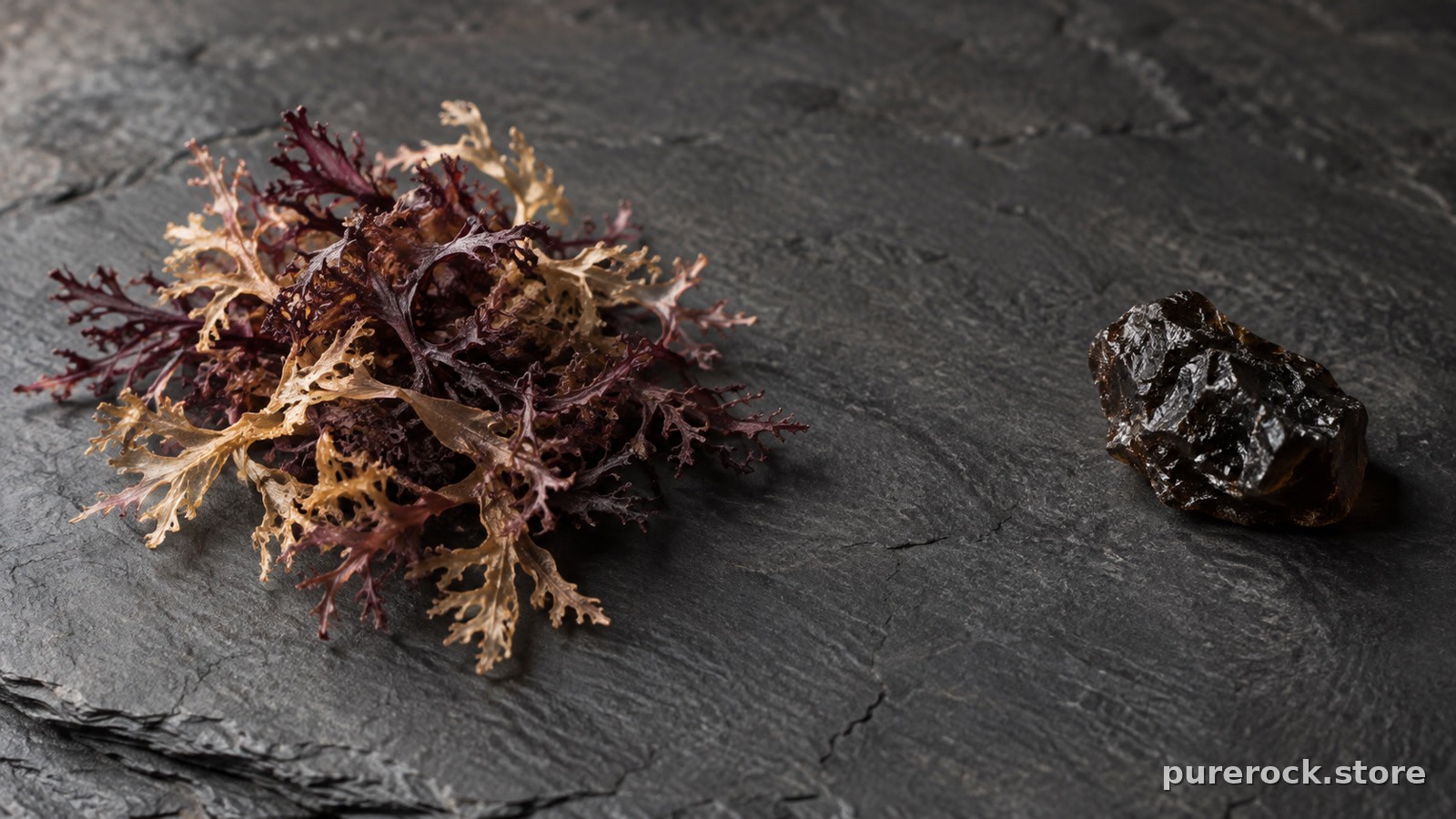
Sea moss and shilajit now turn up together in gummies, capsules, and gel jars, usually sold as a “complete mineral” daily stack. One comes from the ocean, one from the mountains, and both are marketed as rich in minerals. Here’s what the research says about each, what it says about the two together (nothing yet), and why iodine is the detail most combo labels leave out.
Key Takeaways
- “Sea moss” is a trade name, not a single species. It traditionally means Chondrus crispus (Irish moss), but the name also gets attached to other red seaweeds, and many products don’t say which one you’re getting.
- We couldn’t find a published human trial of sea moss for any health outcome. The US government’s lactation database states that “no medicinal value has been proven.”
- Shilajit has a few small human trials on one standardized extract: thin, but more than sea moss has.
- No study has tested sea moss and shilajit together. A PubMed search for shilajit combined with seaweed, sea moss, or iodine returned zero results as of September 2026.
- The biggest practical risk in the combo is iodine. Seaweed iodine varies enormously and labels rarely state it, which matters most for people with thyroid conditions, on thyroid-related medication, or pregnant or breastfeeding.
What “Sea Moss” Actually Is
The name sounds specific, but it isn’t. The US Department of Defense’s Operation Supplement Safety program defines sea moss as Chondrus crispus, also called Irish moss: a red seaweed from the North Atlantic. The National Library of Medicine’s LactMed entry uses the same definition and lists alternative names including carrageen and carragheen. Irish moss is where carrageenan, the common food thickener, gets its name.
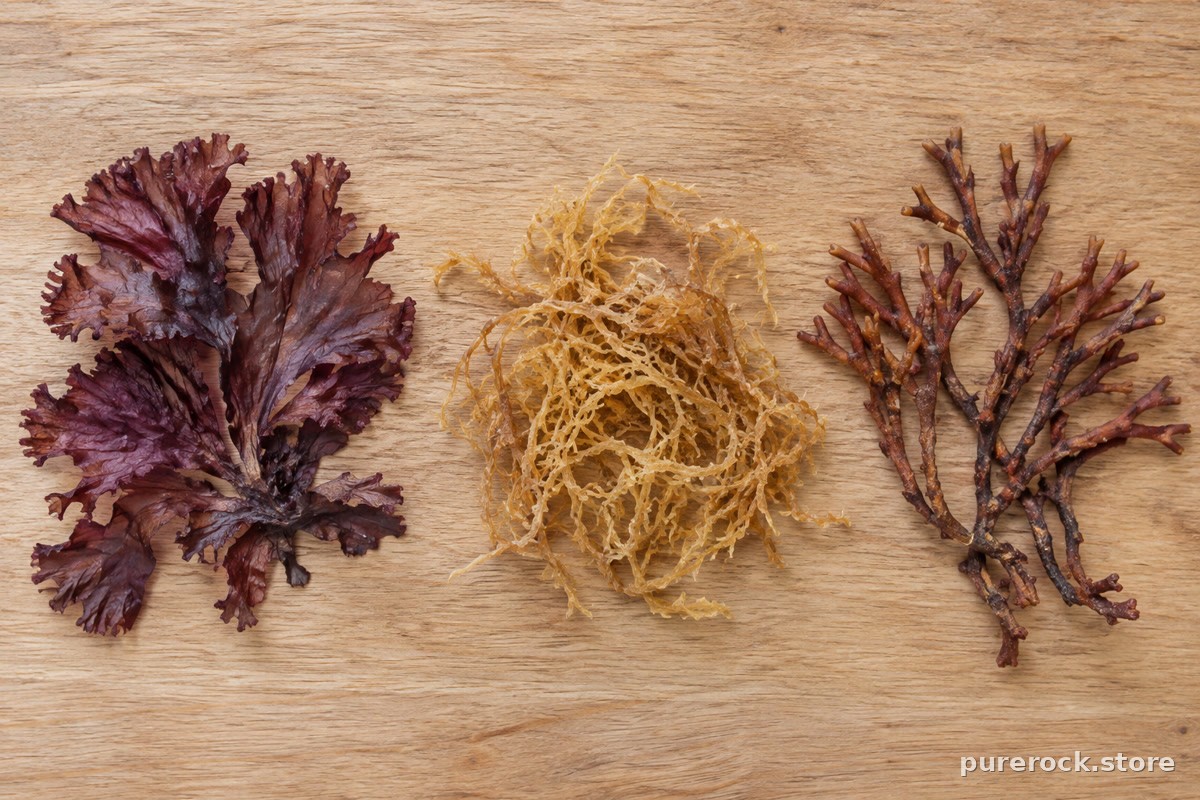
In practice, “sea moss” is used more loosely than that. The common name shows up for unrelated red seaweeds even in scientific papers: a 2023 study in Scientific Reports (Montúfar-Romero et al.) calls the tropical farmed seaweed Kappaphycus alvarezii “elkhorn sea moss”. Cold-water Irish moss and warm-water farmed seaweeds grow in different waters and have different chemistry. Operation Supplement Safety advises checking that the label specifies the type of seaweed, and it accepts “sea moss,” “Irish moss,” or “Chondrus crispus” as that specification. Given how loosely the common name gets used, we’d go further and look for the species name.
For a combo product, iodine content, heavy-metal load, and even which gelling compounds are present all depend on the species and the water it grew in. A label that says only “sea moss” leaves all of that open.
The Human Evidence for Sea Moss Itself
Sea moss is a traditional food and contains real nutrients. A 2024 review in Marine Drugs (Park et al.) on the genus Chondrus summarizes its chemical constituents and lab-measured biological activities: carrageenans, minerals, antioxidant and antiviral activity in the lab. It’s a useful catalogue, but nearly everything it describes comes from cell cultures, test tubes, or animals.
When we searched PubMed for Chondrus crispus or Irish moss alongside terms like “randomized,” “trial,” “participants,” or “volunteers,” the matches were studies in dairy cows, laying hens, and mussels. None were in people taking sea moss for a health outcome. A 2025 study in Food Chemistry looked at how red seaweeds, including Chondrus crispus, affect human gut bacteria, but in an in-vitro model, not in living people.
The official summaries reach the same conclusion. Operation Supplement Safety notes that sea moss is marketed for digestion, “detox,” weight loss, thyroid health, and immunity, and that “there isn’t enough reliable evidence to confirm whether dietary supplements with sea moss are safe or effective.” LactMed puts it more bluntly: sea moss is “used as food and medicine, although no medicinal value has been proven.”
Shilajit’s Side of the Ledger
Shilajit is the better-studied half of the pair, though that’s a low bar. A handful of small randomized trials on a purified, standardized extract have reported measurable changes: testosterone in middle-aged men, strength retention after fatiguing exercise, and slower bone-density loss over 48 weeks in postmenopausal women with osteopenia. Those trials used roughly 250–500 mg a day, most had manufacturer funding, and none has been independently replicated. Our evidence-graded verdict on shilajit walks through each trial and its limits.
For a combo product, the key point is that those trials tested a characterized extract with a defined composition. A gummy with an unstated amount of “shilajit” inside a blend isn’t what the research studied.
Shilajit and Sea Moss Benefits: What Each Ingredient Brings vs the Evidence
Combo marketing usually gives both ingredients the same list of benefits: energy, minerals, immunity, thyroid, “vitality.” This table separates what each ingredient actually contains from what has been tested in people.
| Sea moss | Shilajit | The combination | |
|---|---|---|---|
| What it is | Red seaweed; traditionally Chondrus crispus, but the trade name covers other species | Mineral-organic resin from mountain rock, rich in fulvic acid | A marketing pairing |
| Headline marketing claims | Digestion, “detox,” weight loss, thyroid, immunity (per OPSS) | Energy, testosterone, strength, “vitality” | “Complete minerals,” both sets of claims combined |
| Human randomized trials | None found | A few small trials on one standardized extract, mostly manufacturer-funded | None |
| Best evidence available | Lab, animal, and in-vitro studies; composition analyses | Small RCTs of 60–100 people, 8–48 weeks | None |
| Key nutrient concern | Iodine, highly variable and often unlabeled | Fulvic acid content varies widely between products | Iodine intake is unknown unless the label states it |
| Contaminant concern | Arsenic, mercury, lead, and cadmium reported in seaweed | Heavy metals and thallium reported in some products | Two separate sources of exposure |
| Official caution | LactMed: avoid while breastfeeding unless iodine and metals are shown to be low | Not studied in pregnancy or breastfeeding | Neither ingredient cleared for these groups |
The pattern is lopsided. One ingredient has thin human evidence, the other has essentially none, and the combination has never been studied.
The Iodine Problem Most Combo Labels Leave Out
Your thyroid needs iodine to make hormones. The NIH Office of Dietary Supplements puts the adult requirement at 150 mcg a day (220 mcg in pregnancy, 290 mcg while breastfeeding) and sets the Tolerable Upper Intake Level, the long-term daily ceiling, at 1,100 mcg for all adults, pregnant and breastfeeding included.
Seaweed can overshoot that ceiling easily, and unpredictably. A 2004 study in Thyroid (Teas et al.) measured iodine in 12 species of commercially available seaweed. Levels ranged from about 16 mcg per gram in nori to more than 8,000 mcg per gram in one processed kelp product. Iodine also shifted with growing conditions and could be lost in cooking or humid storage, so a finished product’s content is hard to predict.
Sea moss specifically isn’t a low-iodine exception. In a small 2019 study in the Journal of Medicinal Food (Andersen et al.), eight volunteers each ate 45 g of household Chondrus crispus from East Greenland. That portion supplied about 2.1 mg of iodine, nearly twice the adult upper limit, and a large share was absorbed and later excreted in urine. That’s far more seaweed than a capsule holds, but it shows how much iodine Chondrus can carry.
Why does excess matter? The NIH fact sheet explains that too much iodine can cause some of the same problems as too little: goiter, raised TSH, and hypothyroidism. It can also trigger hyperthyroidism and thyroiditis. It adds that people with autoimmune thyroid disease can react to intakes considered safe for everyone else. It happens with seaweed supplements, too. A 2019 report in Medicine (Gherbon et al.) describes a 70-year-old woman with no previous thyroid disease who developed transient hyperthyroidism after three months of kelp-containing tablets. That involved kelp, not sea moss, but it’s the same mechanism.
The effect can also pass to infants. LactMed notes that maternal consumption of excess iodine from seaweed has caused thyroid suppression in breastfed infants. One report in the Journal of Paediatrics and Child Health (Emder and Jack, 2011) describes two cases of neonatal hypothyroidism linked to a cultural practice of eating seaweed soup to support milk supply.
A combo gummy with a small amount of sea moss probably won’t come near a bowl of seaweed soup. The problem is that you usually can’t know, because most combo labels list the seaweed by weight, if at all, not the iodine it delivers. Whatever it supplies stacks on top of iodized salt, dairy, eggs, seafood, and any multivitamin you take.
Heavy Metals: Two Ingredients, Two Exposure Routes
Seaweed absorbs what’s in the water around it. LactMed notes that sea moss contains “some toxic heavy metals such as arsenic, lead, cadmium and mercury that come from the water where it was grown.”
The most direct look at the US retail market so far is a 2026 study in the Journal of Food Protection (Rejuso et al.). The researchers bought 66 sea moss products from major online retailers: 53 dried products and 13 gels. Arsenic, cobalt, and mercury were detected in the dried sea moss. In the gels, arsenic and cobalt were below detection limits and mercury appeared only at trace levels. The same study found wide variation in microbial quality, and bacteria identified among the isolates included Salmonella and Cronobacter. The authors’ conclusion wasn’t that sea moss is dangerous, but that quality is inconsistent and handling guidance hasn’t caught up.
Shilajit brings its own contamination concerns. Independent testing has found heavy metals below levels of concern in some products, but at least one study has measured thallium in commercial supplements, as our evidence review covers. Combining the two doesn’t multiply the risk in any tidy way. It does mean two raw materials from very different sources, each needing its own testing.
Stacking Two Under-Tested Ingredients
Combo marketing assumes two “good” things are better together. The research doesn’t support that, for three reasons.
Nobody has measured the pair. No trial has given people sea moss and shilajit together and compared them with either ingredient alone or with a placebo. Any claimed “synergy” between them is a marketing idea, not a finding.
The doses rarely match the research. The shilajit trials used a defined standardized extract at 250–500 mg a day. Sea moss has no human dose-response data at all. A gummy splitting a small total weight between the two, plus other botanicals, likely gets neither to a studied amount. It also gives you no way of knowing how much of each is there.
The side-effect picture is unknown. Shilajit’s safety data comes from screened volunteers taking a tested extract for up to 48 weeks. Sea moss has no comparable safety trial. Nobody has checked whether the combination changes absorption, tolerability, or thyroid measures, so the honest answer on interactions is “unknown,” not “none.” And if you feel unwell on a six-ingredient gummy, you can’t tell which ingredient is responsible.
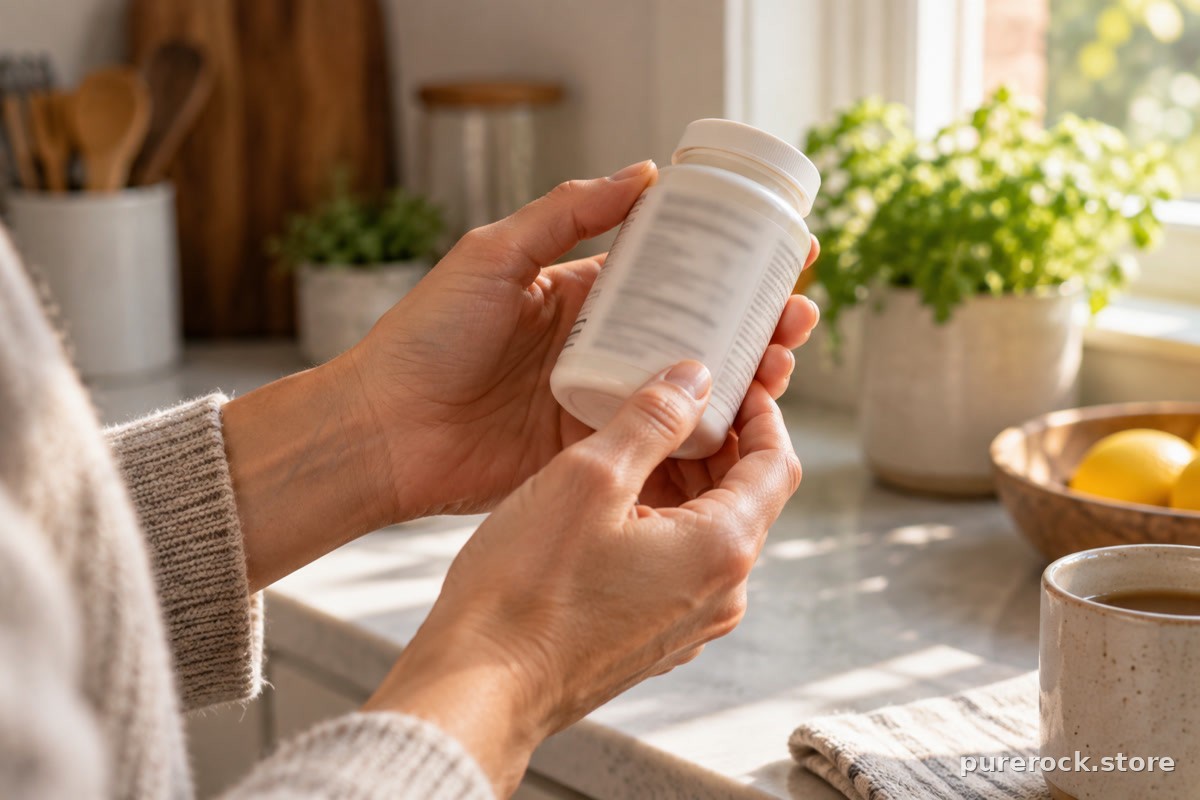
How to Read a Shilajit Sea Moss Label
Many combo products put their ingredients inside a “proprietary blend.” Under US labeling rules (21 CFR 101.36), a blend must show its total weight and list its ingredients in descending order by weight. It doesn’t have to show how much of each ingredient is present. A “Mineral Blend 600 mg” listing sea moss first and shilajit second tells you there’s more sea moss than shilajit, and nothing else. Shilajit could be most of the remainder or a token amount.
When you’re reading a combo label, check for these:
- Individual amounts. Does each ingredient have its own milligram figure, or is everything folded into one blend total?
- A named seaweed species. In our view, “Chondrus crispus” is informative. “Sea moss” or “ocean minerals” isn’t.
- Iodine per serving. Is it stated in mcg on the Supplement Facts panel? If not, you can’t tell how much you’re getting.
- What kind of shilajit. Is there a stated fulvic acid percentage or a standardized extract, or just the word “shilajit”?
- Testing that covers both ingredients. A certificate of analysis should include a heavy-metal panel (arsenic, lead, cadmium, mercury) for the finished product, not just one raw material.
- Everything else in the gummy. Sugar, gelling agents, and extra botanicals (such as ashwagandha or other adaptogens) each add another unknown.
Our format-agnostic buying checklist covers certificates of analysis in more depth. If you prefer capsules, the capsule guide explains how a single-ingredient label should read by comparison.
Can You Take Sea Moss and Shilajit Together? Who Should Skip It
There’s no evidence either way on the combination’s safety, so the real question is who carries the most risk from the unknowns. Based on the sources above, these groups have the strongest reason to skip it or talk to a doctor first:
- People with any thyroid condition, including autoimmune thyroid disease such as Hashimoto’s or Graves’ disease. The NIH fact sheet notes that people with autoimmune thyroid disease may react to iodine intakes considered safe for others.
- People taking thyroid-related medication. The NIH fact sheet notes that high iodine intake alongside antithyroid drugs can have an additive effect. If a prescriber is managing your thyroid, an unmeasured iodine source is worth raising with them before you start. Never adjust medication on your own.
- People who are pregnant or breastfeeding. LactMed advises avoiding sea moss while breastfeeding unless its iodine and heavy-metal levels are shown to be low enough, and shilajit hasn’t been studied in either group.
- People already taking iodine, through a multivitamin, prenatal vitamin, kelp supplement, or a diet high in seaweed.
- Anyone on regular medication or managing a chronic condition, because neither ingredient, let alone the pair, has been studied in those groups.
For everyone else, the question is whether the product tells you enough to judge it.
FAQ
Is there any research on sea moss and shilajit together? No. A PubMed search combining shilajit with seaweed, sea moss, or iodine returned no studies as of September 2026. Every claim about the combination is extrapolated from each ingredient separately, and sea moss has no human trials of its own.
What are the actual shilajit and sea moss benefits? For shilajit, a few small manufacturer-linked trials on a standardized extract reported effects on testosterone, strength retention, and bone density in specific groups. For sea moss, the evidence is lab and animal work plus nutrient analyses. Neither has human evidence for the energy, immunity, or “detox” claims usually printed on combo packaging.
Does sea moss help the thyroid because it has iodine? Iodine is essential for thyroid function, and it’s true that sea moss contains it. The problem is the amount: it varies widely, it’s rarely on the label, and too much can cause thyroid problems. The NIH fact sheet notes that national survey data show the general US population is already iodine sufficient, largely from foods like iodized salt, dairy, eggs, and seafood. If you have a thyroid condition, this is a question for your doctor, not for a gummy.
Is sea moss gel safer than dried sea moss or capsules? Not clearly. In the 2026 Journal of Food Protection study, gels had lower detected arsenic and cobalt than dried products, but gels varied widely in pH and dissolved-solids content, and microbial quality varied across all products. The authors called for better handling and storage guidance, not a switch to one format.
Related Guides
- What is in shilajit: minerals, fulvic acid and lab variability.
- Shilajit side effects and safety: documented versus theoretical risks.
- Shilajit benefits, graded by evidence: every common claim and how much research backs it.
Bottom Line
The sea moss and shilajit trend pairs one ingredient with thin human evidence and one with essentially none, and no trial has tested them together. The best-documented issue in the combination isn’t a benefit at all. It’s iodine: seaweed can deliver anything from a little to a lot, and most combo labels don’t tell you which.
If you’re curious about shilajit, a single-ingredient standardized extract with clear testing is the easiest to evaluate. If you’re considering a combo, choose one that names its seaweed, lists individual amounts, states iodine per serving, and tests both ingredients. If you have a thyroid condition, take thyroid medication, or are pregnant or breastfeeding, talk to your doctor first.