 Purerock
format
Shilajit Capsules Guide: Labels, Dosing, and Storage
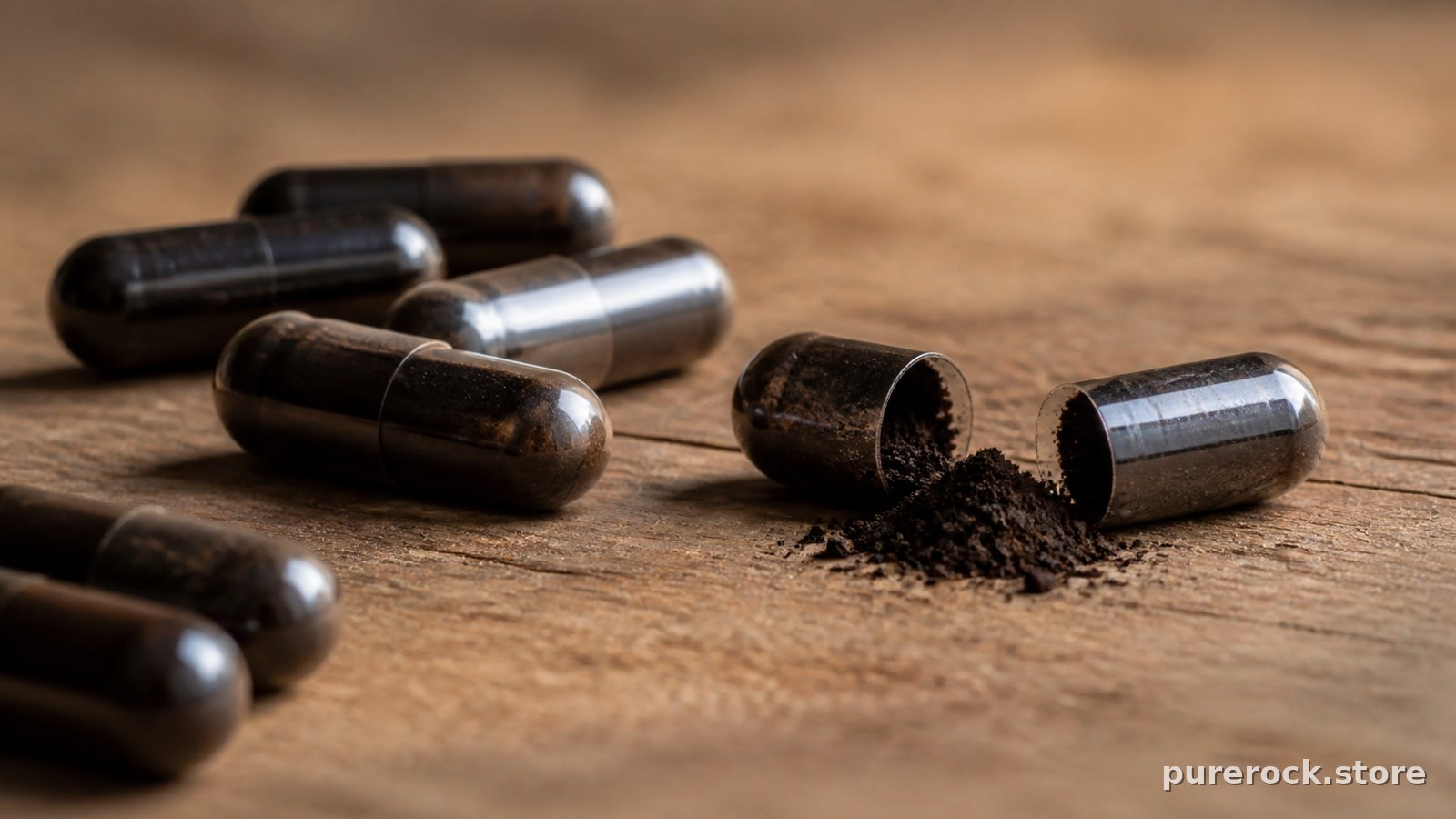
Capsules are the most standardized way to take shilajit, but “standardized” doesn’t mean every label means the same thing. Two bottles can both say “shilajit extract capsules” and deliver meaningfully different amounts of the compounds that actually matter, depending on how the extract was concentrated, what the label reports, and how the capsule itself was made. This guide is a deep dive on capsules specifically — how the extract inside them is standardized, how to actually read what’s on the bottle, the practical differences between capsule shell materials, and how to take them correctly. If you’re deciding between capsules and other formats, see the capsules vs. resin vs. gummies comparison; this guide assumes you’ve already chosen capsules and want to use them well.
Key takeaways:
- Two bottles labeled “shilajit extract capsules” can deliver very different amounts of fulvic acid even at the same total mg weight — always check the fulvic acid percentage, not just the headline extract weight.
- “Shilajit extract” and “shilajit powder” are not the same starting material; powder that hasn’t been purified and concentrated is lower-potency at the same mg.
- Gelatin and vegetarian (HPMC) shells are inert packaging — the shell choice affects dietary suitability and storage stability, not dose or efficacy.
- Take capsules with a full glass of water, ideally with food if you’re new to shilajit, at a consistent time each day.
- A trustworthy Certificate of Analysis is batch-specific, dated, and covers fulvic acid content, heavy metals, and microbial testing — not just a generic pass/fail claim.
How capsule extract gets standardized
Raw shilajit exuded from rock is not what ends up in a capsule. It goes through a purification process — repeated dissolution in water, filtration to remove insoluble rock and organic debris, and slow evaporation to concentrate it back into a paste or resin. That purified resin is then either spray-dried or freeze-dried into a powder, and it’s at this drying stage that manufacturers can standardize the extract to a specific fulvic acid percentage. There’s no industry-wide standard figure: the extract used in a 2019 clinical trial, for example, was standardized to at least 50% fulvic acid, but label percentages vary by supplier and also depend on which test method was used to measure them, so two labels quoting the same number aren’t always directly comparable.
Standardization matters because raw purified shilajit resin naturally varies in fulvic acid content depending on the mine, altitude, and season it was harvested. A manufacturer who standardizes to, say, 50% fulvic acid is diluting or concentrating batches of raw extract so that every capsule lot hits the same target regardless of the underlying batch variability. Without that step, one bottle of “shilajit extract capsules” could be meaningfully weaker or stronger than the next bottle from the same brand, even if the label says the same thing.
The catch is that standardization claims are only as trustworthy as the testing behind them. A label that states a fulvic acid percentage without any reference to third-party lab verification is an unverified claim, not a guarantee.
There’s also a practical reason standardization is harder for shilajit than for many other plant extracts: shilajit isn’t a single isolated compound like a vitamin, it’s a complex mixture of humic substances, fulvic acid, minerals, and trace organic material that varies naturally by geology. Fulvic acid content is the most commonly reported marker because it’s relatively easy to test for and correlates with how thoroughly the raw material was purified, but it’s a proxy for overall quality rather than a complete picture of everything in the extract. Two capsules standardized to the same fulvic acid percentage can still differ in mineral profile depending on the source mountain range, which is one reason experienced buyers look at both the fulvic acid number and the sourcing information together rather than treating either one alone as sufficient.
Reading a capsule label correctly
This is the single most common point of confusion with shilajit capsules, and it’s worth slowing down on. Labels typically report two different numbers, and they are not interchangeable:
- Total extract weight per capsule — the total mg of shilajit extract packed into the capsule, commonly 250-500 mg.
- Fulvic acid content — the mg or percentage of fulvic acid within that extract, which is the fraction most often cited as the active marker compound.
A capsule labeled “500 mg shilajit extract” that is standardized to 50% fulvic acid contains roughly 250 mg of fulvic acid. A different capsule also labeled “500 mg shilajit extract” but standardized to only 20% fulvic acid contains just 100 mg. Both bottles can legally use the same “500 mg” headline number on the front of the label while delivering more than double the fulvic acid difference between them. If a label reports only the total extract weight and never mentions a fulvic acid percentage or mg amount, that’s a gap worth noting — it means you can’t compare that product’s actual potency against a competitor that does disclose it.
A second thing to check is whether the label lists “shilajit extract” or “shilajit powder.” Powder that hasn’t gone through a purification and concentration process is a lower-potency starting material than a standardized extract, even at the same total mg weight, because it hasn’t been reduced down to the concentrated actives the way a true extract has.
Vegetarian vs. gelatin capsule shells
The shell holding the extract is a separate manufacturing decision from the extract itself, and it affects both who can take the product and how it behaves after swallowing.
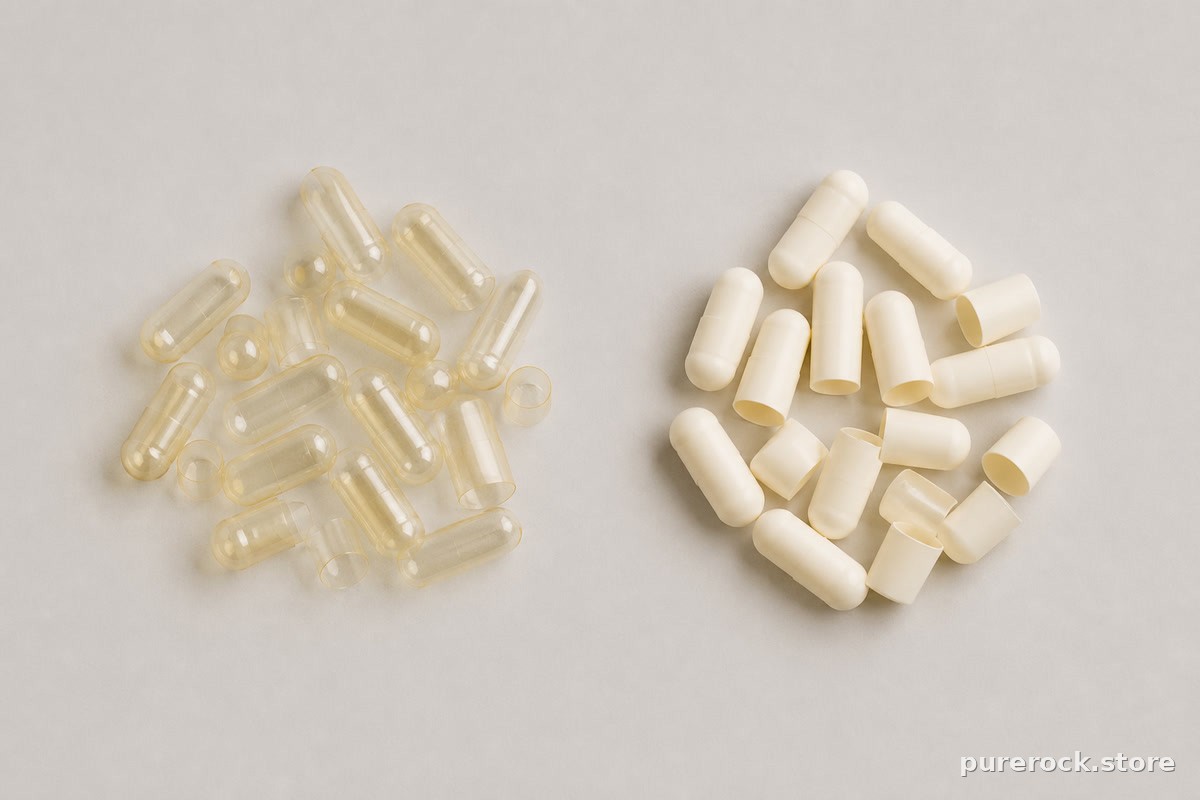
Gelatin capsules are made from animal-derived collagen, most commonly bovine or porcine. They tend to dissolve slightly faster in stomach acid than vegetarian shells, which is part of why gelatin has historically been the default choice for supplement manufacturers. They are not suitable for vegetarians, vegans, or anyone avoiding animal products for religious or dietary reasons.
Vegetarian capsules (often labeled HPMC — hydroxypropyl methylcellulose, or sometimes pullulan) are plant-derived, typically from cellulose. They dissolve at a comparable rate to gelatin for most formulations, though HPMC shells can be marginally slower to break down in some cases. They also tend to be more stable in humid or warm conditions than gelatin, since gelatin shells can soften or become tacky with moisture exposure over time.
Neither shell type changes the amount of active shilajit extract inside — the shell is inert packaging, not part of the dose. The choice between them is a matter of dietary preference and, to a lesser degree, storage stability rather than efficacy.
A less obvious factor is size and shape uniformity. Two-piece capsule shells are manufactured in standard sizes (commonly “00” or “0” for shilajit extract doses), and a well-made capsule should have a snug, even fit between the cap and body with no visible gaps or powder leakage at the seam. Loose-fitting or unevenly filled capsules aren’t necessarily a sign of a bad product, but they can indicate a smaller-scale manufacturer with less consistent filling equipment, which is worth factoring in alongside the COA when comparing brands.
How to actually take shilajit capsules
With food or on an empty stomach. Shilajit capsules can be taken either way, but taking them with a meal — particularly one containing some fat — can reduce the mild stomach upset or nausea some people report when taking concentrated extracts on an empty stomach. If you’re new to shilajit, starting with food is the more cautious approach; you can experiment with empty-stomach timing later if you tolerate it well and want faster absorption.
Water amount. A full glass of water (roughly 8 oz / 240 ml) is enough to move the capsule through the esophagus and give it room to begin dissolving in the stomach. Taking a capsule with only a sip of water increases the (rare but real) risk of it lodging partway down, which can cause irritation.
Swallowing tips for people who struggle with pills. If capsules are difficult to swallow: tilt your head slightly forward (not backward) when swallowing — this counterintuitive position helps the epiglottis cover the airway and can make the capsule go down easier than the head-back posture most people default to. Taking a sip of water first to wet the throat, then placing the capsule on the tongue with a full mouthful of water and swallowing in one motion, also helps. Capsules float in water because of trapped air in the gelatin or HPMC shell, so drinking with a straw pointed toward the back of the mouth can keep the capsule moving with the water flow instead of floating to the surface. If swallowing capsules remains consistently difficult, that’s a signal to consider a different format, such as resin dissolved in water, rather than forcing a format that doesn’t work for you.
Consistency matters more than timing. Taking capsules at roughly the same time each day — whether that’s with breakfast or before bed — matters more for building a routine than any specific claimed “best” time of day, since shilajit is typically used as a daily supplement rather than something with a narrow dosing window.
Shelf life and storage: how capsules differ from resin
Encapsulation changes the storage profile of shilajit in ways worth understanding if you’re used to resin. Loose purified resin is hygroscopic and needs an airtight container plus a dry scooping utensil every time, or it risks absorbing ambient moisture and developing mold. Capsules solve most of that problem structurally: the shell itself is a barrier against moisture and air exposure for each individual dose, and a sealed supplement bottle protects the rest of the capsules until they’re used.
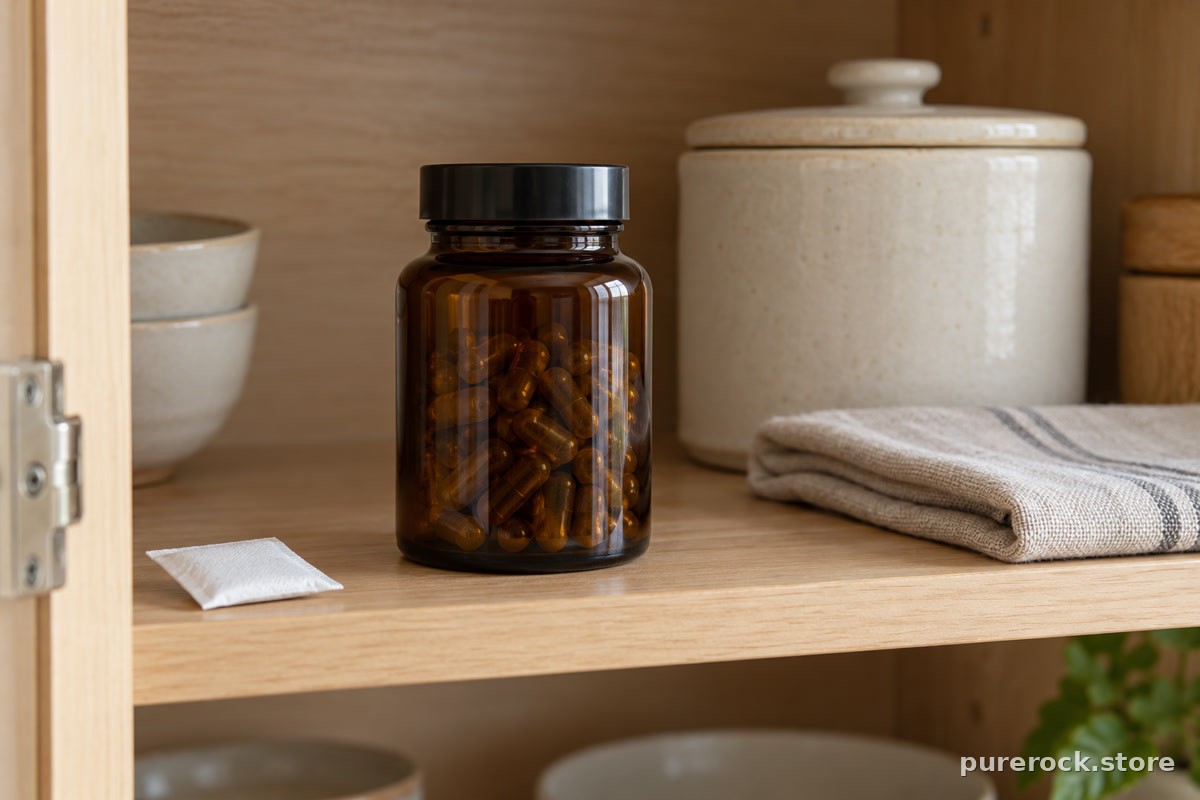
That said, capsules are not immune to degradation. Heat and humidity are still the two things to avoid — a bathroom medicine cabinet, which cycles through steam from showers, is a worse storage spot than a kitchen cabinet or bedroom drawer. Gelatin shells in particular can soften, stick together, or become tacky if stored somewhere warm and humid for extended periods, which is one practical reason some manufacturers prefer HPMC shells for markets with more variable climates. Check the printed expiration or best-by date rather than assuming an unopened bottle lasts indefinitely; while shilajit extract itself is fairly stable, the capsule shell’s structural integrity is the more likely point of failure over a long shelf life.
A silica gel packet inside the bottle, if included, is doing real work and shouldn’t be discarded once the bottle is opened — it continues absorbing incidental moisture every time the cap comes off. If capsules start sticking together in a clump, feel unusually soft, or the shell looks cloudy or discolored compared to when the bottle was new, that’s a sign moisture has gotten in and the batch is degrading faster than expected, even if the printed expiration date hasn’t passed yet. In that case it’s reasonable to treat the remaining capsules with caution rather than finishing the bottle on schedule.
“Pills” vs. “capsules”: a manufacturing distinction that gets blurred in marketing
Marketing copy uses “pills” and “capsules” almost interchangeably, but they can describe two different manufacturing processes:
- Encapsulated (true capsules): dried extract powder is measured and mechanically filled into a two-piece gelatin or HPMC shell. This is what most products sold as “shilajit capsules” actually are.
- Pressed tablets: dried extract powder is compressed under pressure into a solid tablet shape, often with a binder to hold it together, and no outer shell.
Both deliver the same underlying extract, and the distinction rarely affects efficacy in any meaningful way for a daily supplement. It’s worth knowing the difference mainly because pressed tablets sometimes take slightly longer to break down and dissolve than an encapsulated powder, since the compression process can make the tablet denser. If a product markets itself as “shilajit pills” without clarifying whether it’s an encapsulated powder or a pressed tablet, that ambiguity itself isn’t a red flag — it’s just marketing language that doesn’t map cleanly onto the two underlying manufacturing methods, and it’s fine to ask a manufacturer directly if the distinction matters to you.
What a Certificate of Analysis for capsule extract should show
A Certificate of Analysis (COA) is the document a third-party lab issues after testing a specific batch of product, and it’s the clearest way to verify what a capsule label claims. For shilajit capsule extract specifically, a complete COA should include:
- Fulvic acid percentage or mg content, tested against the specific batch the capsules were made from — not a generic claim applied across all batches.
- Heavy metal screening for lead, arsenic, mercury, and cadmium, since shilajit is a mineral exudate and heavy metal contamination is the most common safety concern with unpurified or poorly sourced material. Results should be reported as specific values against a recognized safety limit, not just a pass/fail checkbox.
- Microbial testing covering yeast, mold, and common pathogenic bacteria, relevant because capsule powder is a dry environment but can still be contaminated during manufacturing if handling isn’t controlled.
- Batch or lot number that ties the COA to the specific bottle you’re holding, not a one-time test from years earlier that a brand reuses indefinitely on its website.
- Testing lab name and accreditation, ideally an independent lab with no ownership stake in the brand being tested, along with a test date recent enough to reflect current manufacturing.
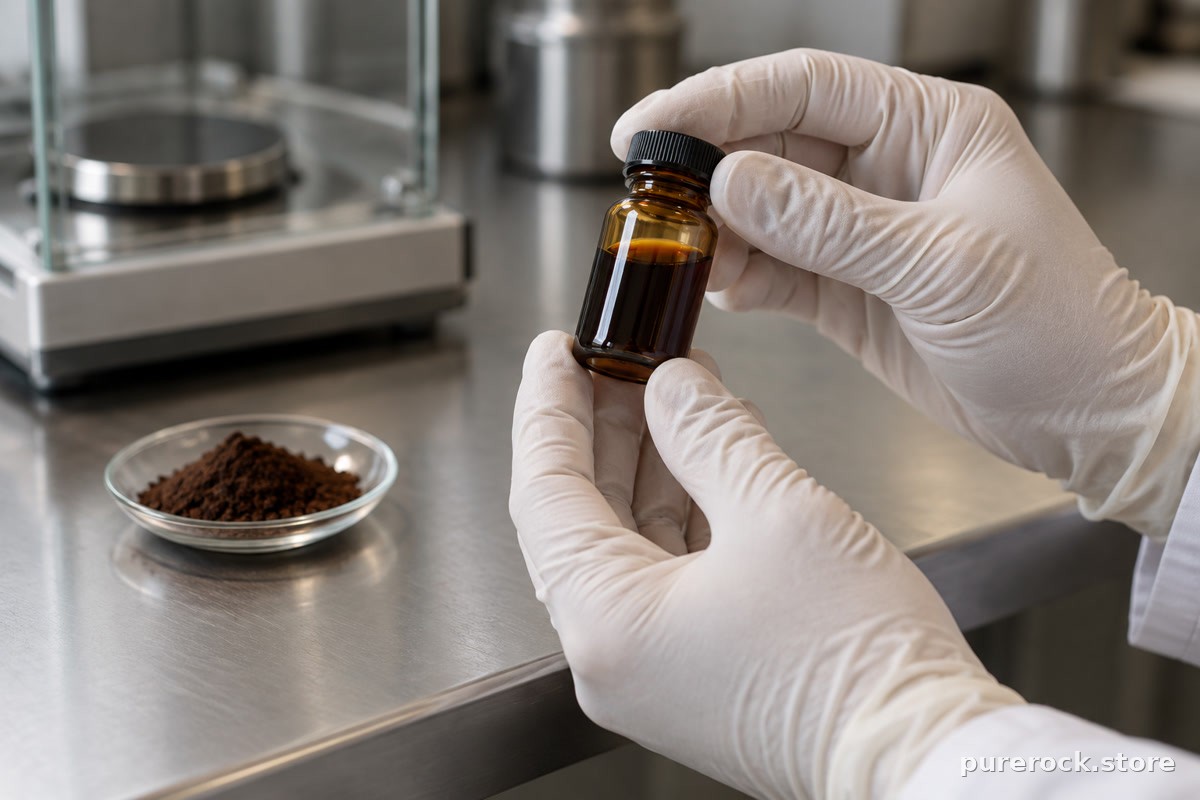
A COA that’s missing the batch number or is undated should be treated with the same skepticism as no COA at all — it tells you a test happened at some point, but not whether it applies to the product currently on the shelf. Reputable capsule brands typically make batch-specific COAs available on request or searchable by lot number printed on the bottle.
FAQ
Do capsules lose potency faster than resin? Not inherently. The concentrated extract inside a capsule is chemically similar to purified resin; the capsule shell adds a layer of protection against moisture that loose resin doesn’t have. The more relevant shelf-life risk for capsules is the shell’s physical integrity in heat and humidity, not the extract degrading faster than resin would.
Can I open a capsule and take the powder directly? Physically yes, but you lose the point of encapsulation — no taste masking, and less precise dosing since some powder inevitably sticks to the shell. If you’re doing this regularly because you dislike swallowing capsules, resin dissolved in water is a more purpose-built alternative for the same delivery method.
Is a higher mg-per-capsule number always better? Not on its own. A 600 mg capsule standardized to 20% fulvic acid delivers less active compound than a 300 mg capsule standardized to 50% fulvic acid. Always compare the fulvic acid content, not just the total extract weight, when judging potency between products.
How many capsules should I take per day? This depends entirely on the mg-per-capsule and fulvic acid standardization of the specific product, so there’s no single number that applies across brands. Most labeled serving sizes fall in a range equivalent to 300-500 mg of standardized extract per day, often split into one or two capsules. Follow the manufacturer’s labeled serving size rather than a number you’ve seen for a different product, since the underlying potency isn’t interchangeable between brands.
Why does the capsule color or smell vary between bottles, even from the same brand? Shilajit extract is a natural material, and small variations in color (from dark brown to nearly black) and smell (an earthy, mineral note that some describe as slightly tar-like) are normal batch-to-batch variation tied to the source mine and harvest season. A sudden, sharp change in smell — particularly anything acrid or chemical rather than earthy — is more worth flagging to the manufacturer than ordinary color variation.
This guide is educational and not medical advice. If you’re managing a health condition, pregnant, or taking medication, talk to a doctor before starting shilajit capsules or any new supplement.
Related Guides
- How to choose the best shilajit: a brand-free checklist.
- What is in shilajit: minerals, fulvic acid and lab variability.
- Shilajit price and cost per serving: how to compare costs fairly.