 Purerock
buying
Shilajit Reviews: How to Read Them Critically

Most shilajit reviews can’t tell you whether a product is pure, safe, or effective. A review records one person’s experience, which may be shaped by placebo, expectation, or a payment you can’t see. A star rating also says nothing about heavy metals or what’s actually in the jar. This page isn’t a list of review scores. It shows how to read any review, on any site, with a skeptical but fair eye.
Key Takeaways
- A review is anecdote. The FTC states that anecdotal evidence, including surveys of consumer experiences, is “never sufficient to substantiate claims about the effects of a health product.”
- Since October 2024, an FTC rule bans fake reviews, undisclosed insider reviews, and fake social media followers or views. Rules exist, but enforcement can’t catch every review on every site.
- Reviewers tend to report taste, energy, digestion, and “feeling different.” Published trials measured things like strength, testosterone, sperm count, and bone density, in specific groups and doses.
- A “verified purchase” label confirms a purchase was recorded. It doesn’t confirm the product is pure, or that the reviewer wasn’t compensated.
- A batch-specific lab report with measured metal values beats any number of reviews on the question that matters most for safety.
- Use the checklist below on any review, including anonymous forum threads.
What a Review Can and Can’t Tell You
A review can tell you things that are real and useful: how a product tastes, whether the packaging arrived intact, whether shipping took three days or three weeks, whether the seller answered an email. Those are experience-of-the-purchase facts.
It can’t tell you whether the resin is purified, what the lead level is, whether the fulvic acid percentage on the label is accurate, or whether the effect someone felt came from the product. Those need a laboratory, not a reviewer. The guide to spotting fake or unpurified shilajit covers the lab side, and is shilajit legit? covers what evidence exists for the category.
Why Reviews Mislead Even When They’re Honest
Most review problems have nothing to do with fraud.
Placebo and expectation. The FTC’s health products guidance says that “even if consumer experiences are genuine, they may be attributable to a placebo effect or other factors unrelated to the product.” Someone who spends money on a supplement, expects more energy, and starts sleeping better the same week will credit the supplement.
Many things change at once. People often start a supplement alongside a new gym routine, a diet change, or after a bad month ends. A review rarely reports those.
Survivorship and selection. People who feel nothing usually don’t write reviews. People who feel strongly, in either direction, do. A review page is a sample of motivated people, not a sample of buyers.
Timing. A review written on day three can’t speak to week eight. Our page on how long shilajit takes to work covers why timelines in trials look nothing like the “worked in a week” posts online.
Individual differences. Even in the controlled trials, results are group averages. One study of recreationally active men (Keller et al., 2019) randomized 63 men to 250 mg, 500 mg, or placebo for 8 weeks. The reported benefit was a smaller fatigue-induced strength decline at 500 mg in the upper half of baseline strength, not in everyone. A reviewer in the other half might have felt nothing.
What Reviewers Report vs. What Trials Measured
Public reviews and clinical trials don’t answer the same question. Here is the gap.
| What reviewers commonly describe | What published trials measured | What we can say |
|---|---|---|
| “More energy” | Fatigue scale scores in a 28-day open-label pilot of 25 men (Yadav et al., 2026); strength retention in a placebo-controlled trial (Keller et al.) | The pilot reported a lower fatigue score within the group, but had no control and most authors work for the manufacturer. Not the same as a general energy boost. |
| “Boosted my testosterone” or “libido” | Total and free testosterone in 45 to 55 year-old men over 90 days vs placebo (Pandit et al., 2016); sperm parameters in men with low counts, no placebo (Biswas et al., 2010) | Hormone lab changes in specific groups. Libido wasn’t what the abstracts reported. |
| “Tastes terrible” or “smoky” | Not measured | Real, subjective, and useful. See what shilajit tastes like. |
| “Upset my stomach” | Adverse events, itemized in one pilot (mild stomach pain and dyspepsia in 1 participant each) | Honest reports of mild issues are consistent with trial data. See shilajit side effects. |
| “It works” | Varies by outcome; most trials are small | Depends on the outcome. See does shilajit work. |
| “Pure, no heavy metals” | Not measurable by a reviewer | Only a lab can say. |
The pattern: reviewers describe sensations and experiences, trials measure lab values and performance outcomes, and neither tells you a specific jar is clean.
How Fake and Manipulated Reviews Work
We don’t have reliable statistics on how many shilajit reviews are fake, and we’re not going to make one up. What we can describe is what regulators have said is prohibited, which tells you the tactics that exist.
In August 2024 the FTC announced a final rule (press release), which took effect on October 21, 2024, according to the FTC’s rule Q&A. It prohibits:
- Fake reviews and testimonials, including ones that “misrepresent that they are by someone who does not exist, such as AI-generated fake reviews.”
- Paid reviews conditioned on sentiment. Compensation “conditioned on the writing of consumer reviews expressing a particular sentiment.”
- Undisclosed insider reviews, from officers or managers who don’t “clearly and conspicuously disclose” their connection.
- Fake independent review sites. A business can’t misrepresent that a website or entity it controls provides independent reviews.
- Review suppression through “unfounded or groundless legal threats, physical threats, intimidation.”
- Buying fake social media indicators such as followers or views.
Two nuances matter. The FTC’s Q&A says the rule “does not prohibit giving incentives for reviews, as long as there isn’t an express or implied requirement that the reviews have to express a particular sentiment.” So a free jar in exchange for an honest review can be legal. And the rule authorizes civil penalties for knowing violations, but a rule on paper doesn’t clear every site.
Separately, the FTC’s influencer guidance says you must disclose “any financial, employment, personal, or family relationship” with a brand, “if you got anything of value to mention a product.” That’s why a disclosed “free sample” review is not an automatically dishonest one. It’s just a review with a known bias, to be weighed.
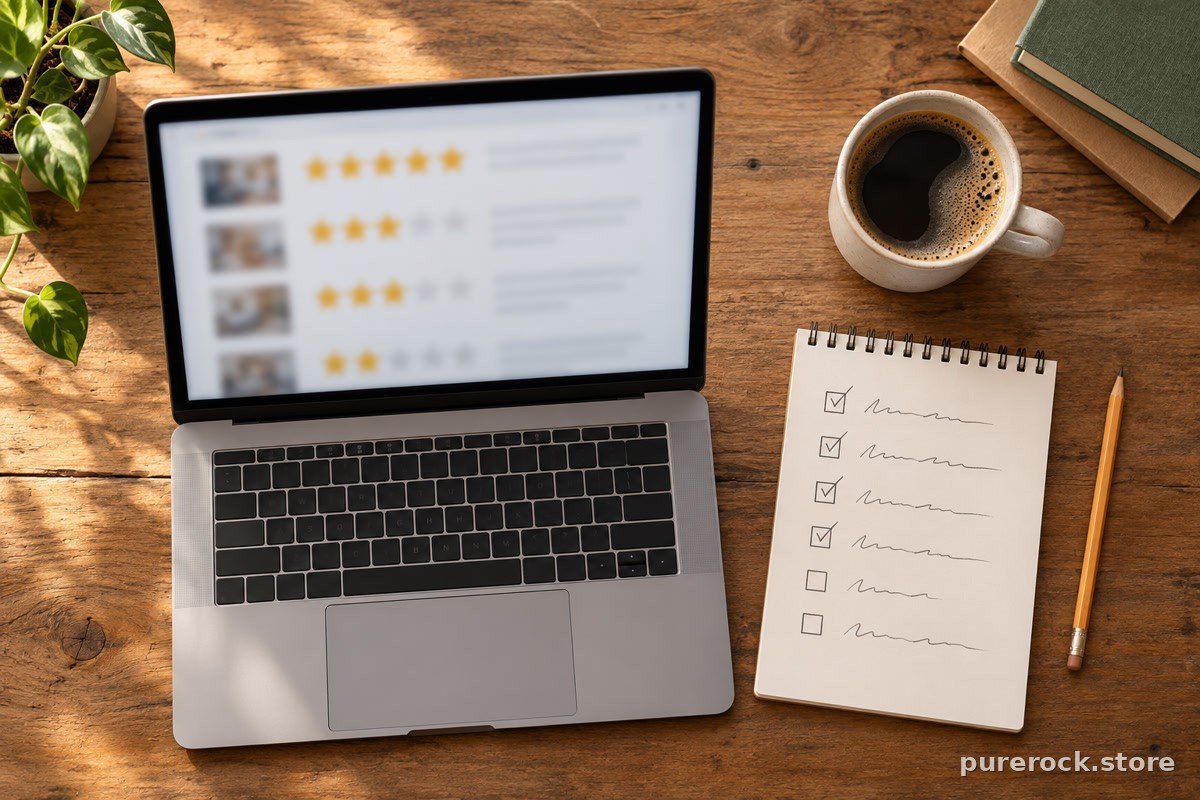
Red-Flag Phrases and Patterns
These aren’t proof of fakery, and a real person can write any of them. They’re reasons to lower your trust.
- “Cured” or treatment language. A reviewer saying it fixed a condition is making a medical claim no trial supports. A seller quoting it makes it worse, since the FTC says marketers can’t make claims through testimonials they couldn’t substantiate if they made them directly.
- “Doctors don’t want you to know.” Marketing language, not experience.
- Identical phrasing across reviews. Several reviews that share the same odd sentence or the same product-feature list.
- Reviews that read like the product page. Specific percentages, fulvic acid claims, and ingredient jargon repeated back.
- Extreme before-and-after claims in a few days. The timing doesn’t match any published trial.
- A burst of five-star reviews in a short period, or a rating that’s almost entirely five stars with almost no middle.
- No negatives, ever, and no mention of taste. Shilajit has a distinctive taste and smell, so reviews that never mention either deserve a second look.
- Reviews that are vague. “Great product, works!” tells you nothing.
- Reviews that praise the seller’s shipping but never describe use.
- Off-site “reviews” that link to a purchase page. A website controlled by the seller or a paid partner isn’t necessarily independent. The FTC rule specifically names fake independent review sites.
How Marketers Use Before-and-After Claims
Before-and-after photos, testimonial videos, and “30-day transformation” stories are the most persuasive form of review and the least reliable. The FTC’s health products guidance is direct: advertisers must have “appropriate scientific evidence to back up the underlying implied claim that the product is effective and will work for buyers as it did for the endorser.”
Watch for these moves:
- Cherry-picking. A page highlights the best result and omits the rest.
- Bundled changes. The “after” includes a diet and training plan.
- Stock or borrowed images. A reverse image search sometimes finds the same photo elsewhere.
- Implied typicality. A tiny “results not typical” disclaimer under a headline claiming the opposite.
- Mechanism borrowing. A trial result for an extract at a specific dose gets attached to an unrelated product. Compare the trial dose to the label.
Reddit, Forums, and “Real” Reviews
Searches like “shilajit reddit” are popular because people want reviews with no marketing attached. Forums have real advantages: people describe side effects, compare experiences, and argue with each other. They also have limits.
- Anonymity cuts both ways. You can’t verify who’s writing, and undisclosed sellers or affiliates can post. The FTC rule names undisclosed insider reviews and buying fake social indicators as prohibited, but moderators and readers are your only real filter day to day.
- Echo effects. A popular recommendation gets repeated until it looks like consensus.
- Survivorship again. Threads reward dramatic stories.
- Link patterns. A recommendation with a link to a specific listing, from an account that posts little else, is a flag.
Use forums as a source of questions to ask, not as evidence. If someone describes a symptom that worries you, bring it to a clinician instead of a thread.
What Third-Party Evidence Beats a Review
If you want to know whether a specific jar is worth buying, these matter more than the star rating:
- A batch-specific certificate of analysis from an independent lab, with measured lead, arsenic, cadmium, and mercury values, not just “passed.” Analyses of shilajit have found metals above permissible limits in some samples (Aldakheel et al., 2022), so this is the safety evidence a review can’t replace. Our buying guide explains how to read one.
- Lab methods you can check. Which lab, which method, which batch, and a date that matches the lot number on your jar.
- Transparent ingredients: a single ingredient, a stated amount per serving, and no proprietary blend hiding the amount.
- A published trial of that formulation, not of a different extract. Even then, check sample size and who funded it.
- A seller who answers specific questions about sourcing and testing.
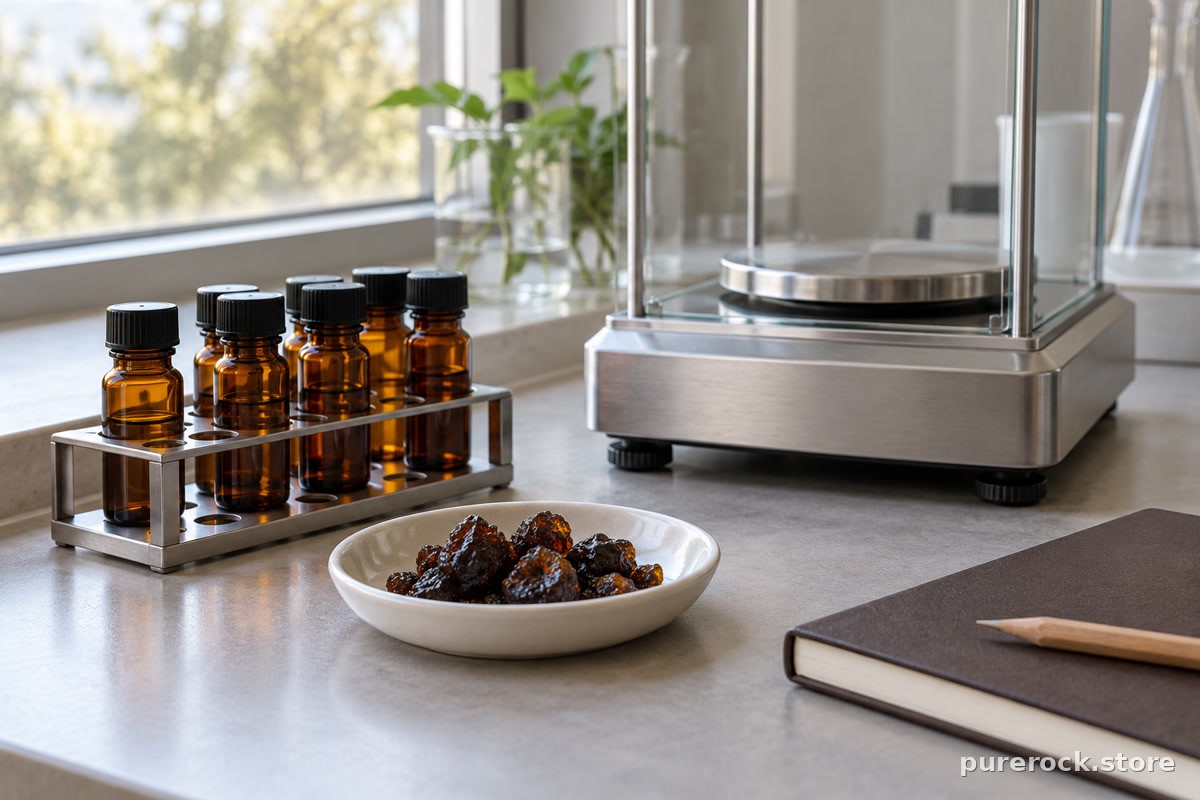
For help comparing, see our criteria-based best shilajit framework, which is brand-free.
A Checklist for Evaluating Any Review
Run any review through these questions. Count the “no” answers (a “yes” is always the better sign).
- Is the reviewer identifiable, with a history of reviewing other things?
- Do they describe how and how long they used it (dose, form, weeks)?
- Do they disclose any free product, discount, or affiliation?
- Do they mention anything negative or mixed (taste, smell, price, side effects)?
- Did they change anything else at the same time?
- Do they avoid medical claims? A claimed medical result deserves heavy discounting.
- Is the language specific and personal, or generic and promotional?
- Is the review free of purchase links?
- Is this review consistent with the lab data and trial limits we know, or does it claim far more?
- Does it reference a lab report for that batch, and can you find the report?
Reviews with three or more “no” answers shouldn’t change your decision. A review is best used to check an issue you’ve already researched, like shipping or taste, rather than as a verdict.

A Simple Process Before You Buy
- Decide what you’re after, then check what the evidence says about it on our pages about whether shilajit works.
- Find products with a batch-specific lab report.
- Only then read reviews, focusing on taste, texture, delivery, and customer service.
- Skim negative reviews first: do they describe real problems or sound like competitors?
- Check with a clinician if you take medication or have a health condition.
FAQ
Are shilajit reviews real?
Some are, some aren’t, and we don’t have reliable numbers on either. The FTC’s 2024 rule prohibits fake and undisclosed insider reviews, but rules don’t remove every one. Read reviews with the checklist above rather than trusting a star average.
Is a “verified purchase” review trustworthy?
It tells you a purchase was recorded, not that the reviewer is independent or that the product is pure. Incentivized reviews can be legal if they don’t require a particular sentiment, and a reviewer can be compensated without it being obvious.
Can I trust shilajit reviews on Reddit?
Treat them as leads, not proof. Anonymous accounts can’t be verified, and undisclosed marketing is prohibited under the FTC’s rule but hard to spot. Look for specific, balanced, disclosed experiences.
Why do reviews say shilajit gave them energy when trials show something different?
Trials measured specific outcomes such as strength or testosterone in specific groups, often small. Energy in a review can come from placebo, other lifestyle changes, or the product. The fatigue-scale data we found came from an uncontrolled 25-man pilot.
What should I trust instead of reviews?
An independent, batch-specific lab report with measured metal values, a transparent label, and your doctor’s input if you take medication.
Bottom Line
Reviews are useful for taste, shipping, and service. They can’t verify purity, safety, or effect. Placebo, selection, and undisclosed incentives all distort them, and the FTC has made clear that testimonials don’t replace scientific evidence for health claims. Use the checklist, weight disclosed and specific reviews more, discount medical claims, and give independent lab reports far more weight than any star rating. If a review contradicts the evidence or a lab report, believe the evidence.