 Purerock
buying
Shilajit Price: Cost Per Serving and Per mg
The sticker price of a shilajit jar tells you almost nothing, because jars hold different amounts, servings differ in size, and the active material per serving varies enormously. The useful numbers are cost per serving and, if the product publishes a documented fulvic acid assay, cost per verified milligram of fulvic acid. This page gives you both formulas, a worked example with hypothetical figures, and an honest look at why price is a weak signal of quality.
We do not quote retail prices here. Prices shift constantly and vary by seller, so any number we printed would be stale or promotional. The method works at any price point.
Key Takeaways
- Price per jar is not comparable across products. Convert to cost per serving first, then to cost per verified milligram of fulvic acid where the data exist.
- Cost per serving equals price divided by number of servings. Cost per milligram of fulvic acid equals cost per serving divided by milligrams of fulvic acid per serving.
- If a product cannot show a fulvic acid figure backed by a named assay, its cost per milligram is not computable, which is itself useful information.
- Real costs such as purification, testing and certified manufacturing explain some price differences. Marketing and brand positioning explain others.
- Price is a weak proxy for quality in both directions. Very low prices deserve extra scrutiny, but a high price is not proof of testing or purity.
Why a Price Tag Alone Misleads
Shilajit is sold by weight in some forms and by count in others. A jar of resin might hold 15 g or 50 g. A bottle of capsules might hold 30 or 120. Even within one format, the amount of shilajit in a serving differs. In ConsumerLab’s 2024 testing of eight shilajit supplements, fulvic acid ranged from 6.9 mg to 2,206 mg per serving, a spread of roughly 32,000% by the lab’s own description. The same report said amounts of fulvic acid are typically not listed on labels. If the amount of the key constituent can differ by that much, the price of the container cannot be compared with another container without more work.
That is the reason to calculate. It is also a reminder that this is one test of eight products at one time, not a statement about the whole market.
The Formula for Cost Per Serving
Cost per serving puts every product on the same footing, a single dose as the label defines it.
Step 1. Find the number of servings.
- Resin: total grams in the jar, converted to milligrams, divided by your serving size in milligrams. A 30 g jar is 30,000 mg.
- Capsules or tablets: capsules in the bottle divided by capsules per serving.
- Gummies and honey sticks: pieces in the package divided by pieces per serving.
Step 2. Divide price by servings.
Cost per serving = total price ÷ number of servings.
Use the serving size you would actually take. Our dosage guide explains commonly cited ranges by format, and the label’s serving may not match what you decide on with a healthcare provider. Include shipping and any subscription pricing in the total, and note whether a discount applies only to the first order.
The Better Formula: Cost Per Verified Milligram of Fulvic Acid
Cost per serving still treats a 10 mg-fulvic-acid serving and a 500 mg one as equivalent. A more informative figure, where the data exist, is cost per verified milligram of fulvic acid.
Fulvic acid per serving (mg) = serving size (mg) × fulvic acid percentage
Cost per 100 mg of fulvic acid = cost per serving ÷ (fulvic acid per serving in mg ÷ 100)
“Verified” is doing real work in that name. The percentage only counts if it comes from a lot-specific certificate of analysis that names the assay method. Different methods measure different things, which is why numbers from different labs often cannot be compared; our fulvic acid explainer covers the details. A claimed percentage with no method behind it is advertising copy, and dividing price by advertising copy gives you an unreliable answer.
One caveat applies to the whole approach. Fulvic acid is a marker commonly used to gauge shilajit, not a proven predictor of benefit, and the trial evidence does not establish that more milligrams means better outcomes. Cost per milligram helps you compare what you are paying for. It does not tell you what the product will do.
Worked Example With Hypothetical Numbers
The figures below are invented to illustrate the arithmetic. They are not real products or real prices.
| Product A (resin) | Product B (capsule extract) | Product C (gummies) | |
|---|---|---|---|
| Hypothetical price | $40 | $30 | $25 |
| Package contents | 30 g | 60 capsules | 60 gummies |
| Serving | 300 mg | 2 capsules (1,000 mg total) | 2 gummies |
| Servings per package | 100 | 30 | 30 |
| Cost per serving | $0.40 | $1.00 | about $0.83 |
| Documented fulvic acid | 30% (assay named, lot COA) | 50% (assay named, lot COA) | Not reported |
| Fulvic acid per serving | 90 mg | 500 mg | Unknown |
| Cost per 100 mg fulvic acid | about $0.44 | $0.20 | Cannot be computed |
Read the table carefully. Product A is cheapest per serving, but Product B costs less than half as much per 100 mg of fulvic acid because each serving carries so much more. Product C has a middle-of-the-road cost per serving, but since the fulvic acid amount is not documented, you cannot say what you are paying for. A buyer who only looked at the sticker would pick Product C or A and might never learn that B is the best value on this particular metric.
Now flip the situation: if Product B’s COA were missing and its “50%” were only a claim, its cost per milligram would drop out of the comparison, and Product A with documentation would be the only one you could evaluate fairly. The documentation determines whether a number is usable, not just whether it looks good.
What Drives Price Variation
Several real costs sit behind shilajit prices, and so does plenty of positioning that has nothing to do with the contents.
| Driver | Real cost or marketing | What to check |
|---|---|---|
| Purification | Real. Water extraction, filtration and drying take equipment, time and yield loss | Is the method described in steps? See how shilajit is made |
| Third-party testing | Real. Lab panels cost money per lot, more if they include metals and microbes | Lot-specific reports, with measured values, available before purchase |
| Raw material and origin | Partly real. Sourcing and transport cost money; the link between origin and quality is not standardized | A named region is checkable; prestige adjectives are not. See the origin guide |
| Form | Real. Capsules add encapsulation and fillers; gummies add sugar and binders; resin needs minimal processing but careful handling | What share of each serving is actually shilajit |
| Certified manufacturing | Real. Audited facilities cost more to run | A named facility you can look up |
| Packaging and branding | Mostly marketing. Glass jars, scoops and boxes raise cost but not purity | Whether documentation, not design, makes up most of the page |
| Retail margin and ads | Marketing. Paid advertising and influencer deals are built into the price | Whether the seller explains the product or only promotes it |
| Subscriptions and bundles | Pricing strategy | Total cost over the term, shipping and cancellation terms |
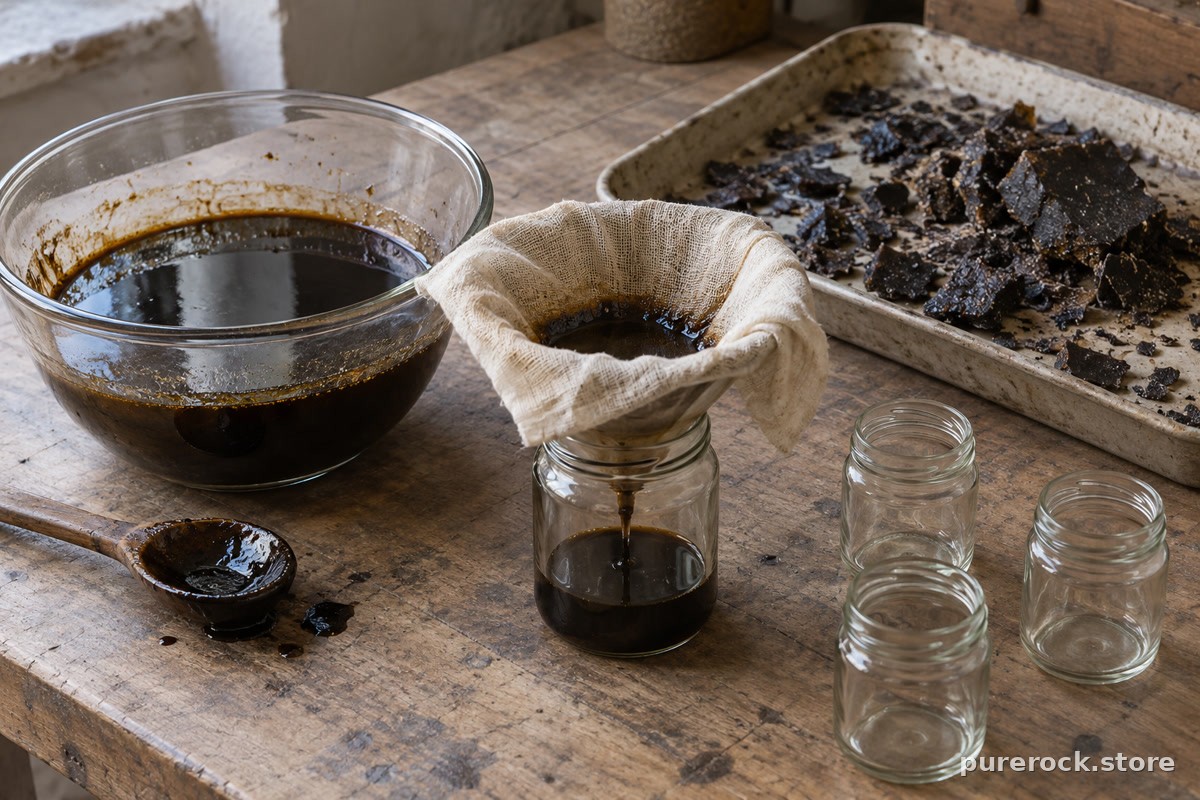
Notice that the real drivers are ones you can verify: methods, lot reports, facility names. The marketing drivers are the ones that cannot be verified. That is a useful sorting rule when you are deciding whether a price premium is plausible.
Price vs Quality: Why Price Is a Weak Proxy
It is tempting to assume that the more you pay, the more you get. The evidence does not support relying on that.
The ConsumerLab report is a good example of why. A spread that wide in fulvic acid per serving means cost per milligram can vary far more than sticker prices do: the report found the cost to obtain 100 mg varied widely across products, and that extracts cost less than resins for an equivalent amount of fulvic acid. The same report found one product that contained much more fulvic acid than its label implied, which shows that a label can be wrong in either direction, and a price cannot reveal that.
Price matters as a clue, not a conclusion. Real production costs set a floor below which genuine, tested material is hard to sell, so extreme discounts raise questions. But above that floor, price reflects brand positioning, sales channel and margin as much as anything about the shilajit. The supplement buying guide makes the same point: price is not a substitute for documentation. If you want a framework for weighing documentation against budget, the best shilajit page walks through proof requirements and a scoring checklist.
Red Flags at Both Ends of the Price Range
Too cheap
- A price far below comparable products with no explanation of how the economics work.
- No lot-specific COA, or one that does not match the lot on the product.
- Resin that fails physical tests. Our guide to spotting fake shilajit covers adulterants and simple checks, though physical tests are not a replacement for a lab report.
- Large “discounts” off a list price that nobody pays, a classic anchoring tactic.
- Unspecified net weight or a serving size that makes the per-serving price look better than it is.
Too expensive
- A premium justified by adjectives such as “rare,” “royal” or “highest altitude” with nothing checkable behind them.
- No lot-specific testing despite a luxury price.
- Fulvic acid claimed at a high percentage with no assay method, which inflates the apparent value.
- Bundles that include extras you did not ask for, which hides the shilajit’s own price.
- Claims about disease outcomes. Under FDA rules, a product sold as a supplement but represented to treat, prevent or cure a disease meets the definition of a drug. That is a legal and credibility red flag at any price.
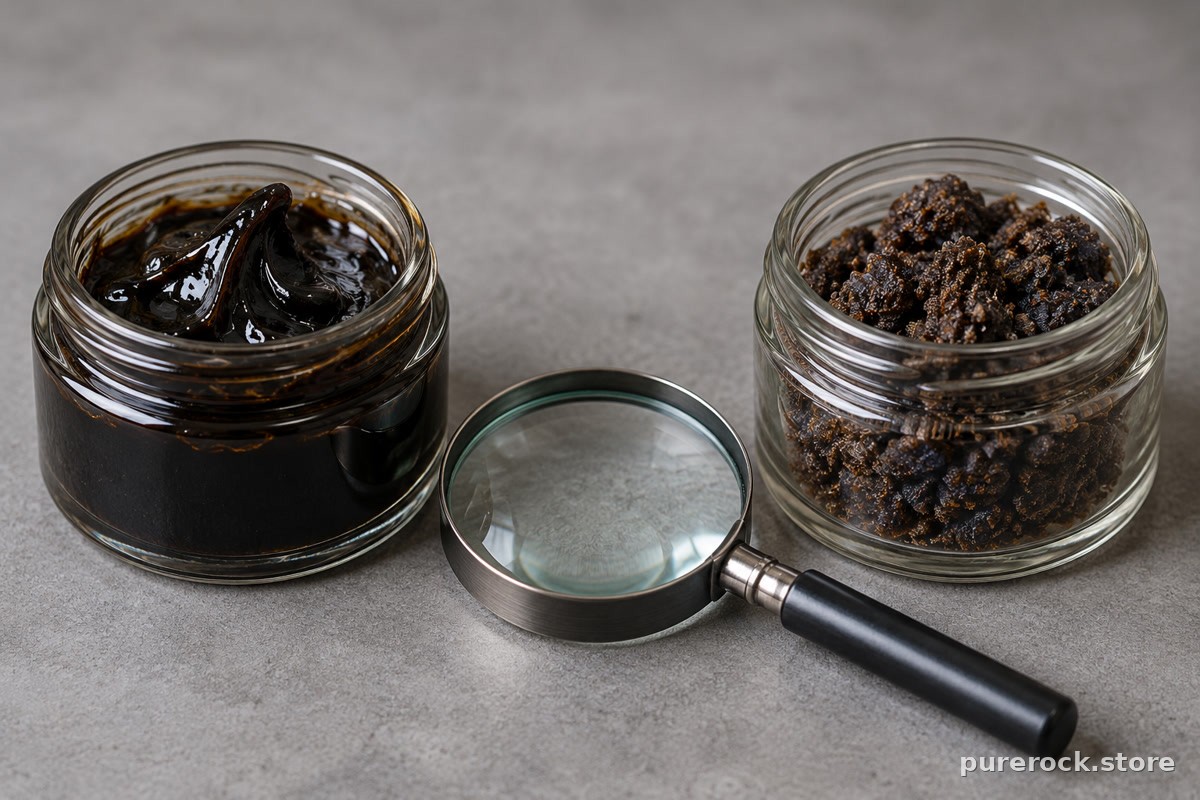
Is Shilajit Expensive?
We have no reliable market-wide price data, so we cannot say how shilajit compares with other supplements. Part of any premium can reflect genuine processing and testing costs, and part may not. Whether it is “expensive” for you depends on what your cost per verified serving is, not on the number on the jar. Two buyers paying the same monthly total can be getting very different amounts of fulvic acid, and one may be getting no usable documentation at all.
Qualitative Comparison by Form
This table describes tendencies, not prices. Individual products vary widely.
| Form | Typical cost drivers | Per-serving price tends to | Watch for |
|---|---|---|---|
| Resin | Purification, jar and packaging, lot testing | Be modest by serving, but depends on the percent of fulvic acid | Servings by eye; unclear gram weight |
| Powder or drops | Drying, grinding, dilution | Vary with how diluted the product is | Percent of shilajit versus carrier |
| Capsules | Extract standardization, encapsulation, fillers | Be higher per serving, often with more fulvic acid per serving | Whether the stated mg is shilajit or total fill |
| Gummies | Sugar, binders, flavoring, packaging | Be higher for the amount of shilajit delivered | Shilajit amount per piece; sugar content |
| Honey sticks | Honey base, individual packaging | Be higher per serving because of packaging | Shilajit amount hidden in a blend |
Because the amounts are measured differently across forms, always convert to milligrams of fulvic acid per serving before comparing across formats. The capsules vs resin vs gummies guide compares practical trade-offs beyond cost.
FAQ
How much does shilajit cost?
It depends heavily on form, serving size and seller, so we do not quote prices. Calculate cost per serving using the formula above, and use cost per verified milligram of fulvic acid when documentation exists. Two products with similar jar prices can differ by several times in cost per serving.
What is the cost per serving of shilajit?
Divide the total price, including shipping, by the number of servings in the package. For resin, convert grams to milligrams and divide by your serving size. Check the serving size against the dosage guide and your healthcare provider’s advice rather than relying on a label’s number alone.
Is shilajit expensive compared with other supplements?
We cannot give a reliable market comparison, because we do not track prices. Purification and testing add real cost, but price alone does not tell you whether you are paying for verified material or for marketing. Compare on documented content per serving.
Why is shilajit so expensive?
Some of the cost is real: collecting, purifying, drying and lot-testing a natural material is not cheap, and certified manufacturing adds more. Some of it is brand positioning, advertising and retail margin. Checking which drivers a seller can document helps you tell the difference.
Does a higher price mean a safer product?
No. Safety depends on contaminant testing, not price. A 2025 study in BMC Chemistry (Kamgar et al.) found thallium in raw shilajit and in supplements, with some supplements higher than raw material, and called for standardized testing. Look for lot-specific heavy-metal results before buying at any price. Where you buy also changes what you can verify, which the where to buy guide covers.
Bottom Line
Ignore the price on the jar and calculate two things: cost per serving, and, for products with a lot-specific COA and a named assay, cost per verified milligram of fulvic acid. Real costs like purification, testing and certified manufacturing can justify a higher price, but branding and retail margin cannot be verified and should not sway you. Treat price as a weak clue that tells you where to look harder, not as proof of quality. If you take medication or have a health condition, talk to your doctor before choosing a product or serving size.