 Purerock
usage
Shilajit FAQ: Pronunciation, Shelf Life, Coffee
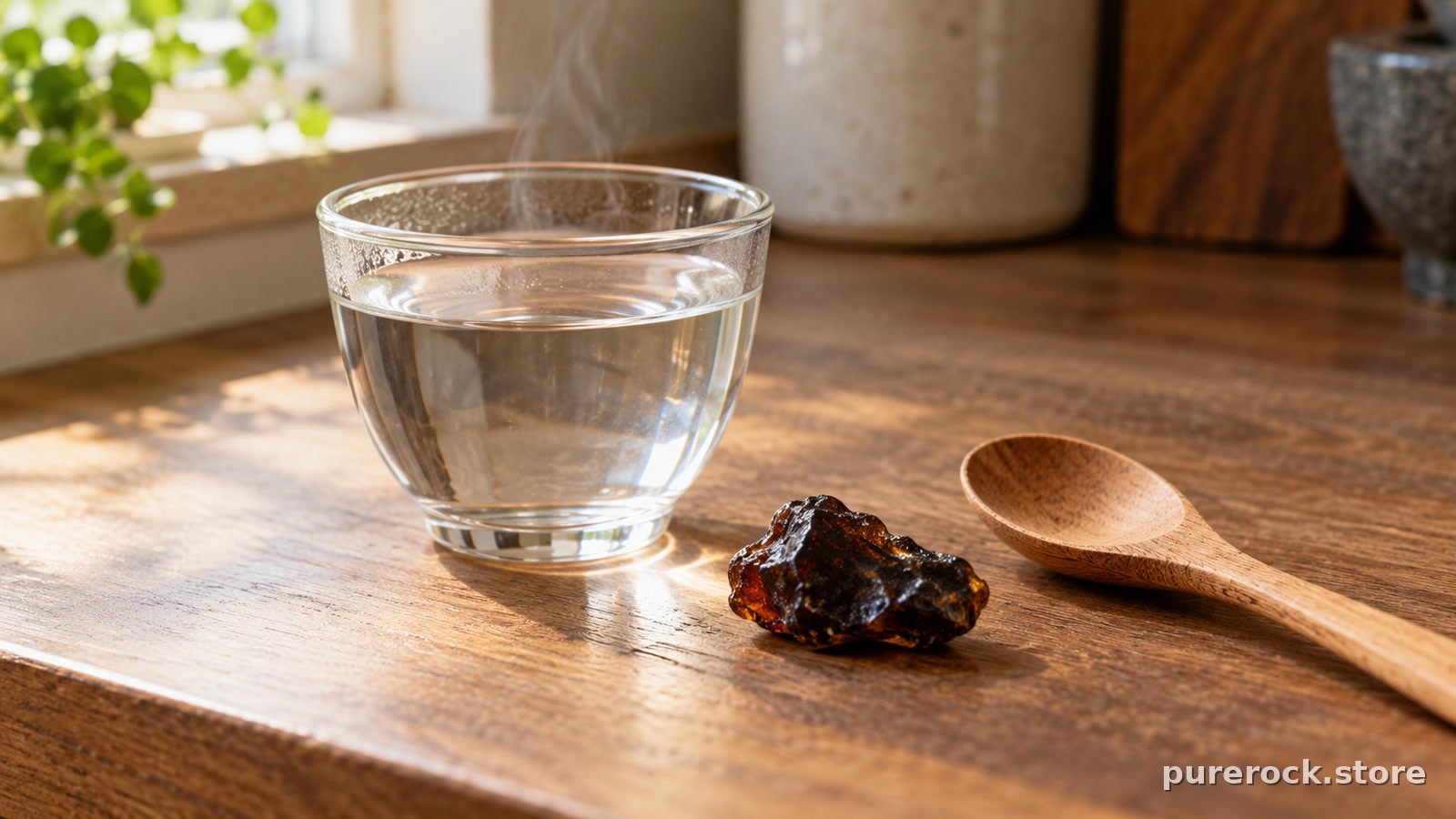
Shilajit is usually pronounced “SHIL-uh-jit” in English, from a Sanskrit word often glossed as “conqueror of mountains.” The other common questions (does it expire, can it go in coffee, does it upset your stomach) mostly have the same honest answer: little has been formally tested, so the useful advice is practical and cautious. This page gives short answers, says where the evidence ends, and links to the deeper posts.
Key Takeaways
- English speakers say “SHIL-uh-jit”; Hindi speakers often say something closer to “shee-LAA-jeet.” Both are understood.
- No published human trial we found measured shilajit’s shelf life, bowel effects, or interaction with coffee, so those answers rest on general supplement practice and hedged reasoning.
- The human trials used standardized extracts taken daily for 8 to 48 weeks, so advice about on/off cycling or fasting is not trial-based.
- Store it cool, dry and sealed, use a dry utensil, and follow the date on the label rather than a rule of thumb.
- Do not give it to children or pets, and ask a clinician before using it in pregnancy or with medication.
Quick Reference
| Question | Short answer | Evidence level |
|---|---|---|
| How do you say it? | SHIL-uh-jit (English); shee-LAA-jeet (closer to Hindi) | Convention, not a trial question |
| Does it make you poop? | Possible stomach upset in some people; not well measured | Weak (reports, not trials) |
| Does it expire? | Treat the label date as the limit; resin and gummies age differently | No published stability data found |
| Coffee? | Not studied; many people keep them apart | None |
| Empty stomach? | Common convention, not proven | Trial instructions varied |
| Alcohol? | Not studied | None |
| Kids or pets? | Don’t | No safety data |
Names and Pronunciation
How do you pronounce shilajit?
The usual English pronunciation is “SHIL-uh-jit,” with stress on the first syllable and a short “i” in the last. Many speakers of Hindi or Nepali say “shee-LAA-jeet,” stressing the middle syllable with a longer vowel. We could not verify a dictionary respelling, so these are common conventions rather than an official standard. Either will be understood in conversation, and you may see the word spelled shilajeet or silajit.
Where does the word come from?
A 2010 review in the International Journal of Ayurveda Research (Meena et al.) describes shilajit as a Sanskrit word meaning “conqueror of mountains and destroyer of weakness,” and also “winner of rock.” Related names include silajit, salajit and mumiyo; mumijo and mummiyo are common variants. The rock association matches how it forms: it seeps from mountain rock layers, which is also why composition varies between sources. See what is in real shilajit for why that matters.
Digestion and Bowel Questions
Does shilajit make you poop?
Some people report looser stools or stomach upset, but we found no trial that measured bowel changes as an outcome. The trial abstracts we reviewed did not report bowel changes as an outcome. Taking it with food, or reducing the amount, is a common response to stomach discomfort, though that is a practical workaround, not a tested fix. If symptoms persist, stop and talk to a clinician. Our side-effects guide covers the reported ones.
Can shilajit upset your stomach?
It can for some people, particularly in resin form on an empty stomach, but frequency is not well quantified. Our timing guide notes that the one explicit trial instruction we found was “with food,” so taking it with a meal is a reasonable choice. Gummies have their own considerations, covered in the gummies side-effects post.
Shelf Life and Storage
Does shilajit expire?
Yes, in the sense that every supplement has a date after which the maker no longer vouches for it. We found no published stability study for shilajit, so we cannot give a number of months or years, and any figure you see online is a manufacturer claim or a guess. Use the date on the label. Capsules and powders are generally more stable than moist resin or gummies, but that is general supplement logic, not shilajit-specific data.
How long does shilajit last after opening?
Unknown from the research, and it depends on the format. Resin is moist and, per our format comparison, can develop mold if handled with a wet spoon or kept damp. Gummies may have the shortest practical shelf life of the three, though we found no data. Opened products should be kept sealed, and anything with a changed smell, visible mold, or a sticky surface that was not there before should go in the trash.
How should you store shilajit?
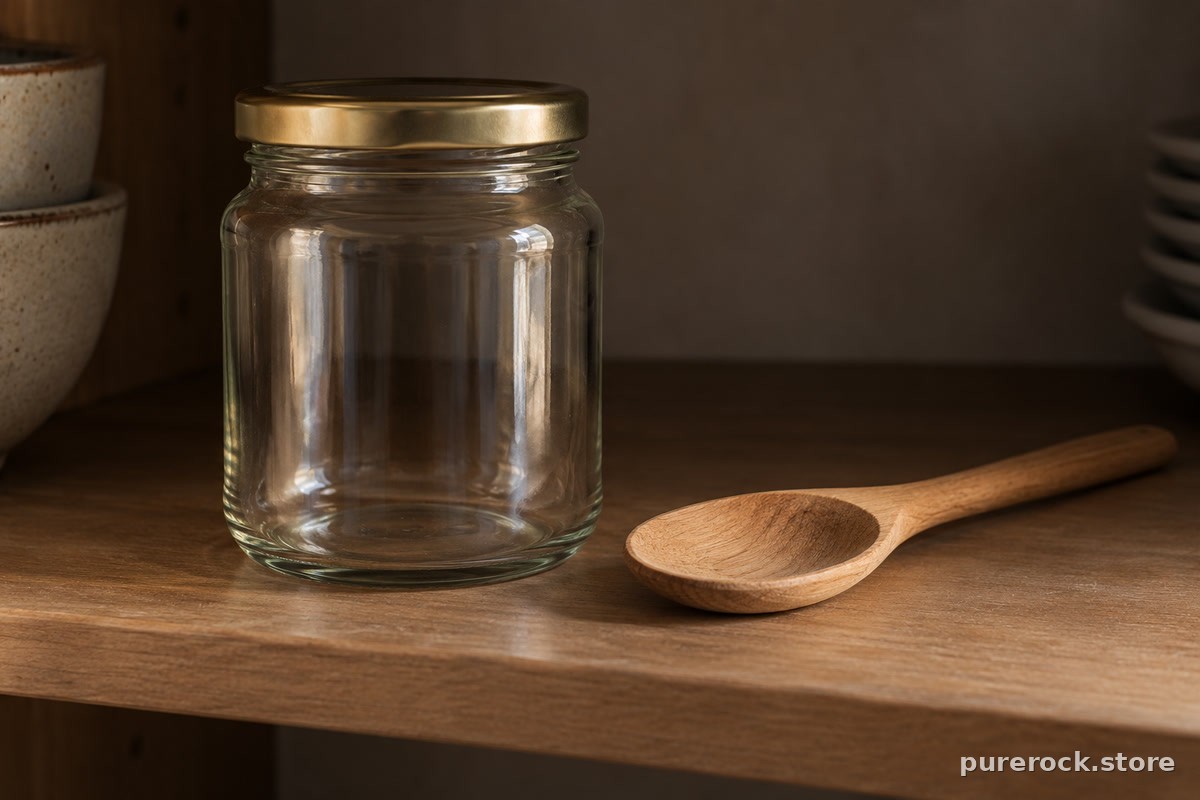
Cool, dry, closed, and away from direct sun is the general rule. Refrigeration is not established as necessary and can add condensation each time you open the jar. The table below summarizes sensible handling. These are common-sense dos and don’ts, not results from a stability trial.
| Do | Don’t |
|---|---|
| Keep the container tightly closed | Leave the lid off between uses |
| Use a clean, dry spoon or stick each time | Dip a wet spoon or your finger |
| Store in a cool, dry cupboard | Keep it on a sunny windowsill or near the stove |
| Note the opening date on the jar | Rely on memory for how old it is |
| Keep gummies in a sealed container, away from heat | Leave gummies in a hot car |
| Follow the label’s best-by and storage instructions | Trust a blog’s “lasts X years” claim |
Mixing, Timing and Fasting
Can you mix shilajit with coffee?
Nobody has studied it, so there is no tested answer. Hot liquid is the common way people dissolve resin, and our how-to-eat guide covers the mechanics. The open questions are whether very hot water changes anything and whether coffee affects how you feel or what you absorb. Our timing guide suggests keeping them separate at first, so that if you react you know which caused it.
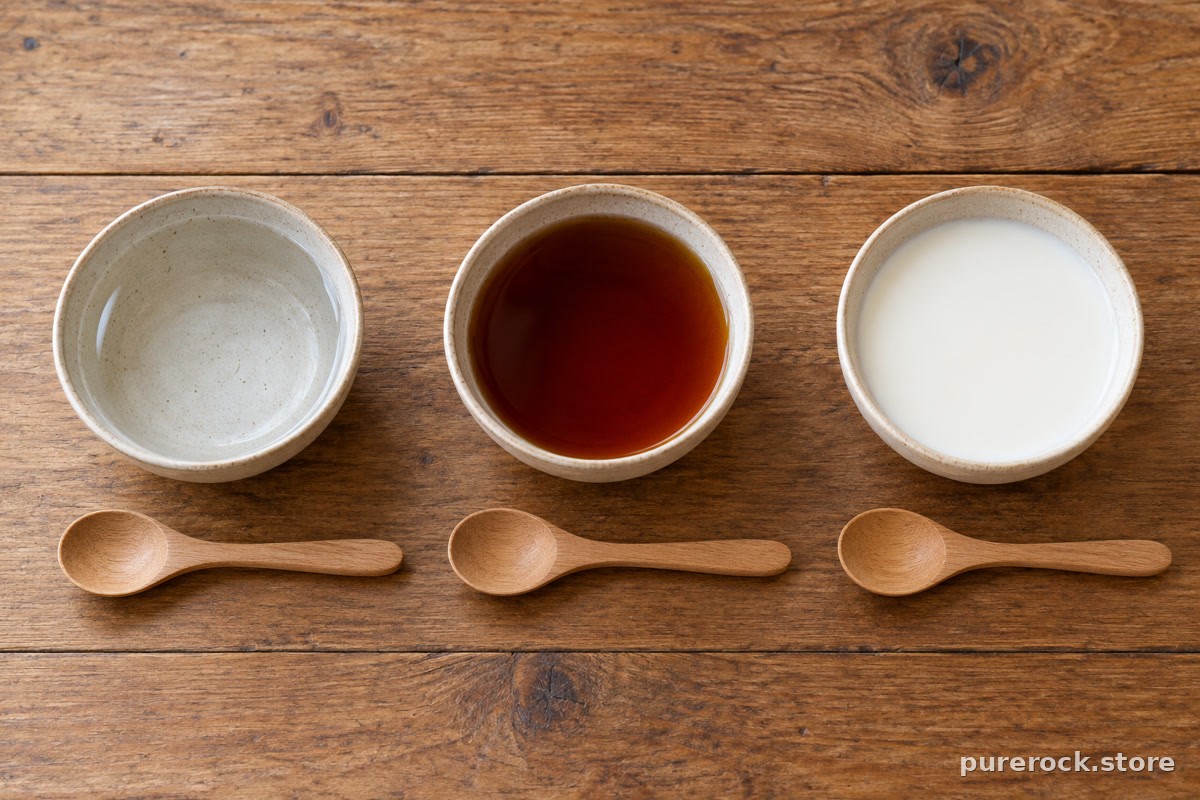
Can you mix shilajit with tea, milk or warm water?
Warm water is the most common suggestion, and milk is also commonly suggested. We could not verify that the human trials used any particular liquid, since the abstracts we reviewed describe capsule or extract doses rather than how they were taken. Very hot liquid is not clearly necessary for dissolving resin, but there is no data on whether it matters. Mixing is mostly a matter of taste and comfort. Dairy or sugar can change how it tastes; see what shilajit tastes like.
Should you take shilajit on an empty stomach?
It is a convention, not a proven requirement. The Ayurvedic tradition and some product guidance favor an empty stomach, while our timing guide found the explicit trial instruction we located was “with food.” If an empty stomach makes you queasy, taking it with a meal is a defensible choice. Consistency matters more than the exact timing, since trials measured steady daily use over weeks.
Can you take shilajit while fasting?
There is no research on fasting and shilajit specifically. A small amount of resin dissolved in water is generally not treated as a meal, but whether that “breaks” a fast depends on your own rules and goals. If you fast for medical reasons, or take medication that needs food, ask your clinician rather than relying on this answer.
Special Situations
Can you drink alcohol while taking shilajit?
No study has tested it. We found no interaction data, and “not studied” is not the same as “safe.” Because alcohol and supplements both stress the same organs, anyone with liver problems or heavy drinking should ask a doctor. Our side-effects guide covers who should avoid shilajit.
Do you need to cycle shilajit on and off?
There is no evidence either way. The trials we reviewed ran continuously, for 8 weeks in the Keller et al. strength trial, 90 days in the Pandit et al. testosterone trial, and 48 weeks in the Pingali et al. bone trial, without cycling. Cycling schedules online are tradition or marketing. See the dosage guide for what trials used.
Can you take shilajit while traveling?
Practically, yes, but a few things help. Capsules and sealed single-serve packets are easier to carry than a soft resin jar that can leak or melt in heat. Customs and airline rules on supplements vary by country, so check them for your route, and keep the product in its original container so it is identifiable.
Can children or pets take shilajit?
No. We found no safety or dosing studies in children, and the research that exists is in adults. For pets, there are no veterinary dosing data we could find, and raw mineral products can carry heavy metals that are a bigger concern for small bodies. If a child or animal swallows some, call a poison control line or a veterinarian.
Is shilajit safe in pregnancy or breastfeeding?
There is not enough safety evidence to say it is, so the conservative position is to avoid it unless a clinician who knows your history agrees. We found no trials in pregnant or breastfeeding women, and the existing studies enrolled men and older women. Our page on shilajit for women covers what is known and unknown.
What No One Has Tested
Several of the most-asked questions share one cause: shilajit’s human evidence is narrow. The trials we cite across this site share a pattern.
- Form. They used standardized extracts, mostly in capsule or measured doses, not raw resin stirred into coffee.
- Duration. They ran 8 weeks to 48 weeks, with continuous daily use.
- Populations. They enrolled adults, mostly men, with a few in older women. None tested children, pregnancy, or pets.
- Outcomes. They measured hormones, strength, bone and biomarkers, not digestion, stability, or beverage mixing.
So when a blog or a seller states a firm rule about coffee, shelf life, fasting, or cycling, it is almost always tradition or opinion. The honest summary is “not studied, and here is the cautious default.” For what is better supported, see does it work and how long it takes, and for a legitimacy check on products, is shilajit legit.
How to Judge Advice You Find Online
A quick filter helps when the same question gets ten different confident answers.
- Ask whether a study is named. If a rule has no citation, treat it as opinion.
- Check what the study used. An extract in capsules says nothing about raw resin in hot coffee.
- Watch for universal language. “Always,” “never,” and “toxic” are rarely backed for shilajit.
- Separate tradition from testing. Ayurvedic custom is a legitimate source of ideas, but it isn’t a trial result.
- Default to caution where evidence is silent. Start low, change one thing at a time, and watch your own response.

FAQ
What does shilajit smell and taste like?
Strong and earthy, often described as smoky or like tar or molasses. It varies by source and form, and gummies and capsules mostly hide it. See what shilajit tastes like for how to cope with it.
Can shilajit affect blood pressure or kidneys?
There are separate pages on both because the evidence is specific and limited. See shilajit and blood pressure and is shilajit good for kidneys rather than relying on a one-line answer.
Can you take shilajit with other supplements?
Interaction data are scarce. Some guidance says to separate shilajit from calcium or iron supplements, as our timing guide notes, and to ask about herbs like ashwagandha. See shilajit and ashwagandha for a one-at-a-time approach.
How much should you take?
Trials used standardized doses such as 250 to 500 mg a day of extract, which is not a recommendation for a resin or gummy. See the dosage guide and ask a clinician.
How do you tell if your shilajit has gone bad?
Look for mold, a new sour or off smell, a changed texture, or moisture that was not there before. If in doubt, discard it. For judging purity at purchase rather than spoilage, see our guide to spotting fake shilajit.
Bottom Line
Say it “SHIL-uh-jit” and nobody will blink. For everything else on this page, the research is silent more often than not: no published stability data, no coffee or fasting trials, no bowel-effect outcomes, no studies in children or pets. Store it dry and sealed, follow the label date, mix it in whatever liquid you find tolerable, and change one thing at a time. If you take medication, are pregnant, or have liver, kidney or thyroid conditions, check with a clinician before starting.