 Purerock
usage
How to Eat Shilajit: A Practical Daily Routine
Buying shilajit is the easy part. Figuring out what to actually do with it — when, how, mixed with what — is where most first-time buyers get stuck. The jar or bottle usually comes with a one-line instruction at best, and the rest gets pieced together from forums, labels, and trial and error.
This guide walks through the practical side of taking shilajit: when in the day people commonly take it and why, what it’s typically mixed with (and what to avoid mixing it with), how the routine differs depending on whether you’re using resin, capsules, or gummies, and the mistakes that trip up most beginners. This is about building a workable daily habit, not about dosage amounts (see our dosage guide for that) or which format to buy in the first place (see our format comparison).
As with everything on this site, treat this as general reference information, not medical advice. Talk to a healthcare provider before adding any new supplement to your routine, especially if you’re pregnant, nursing, on medication, or managing a health condition.
Key Takeaways
- Most people take shilajit first thing in the morning, 20–30 minutes before breakfast, on an empty stomach — but consistency matters more than the exact time.
- Resin should be dissolved in a small amount of warm (not boiling) water or milk, not swallowed as-is or dumped into a full glass.
- Capsules and gummies are lower-effort, taste-neutral alternatives to resin, generally taken with water alongside a meal.
- Avoid boiling-hot liquids, strongly acidic drinks, and diluting resin into too much water — all three make dissolving and dosing harder.
- The biggest factor in whether a shilajit routine “sticks” is anchoring it to an existing daily habit, not finding a theoretically perfect time or method.
What Time of Day Do People Usually Take It
Most labels and traditional sources point to the morning, and many resin labels say to take it about 20–30 minutes before breakfast. That’s a convention rather than a tested rule: the one human trial that stated a timing gave its doses after meals, and no study has compared times of day directly. The part that clearly matters is consistency: pick a slot you’ll actually stick to. For the full morning-vs-night, pre-workout, and caffeine-spacing breakdown, see our guide to the best time to take shilajit.
Empty Stomach vs. With Food
This is one of the more debated practical questions, and it’s worth laying out both sides rather than picking one as definitively correct.
The case for empty stomach:
- No food in the gut to potentially compete for absorption.
- Matches the most commonly cited traditional and label guidance.
- Easier to build into a fixed morning routine (before breakfast, before coffee).
The case for taking it with or right after food:
- Some people find shilajit’s taste and texture easier to tolerate when it’s not the very first thing hitting an empty stomach.
- A small amount of food can reduce the mild stomach unease some beginners report in the first week or two of use, particularly with resin.
- If your only realistic window is later in the day (for example, taking it alongside a mid-morning meal because mornings are rushed), doing it consistently with food beats skipping it entirely.
Neither approach has strong, direct research settling the question specifically for shilajit — most of the reasoning is inference from general supplement-absorption principles and long-standing traditional use, not head-to-head studies. If you’re new to it, a reasonable approach is to try empty stomach first, and if it doesn’t agree with you, shift to taking it with a small amount of food rather than abandoning it. What you take it with (see below) tends to matter more in practice than whether your stomach is technically empty.
What to Mix It With
How you take shilajit depends heavily on format, but resin in particular needs to be dissolved or mixed rather than eaten as-is.
Warm water
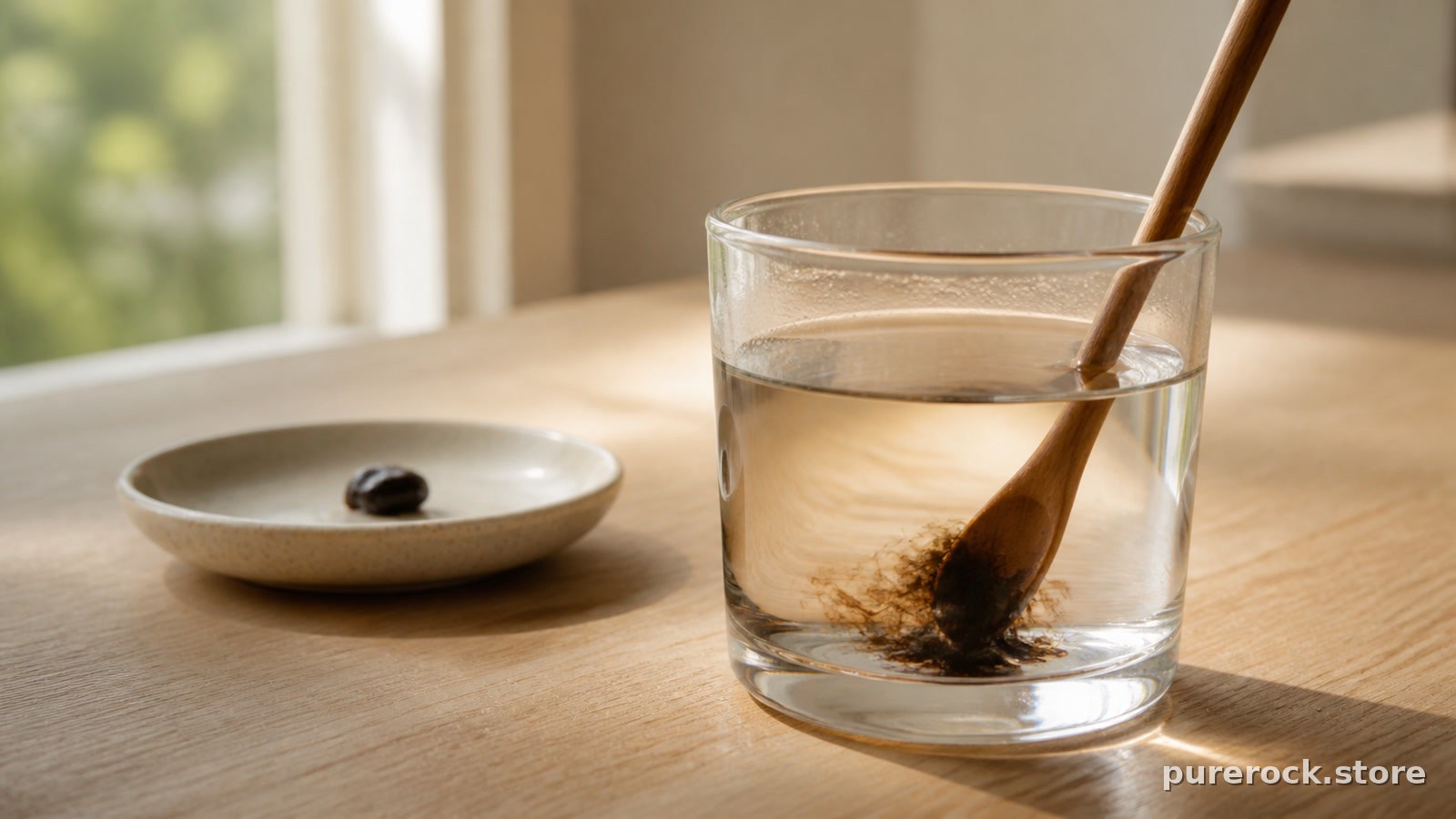
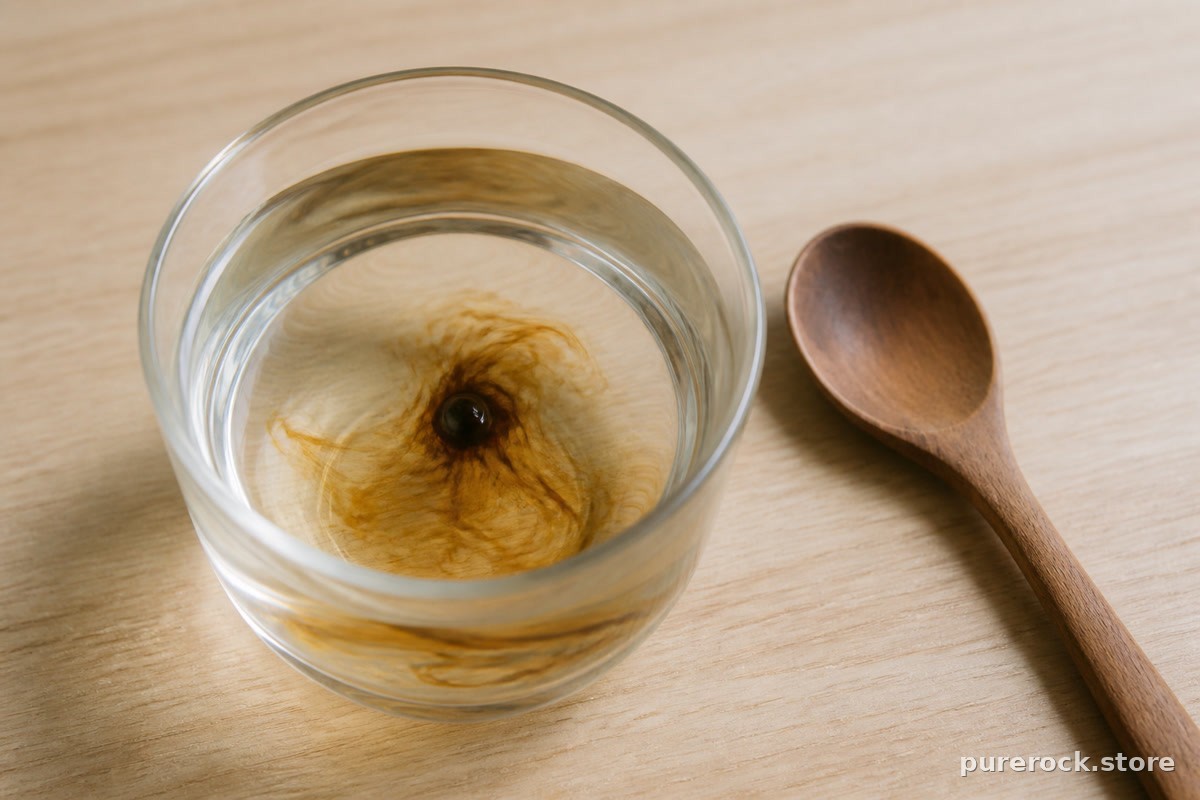
The most commonly recommended base. A pea-sized amount of resin is dropped into a small amount of warm (not boiling) water and stirred until it dissolves, which usually takes a minute or two — resin doesn’t dissolve instantly the way sugar does, and a slightly gritty or slow-dissolving texture is normal, not a sign of a bad product. Warm water is the default because it doesn’t introduce other variables (fat content, sugar, caffeine) that could complicate figuring out how a new supplement affects you.
Warm milk
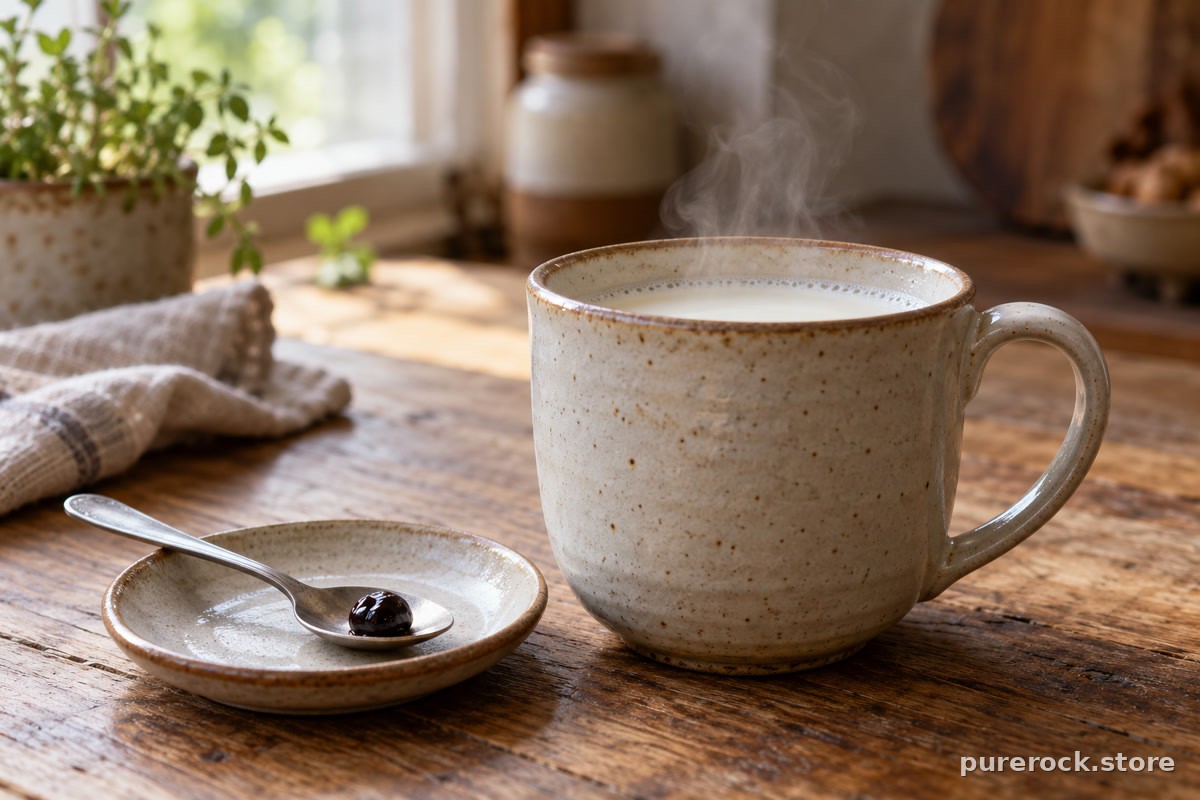
A common alternative, especially in traditional use, sometimes with a small amount of honey or ghee added. Milk’s fat content is sometimes cited as helpful for dissolving and taking certain compounds, though this is more a matter of established practice than something with dedicated shilajit-specific research behind it. If you’re dairy-sensitive, this isn’t a required step — warm water works fine on its own.
Tea
Some people stir resin into a mild herbal tea instead of plain water, mainly for taste. This is generally fine, but it’s worth being mindful of which tea — strongly acidic or very tannic teas are sometimes flagged anecdotally as less ideal, discussed more below. Mild options like chamomile, ginger, or rooibos are the ones that show up most often in this context; heavily caffeinated black tea or coffee are usually treated as separate from the shilajit dose rather than a mixing base, partly because caffeine and shilajit are two different variables and it’s harder to tell how you’re responding to either one if you always take them together.
Honey
A small amount of raw honey stirred in alongside the resin is a common addition, mostly for taste rather than any documented functional reason. If you go this route, the honey is typically added after the resin has already dissolved in warm water, since dissolving resin directly into thick honey is slower and harder to judge for completeness than dissolving it in a thinner liquid first.
What to avoid
- Boiling-hot liquids. Some sources caution against dissolving resin in water that’s actively boiling, on the reasoning that high heat may degrade some of the more heat-sensitive compounds. This isn’t rigorously established for shilajit specifically, but it costs nothing to err on the side of warm rather than scalding, and it also makes the resin easier to dissolve without clumping.
- Highly acidic drinks. Citrus juices or very acidic beverages are sometimes avoided on the theory that a strongly acidic environment could interact with mineral content, though again this is more commonly cited caution than settled research. Plain water, milk, or mild tea remain the more conservative default choices.
- Mixing into a large glass of liquid. A common beginner mistake — see below.
How the Routine Differs by Format
The “how do I take this” question looks different depending on what you bought. This is a practical overview; for the deeper buying and quality considerations for each format, see our dedicated guides.
Resin requires the most hands-on routine: pinch off a pea-sized amount, drop it into a small amount of warm water or milk, stir until dissolved (a minute or two), and drink it. It’s the format with the most preparation involved, but also the one most people associate with traditional use. See our resin guide for sourcing and quality considerations.
Capsules are the lowest-effort option: swallow with water, similar to any other supplement capsule, typically before or with breakfast. There’s no dissolving step and no taste to manage, which is why capsules are often the format people switch to after starting with resin. See our capsules guide for what’s inside a typical capsule and how it compares to resin.
Gummies are similarly low-effort — chew and swallow, often timed with breakfast the same way a daily vitamin gummy would be. Because gummies usually contain added sugars or flavoring, some people treat them as the most “convenience-first” option, at some cost to how close they are to raw, unprocessed resin.
The practical tradeoff across all three: resin asks more of your morning routine but is the format closest to traditional preparation, while capsules and gummies trade some of that traditional feel for consistency and portability (useful for travel, work, or anyone who knows they won’t stick to a multi-step morning ritual).
Building a Consistent Habit
The single biggest factor in whether shilajit “works” as part of someone’s routine isn’t the exact timing or mixing method — it’s whether they actually take it consistently for more than a week or two. A few things that help:
- Anchor it to an existing habit. Right before or after brushing your teeth, right when you start the coffee maker, right before breakfast — attaching a new habit to an established one is a well-known way to make it stick, and it applies just as much to a supplement as anything else.
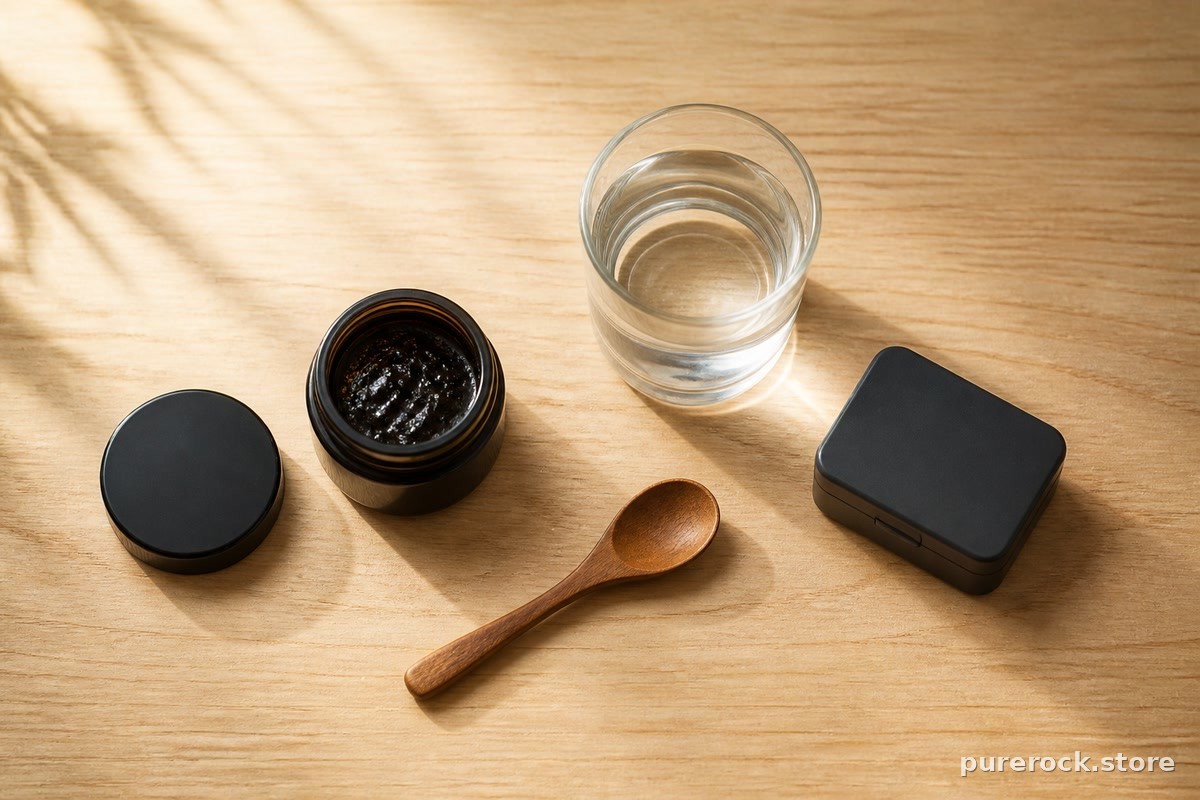
- Prep the night before if mornings are rushed. Some people portion out resin the night before (a small piece on a spoon or in a pillbox) so the only step in the morning is dissolving and drinking it.
- Keep it visible. A jar left in a cupboard gets forgotten; a jar next to the kettle or coffee maker gets used.
- Expect the first couple of weeks to feel like “remembering,” not “routine.” Most habits take a few weeks before they stop requiring conscious effort — this isn’t unique to shilajit.
Common Beginner Mistakes
A handful of mistakes come up repeatedly with people trying shilajit for the first time:
- Using too much liquid. Dissolving a pea-sized amount of resin into a full 12-ounce glass of water makes it easy to not finish the glass, and easy to under-dissolve the resin at the bottom. A small amount of liquid — a few ounces, enough to fully dissolve the resin — is easier to drink completely and track consistently.
- Using water that’s too hot or too cold. Boiling water risks degrading heat-sensitive compounds (see above); cold water makes resin dissolve very slowly and can leave it gritty. Warm — comfortable-to-drink temperature — is the practical middle ground.
- Inconsistent timing. Taking it at 6 a.m. one day and 4 p.m. the next, or skipping several days at a stretch, makes it hard to notice any pattern in how you feel and makes the habit easy to drop entirely. A fixed daily window, even a loose one, works better than an “whenever I remember” approach.
- Not letting resin fully dissolve. Swallowing undissolved clumps can result in an unpleasantly strong, bitter hit of taste all at once, which is one of the more common reasons people say they “don’t like” resin — often it’s a dissolving-technique issue rather than a taste-of-the-product issue.
- Jumping to a large amount right away. Starting with a smaller amount than the label’s upper range and increasing gradually (see our dosage guide) is the more commonly recommended approach for anyone new to it, partly to gauge personal tolerance before settling into a routine.
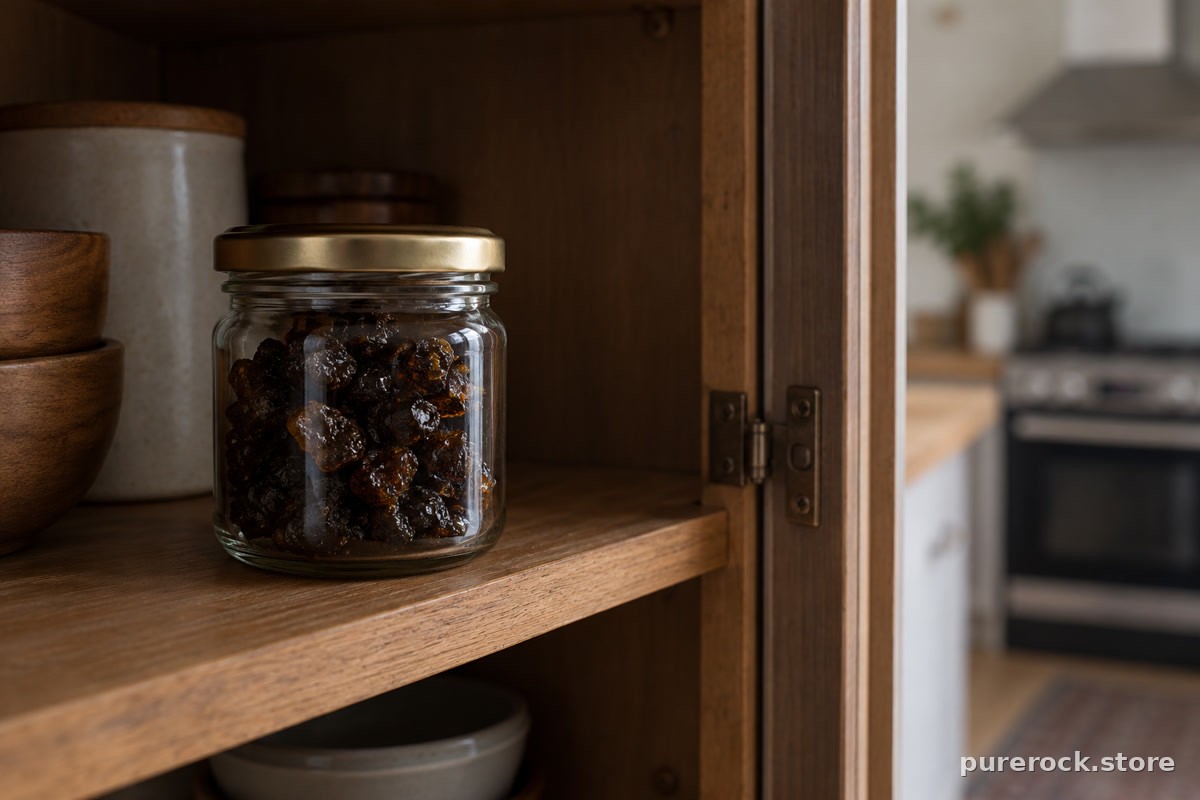
- Storing resin somewhere warm. Resin left near a stove, in direct sun, or in a hot car can soften significantly, making it harder to portion out a consistent pea-sized amount. A cool, dry cupboard is the more practical storage spot for keeping day-to-day handling consistent.
Putting It Together: A Sample Morning Routine
As a concrete illustration — not a prescription — here’s what a resin-based morning routine commonly looks like in practice:
- Wake up, start the kettle for warm (not boiling) water.
- While the water is still warm rather than scalding, pinch off a pea-sized amount of resin onto a spoon.
- Drop it into a small amount of warm water (or warm milk) — a few ounces, not a full glass.
- Stir for a minute or two until it’s mostly or fully dissolved.
- Drink it before breakfast, then go about a normal morning.
For capsules or gummies, steps 2–4 collapse into “take with water alongside breakfast,” which is part of why many people who start with resin eventually switch formats once they’ve decided they want shilajit as a long-term routine rather than something they’re still evaluating.
The Bottom Line
There’s no single universally “correct” way to take shilajit — what shows up across labels, traditional practice, and user habits is a cluster of common patterns: morning, empty stomach or shortly before food, dissolved in warm (not boiling) water or milk, in a small amount of liquid, taken consistently rather than sporadically. Where you land within that range matters less than picking a routine you’ll actually repeat daily, since consistency is the one variable within your control that most consistently shows up in how people describe their experience with it.
If you’re still deciding what to buy in the first place, our guides on resin, capsules, and dosage ranges walk through the format- and amount-specific details this page intentionally left out.
FAQ
Can I take shilajit at night instead of in the morning? Yes, some people do, and no study shows that timing changes its effects. The main anecdotal caveat is that a few people find it mildly energizing close to bedtime. Our best time to take shilajit guide covers how to test that for yourself.
Do I need to take shilajit every day, or can I cycle it? Most labels and traditional use patterns describe daily use, and the “building a habit” framing in this guide assumes daily intake. Some people do choose to cycle — for example, five days on and two off, or a few weeks on followed by a break — though this is more a personal preference than something with dedicated research behind it specifically for shilajit.
Is it normal for resin to taste bitter and strong? Yes, this is expected and one of the more commonly reported first impressions of resin, especially compared to capsules or gummies which mask the taste. If the bitterness feels overwhelming, check whether the resin has fully dissolved (see “Common Beginner Mistakes” above) and consider mixing with warm milk and a small amount of honey rather than plain water.
Can I mix shilajit into coffee? It’s not commonly recommended as a first choice, mainly because coffee is acidic and combines two variables (caffeine and shilajit) in one dose, making it harder to tell how each is affecting you if you’re new to either. Warm water or milk remains the more conservative starting point; once you have a sense of how shilajit affects you on its own, some people do move it into their coffee routine for convenience.
What if I forget a dose — should I double up the next day? No, the general guidance for a missed dose of any daily supplement applies here too: skip it and resume your normal amount the next scheduled time, rather than doubling up. Consistency over the course of weeks matters more than making up for a single missed day, and doubling a dose isn’t a substitute for regular daily use.
Related Guides
- Shilajit FAQ: quick answers on pronunciation, shelf life and more.
- How to choose the best shilajit: a brand-free checklist.
- Shilajit side effects and safety: documented versus theoretical risks.