 Purerock
purity
Shilajit vs Fulvic Acid: What Each Contains, What's Proven
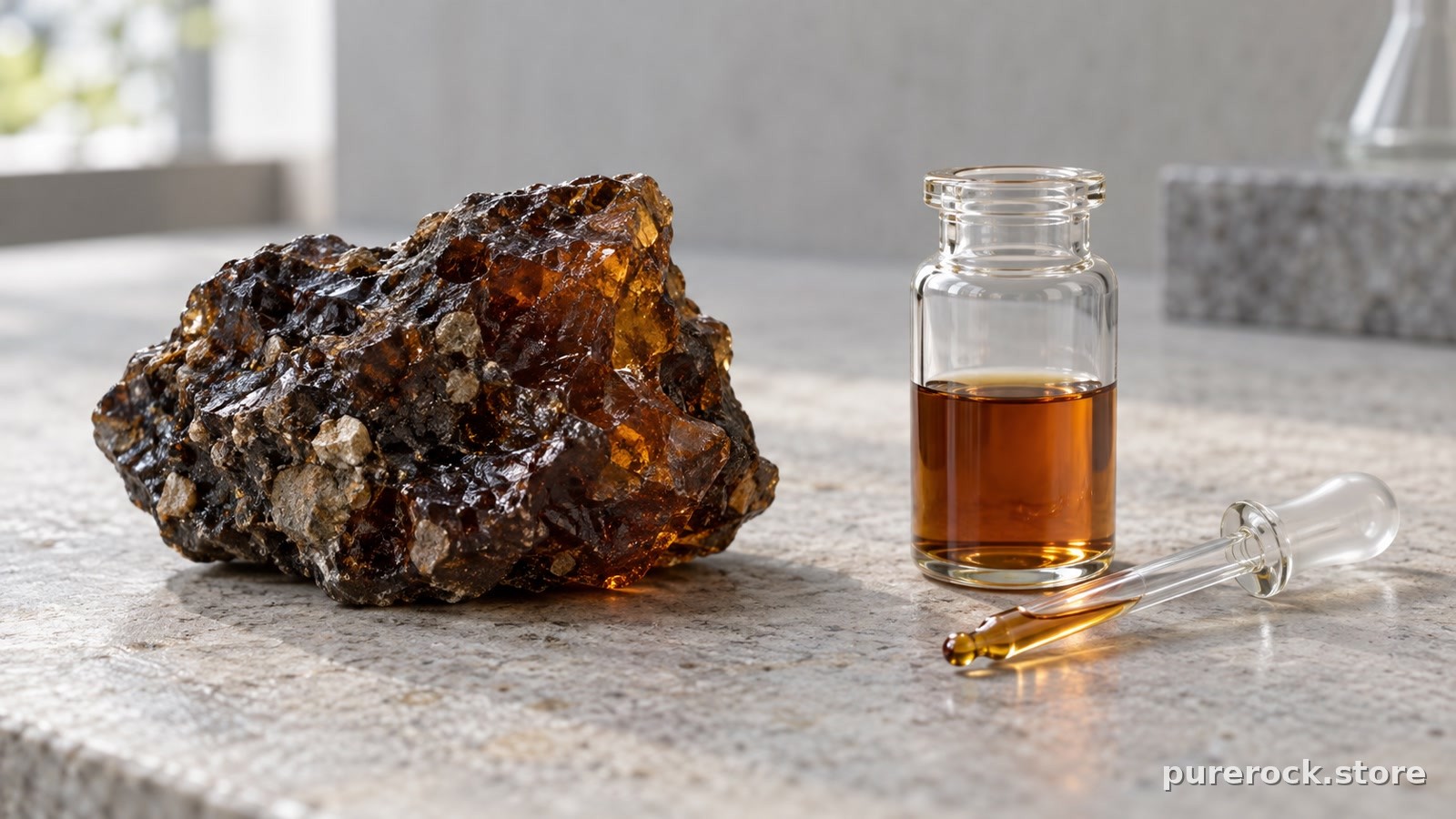
Fulvic acid gets called the “active ingredient” in shilajit so often that some people skip the resin and buy fulvic acid drops instead. Comparing shilajit vs fulvic acid isn’t comparing a whole to one of its parts, though. “Fulvic acid” is a lab-defined fraction of organic matter that can be pulled from coal, peat, or shilajit, and the small body of human research on each points in very different directions.
Key Takeaways
- Fulvic acid isn’t a single molecule. It’s defined by a lab procedure, so a different procedure can report a different amount.
- No validated method for measuring fulvic acid in commercial products existed until 2014, and that one was built for fertilizers. Label percentages from different methods don’t compare cleanly.
- Published estimates put shilajit at about 15–20% fulvic acid raw and 50% or more as a concentrated extract. Shilajit also contains humic acid, dibenzo-α-pyrones, and minerals.
- Standalone fulvic acid can come from coal, peat, shilajit, or a synthetic carbohydrate-derived version, and labels often don’t say which.
- Human evidence is thin for both and thinner for fulvic acid alone. The shilajit trials tested a whole standardized extract, so their results don’t carry over to fulvic acid drops.
What Fulvic Acid Actually Is (and Why a Lab Procedure Defines It)
When plants and microbes decay in soil, peat, sediment, or rock crevices, they leave behind a dark, chemically messy mixture called humic substances. Scientists don’t sort that mixture by structure, because there isn’t one fixed structure to sort by. They sort it by solubility:
- Humic acid: dissolves in alkaline solution but drops out when the solution is acidified to about pH 1.
- Fulvic acid: stays dissolved at both high and low pH.
- Humin: dissolves in neither.
So “fulvic acid” means whatever is still in solution after that procedure. It’s a category defined by how a sample behaves in a flask, not a compound with a fixed formula like caffeine. Its chemistry also depends on where it came from. A 2018 review in the Journal of Diabetes Research (Winkler and Ghosh) notes that fulvic acid isolated in Israel was about 49% carbon by mass, compared with about 39% for a sample from Italy.
That’s the first thing to understand about shilajit vs fulvic acid. One is a specific natural material. The other is a class of material that can be extracted from many sources.
Why “% Fulvic Acid” Isn’t a Standard Number
This is the part most marketing leaves out. In the classic procedure, the “fulvic fraction” is everything that stays soluble at low pH, and that includes non-humic compounds such as sugars, amino acids, and proteins. A 2014 paper in the Journal of AOAC International (Lamar et al.) tightened the definition. It counts only the material that binds to a specific resin, which the authors call hydrophobic fulvic acid, and weighs it on an ash-free basis. The authors wrote that “until this work, there has been no validated analytical method for determining the quantity of HA and FA in any material.” They also cited earlier work showing that a colorimetric method and a California Department of Food and Agriculture method, both then in general use, overestimated the humic acid content of humic ores compared with a gravimetric method.
That approach became ISO 19822:2018, a standard written for fertilizers and soil conditioners, not dietary supplements. No published study has compared methods on shilajit itself, but the implication carries over:
- A figure based on the broad “fulvic fraction” will usually be higher than one based on the stricter resin-bound definition.
- Colorimetric, gravimetric, and chromatographic methods don’t measure exactly the same thing. ConsumerLab’s methods page for its 2024 shilajit testing lists HPLC and quantitative titration, which is different again.
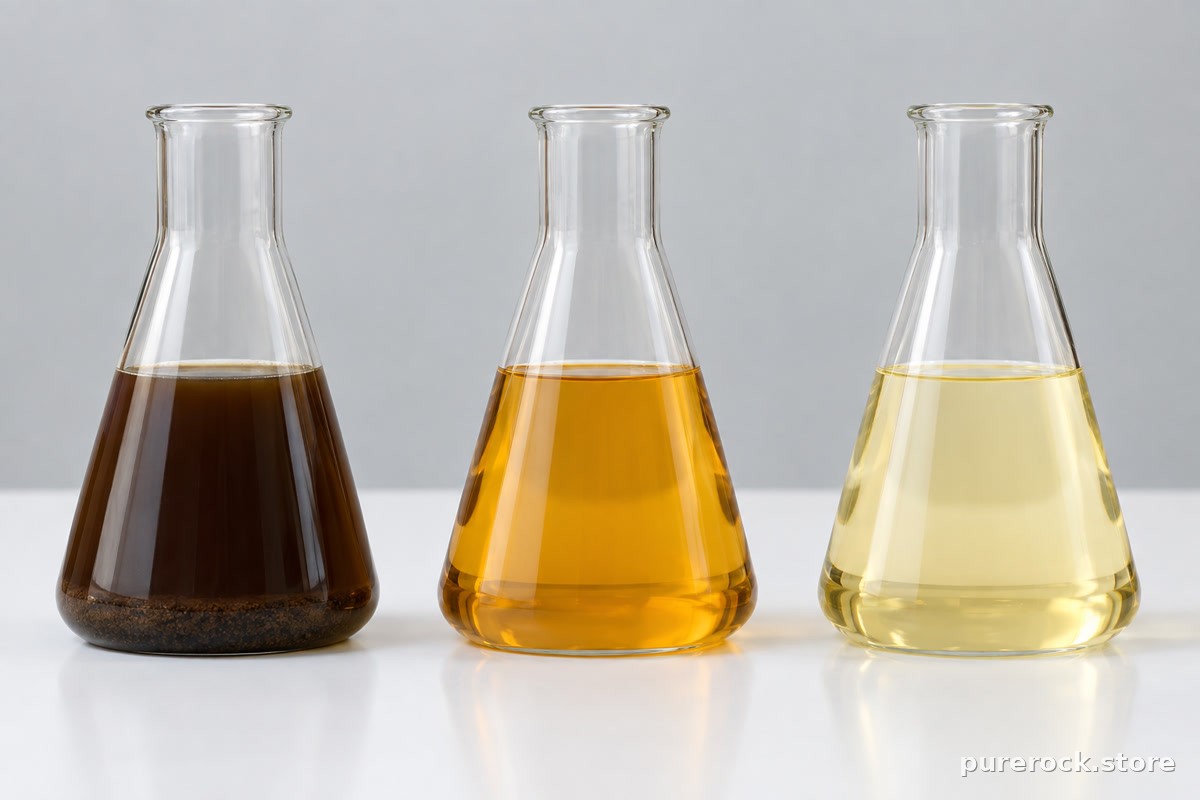
So “70% fulvic acid” on one label and “20%” on another may not mean a 3.5-fold difference in anything. For what to ask a seller about their number, see our supplement buying guide. The point here is simpler: a percentage means little until you know the method.
How Much Fulvic Acid Is in Shilajit?
It depends on the material and the method, and the published figures show why:
- Raw shilajit: about 15–20%. Winkler and Ghosh state that shilajit “contains about 15–20% FvA.”
- All humic substances: about 60–80% or more. A 2012 paper in the International Journal of Alzheimer’s Disease (Carrasco-Gallardo et al.) describes shilajit as “composed mainly of humic substances, including fulvic acid, that account for around 60% to 80% of the total nutraceutical compound.” That figure counts humic and fulvic material together. A 2025 chemistry review (Kamgar et al.) puts it above 80%, so estimates range from about 60–80% to over 80%, depending on the analysis.
- Standardized extracts: 50% or more. The purified extract in a 2019 trial in the Journal of the International Society of Sports Nutrition (Keller et al.) was “composed of ≥50.0% fulvic acid as well as 10% of free DBP and DBP conjugated with chromoproteins.”
- Finished products: all over the map. ConsumerLab’s 2024 testing of eight shilajit supplements found 6.9 mg to 2,206 mg of fulvic acid per serving. Resins “contained far less fulvic acid than extracts in capsules and pills,” and amounts were “typically not listed on labels.”
These figures don’t contradict each other. They measure different things: raw versus concentrated material, fulvic acid alone versus all humic substances, and one method versus another.
What Shilajit Contains Beyond Fulvic Acid
If shilajit were simply fulvic acid in a jar, a fulvic acid supplement would be a cheaper, cleaner substitute. Researchers don’t describe it that way.
Dibenzo-α-pyrones (DBPs). These are small aromatic compounds, found both free and bound to protein-like “chromoproteins.” A 2014 review in Phytotherapy Research (Stohs) concluded that the “key constituents in shilajit responsible for these effects appear to be dibenzo-α-pyrones and fulvic acid and their derivatives.” The extract in the Keller trial was standardized for DBPs as well as fulvic acid. Fulvic acid products aren’t.
Humic acid and humin. Carrasco-Gallardo et al. note that humins, humic acids, and fulvic acids “are found in all shilajit preparations.”
Minerals. Shilajit picks up minerals from the surrounding rock. Some are ordinary, like calcium and iron, and some are unwanted, like the thallium discussed below.
Plant-derived phenolics. A 2026 analysis in Scientific Reports (Kamgar et al.) measured nine phenolic acids, led by gallic acid, in eleven shilajit samples from Iran, India, Nepal, Russia, and Kyrgyzstan. It found “pronounced geographical variation” between them.
This variety is part of why fakes are hard to spot by eye, which we cover in our guide to spotting fake shilajit. Shilajit and fulvic acid overlap, but they aren’t interchangeable.
Where Standalone Fulvic Acid Supplements Come From
Fulvic acid drops and “fulvic mineral” liquids aren’t necessarily made from shilajit. The Winkler and Ghosh review describes several sources:
- Coal. The review lists coal among the parent materials humic substances are isolated from. Commercially, humic and fulvic acids are extracted from raw humate ores, the same ores the agricultural humic industry uses and the ones the Lamar method was designed for. A variant called oxifulvic acid comes from “controlled wet oxidation of carbon-containing coal,” according to a 2012 Clinical Pharmacology paper by Gandy et al.
- Peat. The review mentions fulvic acid extracted from Canadian sphagnum peat.
- Shilajit. Fulvic acid can be isolated from shilajit, though a fulvic acid label won’t necessarily say so.
- Carbohydrates. Carbohydrate-derived fulvic acid (CHD-FA) is a synthetic version. Gandy et al. describe it as “heavy metal-free.”
A label that just says “fulvic acid” could mean any of these, and as the carbon figures above show, they aren’t chemically identical.
The Human Evidence: Shilajit vs Fulvic Acid Supplements
Neither has much, but the gap between them is wide.
Shilajit. A few small randomized, placebo-controlled trials have tested one purified, standardized extract. They include a 90-day testosterone trial in men aged 45–55 (Pandit et al., Andrologia, 2016), an 8-week trial in 63 young men where only the 500 mg dose helped retain strength, in the half of participants with higher baseline strength (Keller et al., 2019), and a 48-week bone density trial in 60 postmenopausal women with osteopenia (Pingali and Nutalapati, Phytomedicine, 2022). The Keller paper states that the project “was funded by” the extract’s manufacturer. We grade these trials in our evidence review of whether shilajit is legit. All of them tested a whole extract containing fulvic acid and DBPs, not fulvic acid alone.
Fulvic acid alone. In September 2026, a PubMed search for fulvic acid studies tagged as randomized or clinical trials returned only two results, both in livestock. The human work that exists is small:
- Gandy et al., Clinical Pharmacology, 2012. A phase 1 safety study in 30 male volunteers with allergies. Doses of a 3.8% CHD-FA solution escalated up to 40 mL twice daily, followed by a one-week placebo-controlled crossover. Safety measures stayed stable, and skin-prick reactions decreased. Reported side effects were diarrhea, headache, and a sore or burnt throat, which the authors put down to the solution’s low pH. It lasted weeks, and it used synthetic fulvic acid, not the coal- or peat-derived kind.
- Everything else. The Winkler and Ghosh review discusses only a few other human studies. Two applied fulvic acid to the skin, and one combined it with probiotics and found no improvement in gastrointestinal symptom scores. On blood sugar, the authors wrote that “there is no direct evidence in the English language showing only FvA” affecting type 2 diabetes symptoms.
Fulvic acid products often borrow shilajit’s research, and shilajit’s reputation is often credited to fulvic acid. The trials don’t support that swap in either direction. No trial has compared the two, or shown that fulvic acid alone reproduces anything seen in the shilajit trials.
Safety: What’s Known for Each
Shilajit. The documented concerns are about contamination. A 2025 study in BMC Chemistry (Kamgar et al.) found thallium, a highly toxic metal, at up to 0.226 µg/g in raw shilajit and up to 0.5 µg/g in supplements. Some supplements had more than the raw material, and the authors called for “regular monitoring and standardized testing.” ConsumerLab’s 2024 testing, on the other hand, found lead, cadmium, arsenic, and mercury “beneath levels of concern if taken as single dose per day” in all eight products it checked. Results vary by product.
Fulvic acid. Almost all the human safety data comes from the weeks-long Gandy study of synthetic CHD-FA. Beyond that, the signals come from lab and environmental research, and they call for caution, not alarm:
- A 1999 study in Environmental Health Perspectives (Peng et al.) used cartilage cell cultures and rats in a selenium-deficient model. Fulvic acid increased lipid peroxidation, a marker of oxidative damage, and built up in bone and cartilage. The authors hypothesized that fulvic acid in drinking water contributes to Kashin-Beck disease, a bone and joint disorder seen in parts of China. That’s a hypothesis about long-term drinking-water exposure, not a finding about supplements, but it shows fulvic acid isn’t biologically inert.
- Winkler and Ghosh note that fulvic acid’s effects in lab studies have been inconsistent and that these “discordant effects seem to result from variances in therapeutic dosages and/or the origin of FvA.”
Both are sold as dietary supplements in the US, and the FDA states that it “does not have the authority to approve dietary supplements before they are marketed.” If you take medication or have a health condition, talk to your doctor before adding either.
Shilajit vs Fulvic Acid Side by Side
| Shilajit | Standalone fulvic acid supplement | |
|---|---|---|
| What it is | A natural rock exudate with many components | One lab-defined fraction of humic material |
| Typical sources | High-altitude rock (Himalaya, Altai, Caucasus, and others) | Coal, peat, shilajit, or synthetic |
| Fulvic acid content | ~15–20% raw; ≥50% in one standardized extract | Varies by source and method; often not disclosed comparably |
| Other constituents | Humic acid, humin, dibenzo-α-pyrones, minerals, phenolics | Mainly the fulvic fraction; may include non-humic compounds |
| Human trials | A few small RCTs of one extract, mostly manufacturer-funded | One small phase 1 safety study of a synthetic version |
| Documented safety concerns | Heavy metals and thallium in some products | Little human data; lab work shows it isn’t inert |
| Measurement problem | “% fulvic acid” varies by method | Same, and the source is often unstated |
How to Choose Between Them
There’s no evidence-based way to call one “better.” It depends on what you’re after.
- If the shilajit trials are what interest you, the closest match is a purified shilajit extract standardized for both fulvic acid and DBPs. Fulvic acid drops aren’t a substitute.
- If you want fulvic acid because it’s “the active part,” know that this hasn’t been tested in humans. It’s one of several constituents researchers credit, not a proven active ingredient.
- If you buy a fulvic acid product, ask what it was made from (coal, peat, shilajit, or synthetic) and how the fulvic acid was measured.
- If you buy shilajit, the heavy-metal panel matters more than the fulvic acid figure. Our buying guide has the full checklist.

FAQ
Is fulvic acid the same as shilajit? No. Fulvic acid is one fraction of humic material, and it can be extracted from coal, peat, or shilajit. Shilajit contains fulvic acid plus humic acid, dibenzo-α-pyrones, minerals, and other compounds.
How much fulvic acid is in shilajit? Estimates range from about 15–20% in raw material to 50% or more in concentrated, standardized extracts. The eight products ConsumerLab tested in 2024 ranged from 6.9 mg to 2,206 mg per serving. Because the result depends on the measurement method, figures from different labs don’t compare cleanly.
Why do fulvic acid percentages on labels vary so much? Partly because products really do differ, and partly because “fulvic acid” is defined by a procedure. A broad solubility-based method counts compounds that a stricter resin-based method leaves out, and a validated method didn’t exist until 2014.
Can you take shilajit and fulvic acid together? No study has tested the combination, so there’s no evidence either way. Combining them mostly adds fulvic acid from a second source, along with that source’s contamination questions. Check with your doctor first, especially if you take medication.
Related Guides
- What is in shilajit: minerals, fulvic acid and lab variability.
- What is shilajit?: the plain-language definition and glossary.
- How to choose the best shilajit: a brand-free checklist.
Bottom Line
Shilajit and fulvic acid aren’t really rivals. Fulvic acid is one of shilajit’s parts, and it can also come from coal, peat, or a lab. Shilajit has a small, mostly manufacturer-funded set of trials on one standardized extract. Fulvic acid alone has a weeks-long safety study of a synthetic version and little else.
For either one, the fulvic acid percentage on the label tells you less than it seems to. Ask how it was measured, where the product came from, and what the heavy-metal results show.