 Purerock
purity
Himalayan Shilajit: Origin Claims You Can't Verify
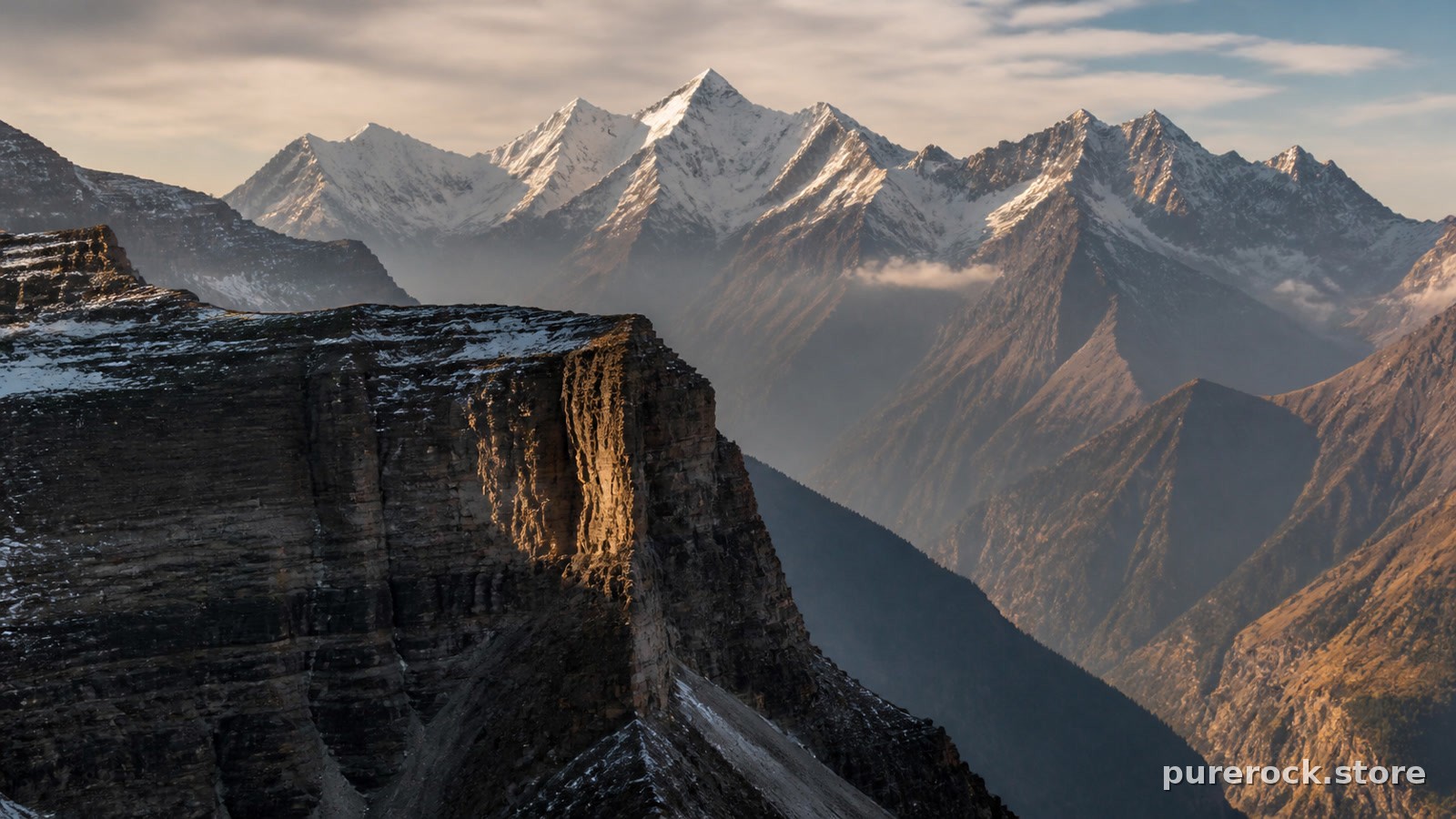
Almost every shilajit product on the market carries the word “Himalayan” somewhere on its label, whether it comes from a small resin importer or a mass-market gummy brand. The word has become shorthand for authenticity and potency, the same way “Swiss” signals precision or “Kobe” signals a certain kind of beef — but unlike a texture test or a dissolve test, an origin claim isn’t something you can verify by handling the product yourself. This guide focuses specifically on that gap: what geographic origin actually means for shilajit quality, why it matters but isn’t the whole story, and how to think about origin claims as a consumer who has no realistic way to trace a jar back to a specific rock face.
This is a different question from adulteration. A product can be genuinely, verifiably Himalayan-sourced and still be cut with fillers or poorly purified. A product from a different range entirely can be meticulously processed and lab-tested to a high standard. Origin and purity are related but separate axes, and conflating them is one of the more common mistakes buyers make when evaluating a product based on label claims alone.
Key Takeaways
- “Himalayan” is not a controlled or certified term — legally, it can be applied to product with no verifiable connection to the mountain range, so the word alone tells you almost nothing about actual sourcing.
- Origin does have a real geological basis: altitude, rock chemistry, and decomposition conditions genuinely affect mineral content and fulvic acid concentration, but the relationship isn’t a clean “higher altitude equals higher quality” scale.
- There is no home test for geographic origin the way there is for adulteration — texture, smell, and dissolve behavior are driven by processing, not by which mountain range the resin came from.
- Altai and Caucasus shilajit can be equally or better documented than a vague “Himalayan” claim, and shouldn’t be dismissed on the basis of brand recognition alone.
- When origin and lab testing are in tension, a verified, batch-specific certificate of analysis is the more decisive signal, because it speaks to safety and composition directly rather than to an unverifiable geographic label.
Why “Himalayan” Became the Default Marketing Claim
Shilajit’s traditional use history is rooted overwhelmingly in the Himalayan region — Ayurvedic and Tibetan medicine both reference resin harvested from high-altitude rock seams across present-day Nepal, northern India, Bhutan, and Tibet. That historical association is real and well-documented, which is exactly why it became the default marketing term even for products whose actual sourcing is murkier. A phrase with genuine traditional weight is more persuasive than a generic one, so it gets applied broadly — sometimes accurately, sometimes as a catch-all descriptor with no specific sourcing behind it.
The practical effect is that “Himalayan” on a label today tells you almost nothing on its own. It can mean resin harvested at 16,000+ feet in a specific valley with a documented supply chain, or it can mean a supplier’s generic marketing language applied to material of uncertain origin. Both products can legally use the word.
Compare this to how geographic indications work in other food and supplement categories. “Champagne” is legally restricted to sparkling wine from a defined region in France, produced under specific rules — using the name for wine made elsewhere is a trademark violation in most markets that recognize the designation. “Himalayan” carries no equivalent legal protection for shilajit. There’s no governing body certifying that a jar labeled “Himalayan” actually contains material extracted from the Himalayan range, no registry a buyer can check, and no penalty for a seller who applies the term loosely. The word functions entirely as marketing language, borrowing credibility from a real geological and traditional association without being bound by any of the verification requirements that come with an actual certification.
How Altitude and Region Actually Affect Composition
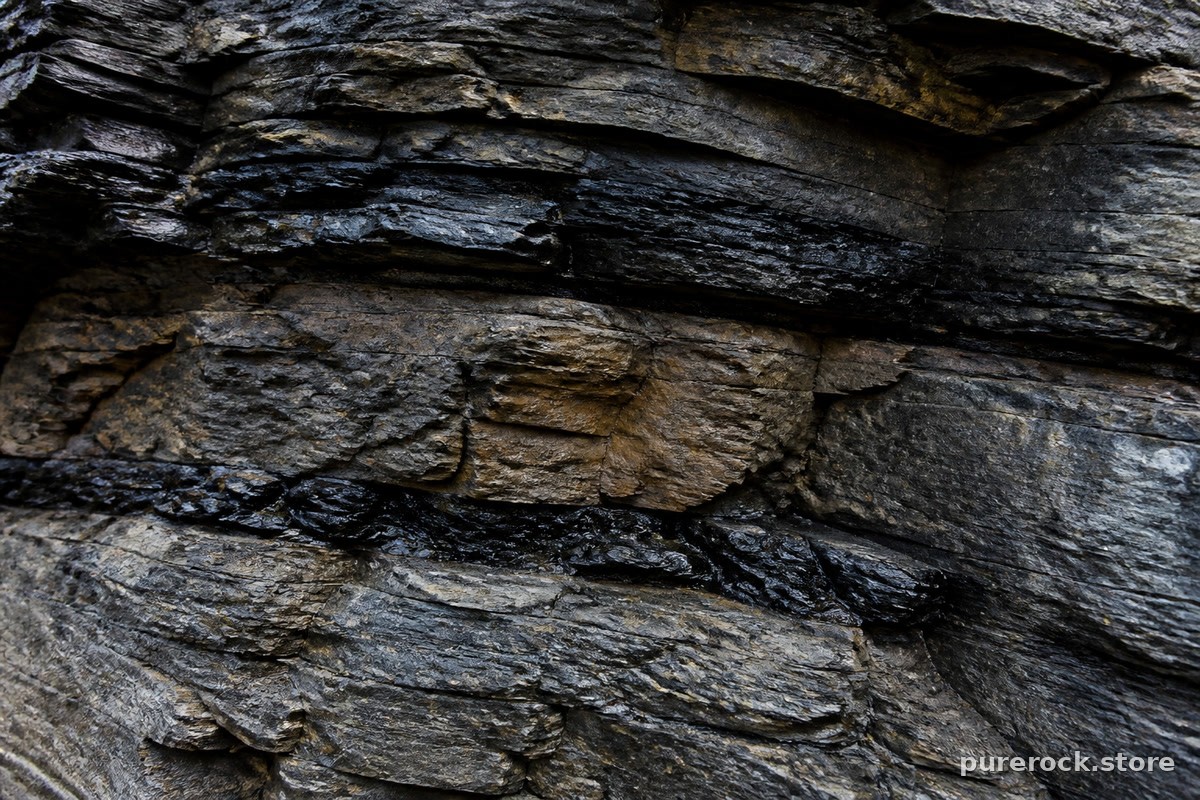
Setting marketing language aside, there is a real geological basis for why origin can matter. Shilajit is generally thought to form from plant material that gets compressed between rock layers over centuries and slowly breaks down under pressure, heat, and microbial activity, absorbing minerals from the surrounding strata as it does. Because the mineral composition of rock varies by mountain range, and because altitude affects temperature, pressure, and the rate of organic decomposition, shilajit from different regions doesn’t have an identical chemical fingerprint. Which plants contribute is still debated — reviews name candidates including mosses, liverworts, Euphorbia royleana, and clover (Trifolium repens) rather than settling on one source (Carrasco-Gallardo et al., 2012; Kamgar et al., 2025).
Published mineral analyses of shilajit samples from different regions have found measurable differences in trace mineral ratios — the relative concentrations of elements like iron, zinc, copper, and various trace minerals shift depending on the surrounding geology. Fulvic acid concentration, the compound class most associated with shilajit’s bioactivity, also varies by both altitude and processing method rather than being a fixed property of any one region. Sellers often claim that higher-altitude material is more mineral-dense or more fully decomposed, but we haven’t found published studies that test that link directly, and “higher altitude” and “higher quality” aren’t interchangeable — processing quality after extraction has at least as much influence on the final product as where the raw material came from.
The honest summary is that origin correlates with compositional differences, but it isn’t a clean, linear “better” or “worse” scale. A Himalayan sample and an Altai sample can both be excellent or both be mediocre, depending on the specific harvest site and how carefully the resin was purified afterward.
Himalayan vs. Altai vs. Caucasus Shilajit: Does Origin Change Quality?
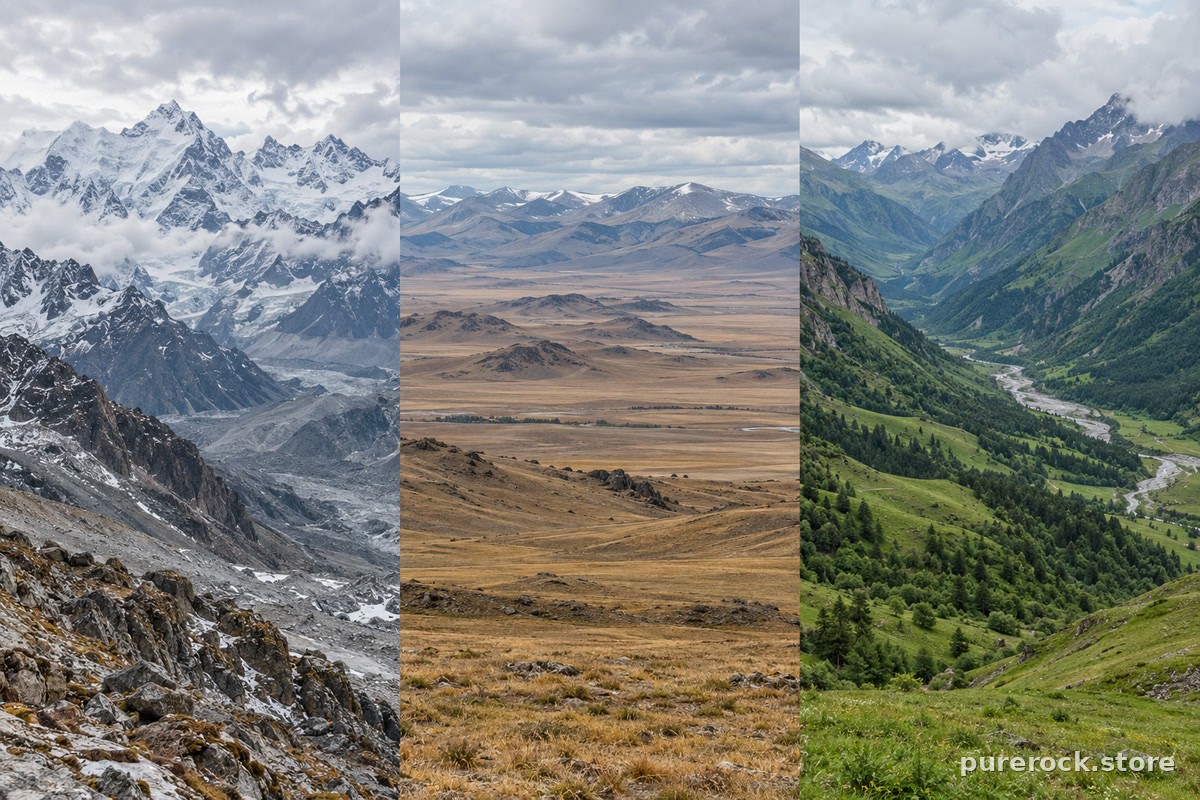
The three regions most commonly referenced in shilajit sourcing each have a distinct profile, though direct, standardized head-to-head comparisons across commercial brands are limited — most of what’s available comes from smaller academic sample sets rather than large-scale industry testing.
- Himalayan (Nepal, India, Bhutan, Tibet). The most referenced origin in both traditional texts and Western marketing, associated with high-altitude harvesting, though specific altitude figures in marketing are rarely documented. It has the longest documented traditional use history, which is part of why it’s treated as a default reference point, but “Himalayan” spans an enormous geographic area with real variation in altitude, rock type, and harvest practice from one valley to the next.
- Altai (Russia, Mongolia, Kazakhstan). Extracted from a geologically distinct mountain system with its own mineral signature. Some sample analyses suggest comparable or, in specific trace-mineral categories, higher diversity than certain Himalayan samples, though this varies enough by specific site that it shouldn’t be treated as a general rule. Altai shilajit has a smaller but growing presence in Western markets and is sometimes sold at a lower price point, in part because it carries less brand recognition rather than because it’s inherently lower quality.
- Caucasus and other minor sources. Less commonly marketed to Western buyers and used more regionally, with quality depending heavily on the same purification standards that apply everywhere else. Data on Caucasus-sourced shilajit specifically is sparser than for the other two regions, which makes independent verification harder rather than easier.
The practical takeaway: origin is a real variable, not a marketing fiction, but it isn’t the dominant variable. A poorly purified Himalayan resin can test worse on heavy metals and fulvic acid content than a well-processed Altai or Caucasus resin. If you’re choosing between two products purely on the basis of which mountain range is printed on the label, you’re weighing a secondary factor over the primary one — verified processing and lab testing.
Why You Can’t Verify Origin the Way You Can Verify Purity
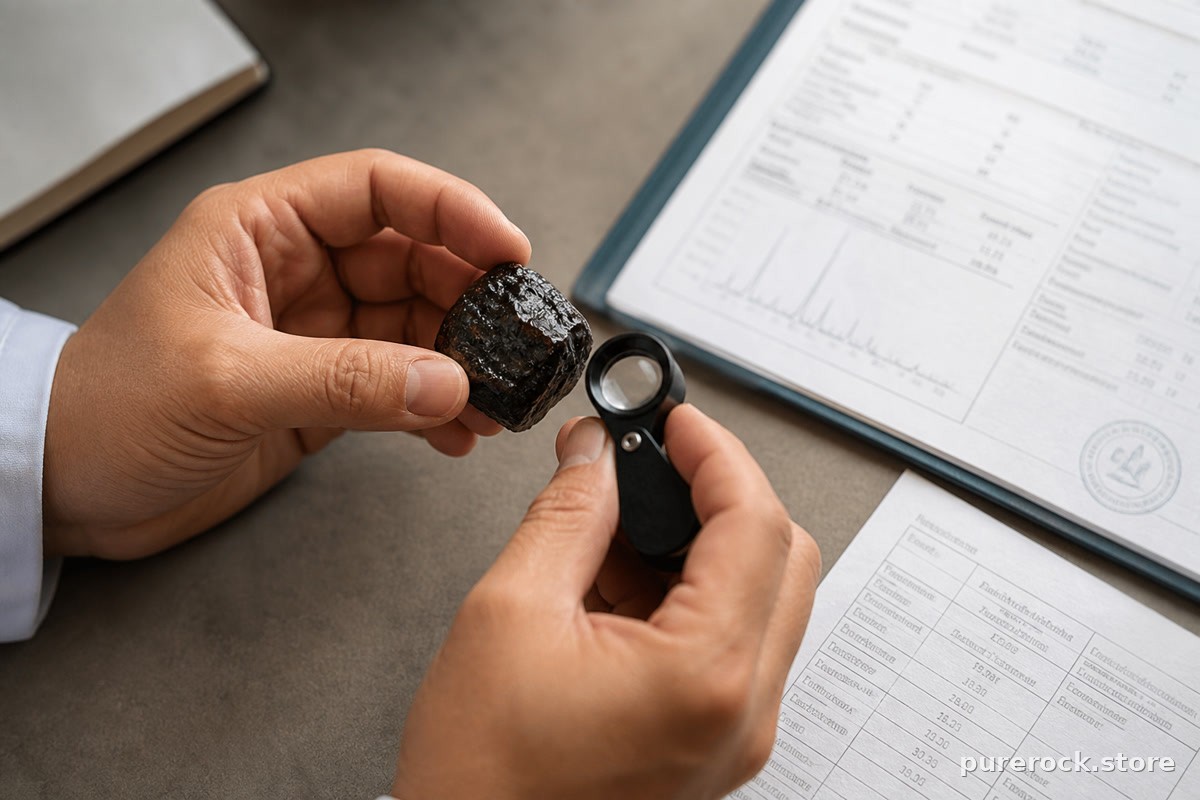
This is the core problem with origin claims, and it’s worth stating plainly: there is no home test for geographic origin. The physical checks that work for detecting adulteration — texture, dissolve behavior, smell — don’t tell you which mountain range a sample came from, because those properties are driven far more by processing quality than by geology. Isotopic or trace-element fingerprinting can, in principle, distinguish regional sources in a lab setting, but that kind of analysis isn’t something a consumer can request as a routine check, and it isn’t standard on the certificates of analysis most brands provide.
What that means practically is that an origin claim sits closer to a trust exercise than a verifiable fact. You’re relying on the seller’s supply chain documentation, import records, and reputation — not on anything you can independently confirm from the product itself. That’s a meaningfully different situation from a purity claim, where a batch-specific lab certificate gives you something closer to direct evidence.
It’s worth being specific about why isotopic fingerprinting isn’t a practical consumer tool, since it does exist as a scientific technique. Stable isotope analysis, which measures ratios of elements like oxygen, carbon, and strontium, can in principle distinguish material formed under different geological and climatic conditions — this is the same underlying science used to verify the origin of wine, honey, and some pharmaceuticals. But running that kind of analysis requires specialized lab equipment, a reference database of known-origin samples to compare against, and a turnaround time and cost that make it impractical for a single consumer to request on a $40 jar of resin. Even brands that invest in third-party lab testing rarely include isotopic origin verification alongside their standard heavy-metal and fulvic-acid panels, because it addresses a different question than the one most certificates of analysis are built to answer.
What Supply-Chain Transparency Actually Looks Like
Since you can’t verify origin directly, the next best thing is evaluating how much verifiable detail a seller is willing to provide around the claim. A few markers that separate a more credible origin claim from an unverifiable one:
- A named region rather than just “Himalayan.” Sellers with a genuine, traceable supply chain are usually willing to name a specific country or even a valley — Nepal, Kashmir, Ladakh, Tibet — rather than defaulting to the broad regional term. A supplier who can only ever say “Himalayan” and nothing more specific, even when asked directly, is giving you a marketing category rather than a sourcing fact.
- Country-of-origin labeling on import documentation. Products imported for retail sale are generally required to disclose a country of origin on customs paperwork, even if that detail isn’t printed prominently on the consumer packaging. A seller who can produce or reference this documentation on request has something more concrete behind the claim than one who can’t.
- Consistency between marketing copy and legal/import filings. It’s reasonable to ask a seller whether the origin stated in their marketing matches what’s declared on their import records. A mismatch, or an unwillingness to discuss it, is a meaningful flag.
- Harvest season and method description. A seller who can describe, even loosely, when and how the resin was collected is more likely to have direct knowledge of the source than one who can only repeat a generic descriptor.
- Direct-relationship sourcing vs. broker chains. Shorter supply chains with fewer intermediaries generally correlate with more traceable origin claims, simply because there are fewer opportunities for material from different sources to get blended or relabeled along the way. This is a heuristic, not proof — a buyer still can’t audit a supply chain directly.
None of these fully substitute for independent verification, since that verification doesn’t really exist at the consumer level. But a seller’s willingness to go beyond the word “Himalayan” — to name a place, describe a process, or reference documentation — is a reasonable proxy for how seriously they take the claim they’re making.
Common Origin-Related Marketing Exaggerations
A few patterns show up repeatedly in how origin claims get stretched or misapplied:
- “Pure Himalayan Shilajit” printed on relabeled or blended product. Because “Himalayan” isn’t a controlled or certified term, it can be applied to product that’s been blended from multiple sources, relabeled after import, or sourced from a broker with no direct knowledge of the original extraction site. The word alone carries no legal weight the way a geographic indication (like Champagne or Parmigiano-Reggiano) does in other industries.
- Altitude figures used as a stand-in for a real claim. A specific number like “harvested above 16,000 feet” sounds precise and verifiable, but it’s not something a buyer can check, and a precise-sounding number is often used to distract from the absence of a named region or documented supply chain.
- “Himalayan” applied to products that are primarily powder or extract-based. Once shilajit has been processed into a powder, capsule filling, or concentrated extract, the connection back to a specific geographic batch becomes even harder to substantiate, yet origin claims are often carried over unchanged from the raw-resin marketing.
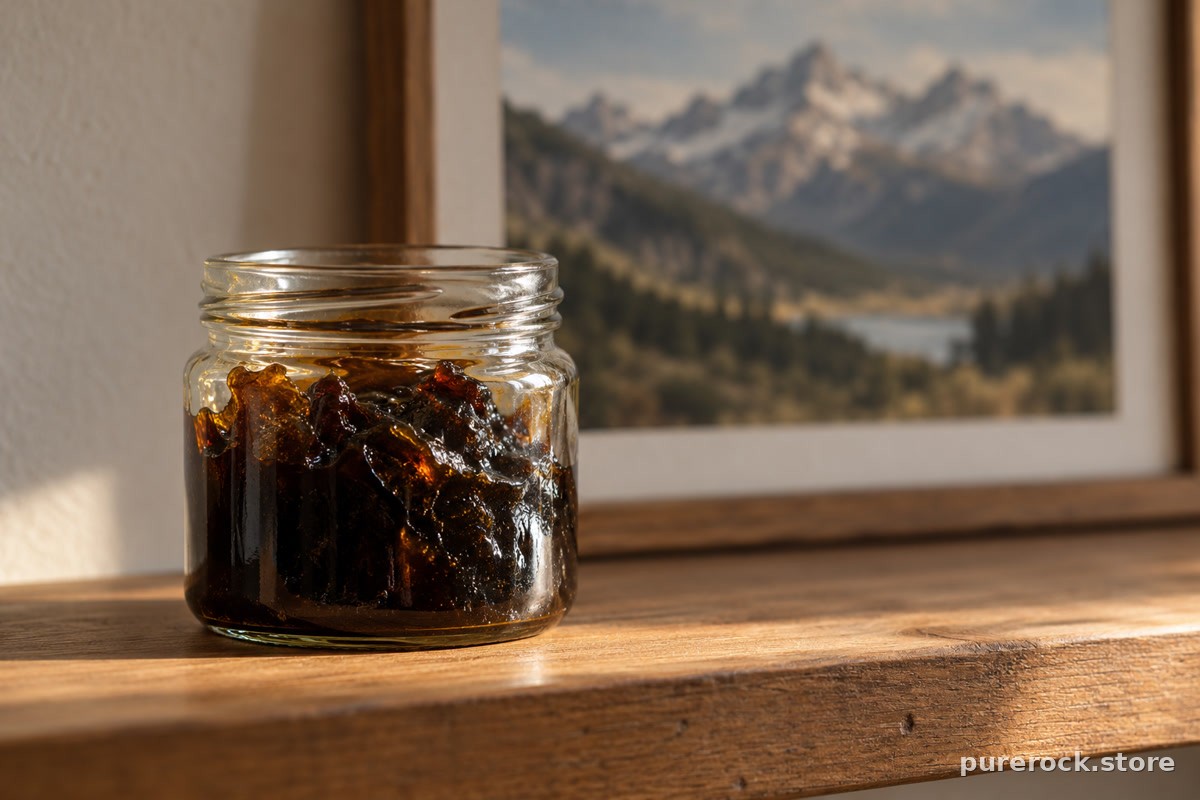
- Photography and packaging implying direct sourcing. Mountain imagery, sherpa or monk imagery, and references to “ancient tradition” are visual and narrative cues, not sourcing evidence. They’re worth noticing as marketing technique rather than treating as information.
None of this means every “Himalayan” claim is false — plenty of sellers do source directly and accurately describe their supply chain. It means the word by itself, absent any supporting detail, isn’t evidence.
Origin vs. Purity: Two Different Questions
It’s worth being explicit about how these two concepts relate, because they get conflated constantly in both marketing and consumer discussion:
- A product can be genuinely Himalayan-sourced and still adulterated — cut with fillers, under-purified, or contaminated with heavy metals above safe limits despite accurate geographic labeling. Origin says nothing about what happened to the resin after it left the mountain.
- A product can be non-Himalayan and well-purified — sourced from the Altai or Caucasus range, properly filtered and lab-tested, with a disclosed fulvic acid percentage and clean heavy-metal panel. Its quality has little to do with which range it came from and everything to do with how it was processed and verified afterward.
- The two claims require different kinds of evidence. Purity claims are supported by lab certificates and physical testing, both of which are at least partially verifiable by a consumer. Origin claims are supported by supply-chain documentation and seller reputation, which are largely a matter of trust.
If you have to prioritize one when comparing products, a verifiable, batch-specific lab certificate is generally more decisive than an origin claim, because it speaks directly to safety and composition rather than to a geographic label that can’t be independently confirmed. That said, the two aren’t mutually exclusive — the strongest products tend to combine a specific, credible origin story with batch-level lab documentation, rather than leaning on either one alone.
A Practical Approach to Origin Claims
Given that origin can’t be directly verified, a reasonable approach is to treat it as one input among several rather than a deciding factor on its own:
- Don’t reject a product solely for not being Himalayan. Altai and Caucasus sources can be perfectly legitimate, and in some cases better-documented than a vague “Himalayan” claim.
- Look for specificity over the word itself. A named country or region, described harvest practices, and referenced documentation are worth more than the label term alone.
- Weight lab testing more heavily than origin when the two are in tension. A specifically named, well-documented origin with no lab certificate is still an incomplete picture; a strong lab certificate from a less-marketed origin tells you more about what you’re actually consuming.
- Be skeptical of precision that isn’t backed by anything checkable — specific altitude figures or evocative harvest stories with no corroborating documentation are a narrative device, not proof.
Origin is a real, geologically grounded variable in shilajit quality, but it’s one that consumers are structurally unable to verify on their own. Treating it with appropriate skepticism — while still giving credit to sellers who go beyond the bare minimum in describing where their product comes from — is a more reliable approach than either dismissing origin claims entirely or taking “Himalayan” at face value.
FAQ
Is “Himalayan Shilajit” a legally protected term, like Champagne or Parmigiano-Reggiano? No. Unlike geographic indications that are legally restricted to products made in a defined region under specific rules, “Himalayan” as applied to shilajit carries no certification requirement or legal protection in most markets. Any seller can print it on a label regardless of the actual sourcing, which is why the term alone shouldn’t be treated as verified fact.
Can I tell where my shilajit came from just by looking at it or smelling it? Not reliably. Texture, color, smell, and dissolve behavior are influenced far more by processing and purification quality than by geographic origin. Two resins from completely different mountain ranges can look and behave almost identically if they were purified to a similar standard, while two resins from the same valley can differ noticeably if one was poorly processed.
Is Altai or Caucasus shilajit lower quality than Himalayan shilajit? Not inherently. Sample analyses show real compositional differences between regions, but no consistent evidence that Himalayan sources are categorically superior. Altai shilajit in particular has a smaller Western market presence and lower brand recognition, which affects price and perception more than it reflects an underlying quality gap.
What should I ask a seller if I want to verify their origin claim? Ask for a specific region or valley rather than the general term “Himalayan,” ask whether they can reference import or customs documentation showing country of origin, and ask about harvest season and method. A seller with a genuine, traceable supply chain can usually answer at least one of these with specificity; a seller repeating only the word “Himalayan” typically cannot.
If I have to choose between a well-documented origin and a strong lab certificate, which matters more? The lab certificate. It speaks directly to safety — heavy metal levels, fulvic acid content, and the presence of adulterants — which is testable and verifiable. Origin claims rely on trust in supply-chain documentation that a consumer usually can’t independently confirm. Ideally a product offers both, but if forced to prioritize, verified composition should outweigh an unverifiable geographic label.
This article is for educational purposes and does not constitute medical advice. Consult a qualified healthcare provider before adding any new supplement to your routine.
Related Guides
- What is shilajit?: the plain-language definition and glossary.
- How to choose the best shilajit: a brand-free checklist.
- What is in shilajit: minerals, fulvic acid and lab variability.