 Purerock
safety
Shilajit and Blood Pressure: What the Studies Measured
Search “shilajit blood pressure” and you’ll get two confident, opposite answers: it brings numbers down, or it pushes them up. Traced back to the studies, neither holds up well. This page covers what researchers actually measured, what they didn’t, and what that means if you’re watching your blood pressure.
Key Takeaways
- Only a handful of human studies have recorded blood pressure or heart rate while people took shilajit. None of them was designed to test blood pressure as its main outcome.
- In a 45-day study in healthy volunteers, researchers reported no significant change in blood pressure or pulse at 2 g a day.
- A 2023 randomized trial in older adults with hypertension, all on their usual medication, found improved oxidative-stress markers but no change in arterial stiffness or endothelial function. The published results don’t include a follow-up blood pressure comparison.
- The claims that shilajit reliably “lowers” or “raises” blood pressure aren’t supported by the human data we could find.
- The most concrete risk is contamination, not shilajit itself: lead exposure is linked to higher blood pressure, and poorly processed mineral products can carry lead.
- If you take blood pressure medication, have kidney disease, or are pregnant, talk to your doctor before starting. Never change or stop a prescribed medication on your own.
Why This Question Keeps Coming Up
Shilajit is a mineral-rich resin that seeps from high-altitude rock; the Himalayan origin guide covers where it comes from. Two things make blood pressure an obvious worry. It’s marketed heavily to middle-aged men, the group most likely to have high blood pressure or take medication for it. And it’s a concentrated mineral product, and minerals like sodium and potassium help regulate blood pressure. The worry is reasonable. It has just run far ahead of the evidence in both directions.
What Human Studies Actually Recorded
Here is each human study we could verify that reported something about blood pressure or heart rate, and what it did and didn’t show.
Healthy volunteers, 45 days (2003). A study in Ancient Science of Life (Sharma et al., 2003) gave normal human volunteers 2 g of shilajit a day for 45 days. According to the abstract, this produced no significant change in blood pressure, pulse rate, or body weight. The main findings were lower serum triglycerides and total cholesterol and higher HDL cholesterol. Two caveats: the participants weren’t hypertensive, and we couldn’t access the full methods to confirm the sample size or whether there was a placebo group, so treat it as preliminary.
Older adults with hypertension, 30 days (2023). The closest thing to a direct test is an open-label randomized trial by Patil et al. in the Indian Journal of Physiology and Pharmacology (2023; 67:197–204). Sixty adults aged 60–80 with hypertension were analyzed, all staying on their usual drugs (calcium channel blockers, beta blockers, ARBs, diuretics, ACE inhibitors). The study group added 500 mg of traditionally purified shilajit twice a day for 30 days. Oxidative-stress and antioxidant markers improved compared with controls, but the authors reported “no significant change in the arterial stiffness markers” and no change in endothelial markers such as nitric oxide. There were no adverse events. The tables give baseline blood pressure (about 142/81 mmHg in the shilajit group) but no follow-up comparison between groups, so the trial can’t tell you which way blood pressure moved. People with chronic kidney disease or diabetes were excluded.
Healthy men, 28 days (2026). A single-arm pilot in Cureus (Yadav et al., 2026) gave 25 healthy men 500 mg a day of shilajit resin. Vital signs were recorded at baseline, day 14, and day 28, but the tables report only baseline blood pressure (about 122/80 mmHg). Seven participants reported mild, self-limiting adverse events, and most authors work for the product’s manufacturer. With no control group and no follow-up readings reported, it can’t show a blood pressure effect either way.
A combination product with exercise and diet (2025). A double-blind, placebo-controlled trial in Nutrients (Martinez et al., 2025) put 166 sedentary adults with metabolic-syndrome risk factors (109 completed) through a 12-week exercise and calorie-reduction program. Some groups took chromium plus Phyllanthus emblica plus just 6 or 12 mg of shilajit a day, far below typical servings. Resting heart rate and diastolic pressure fell over time across groups, with no significant group-by-time differences. The trial can’t isolate any shilajit effect.
Taken together: no human trial we found was designed to test whether shilajit lowers or raises blood pressure, and none reported a change that could be attributed to shilajit.
What Animal and Lab Data Suggest
A 2014 rat study in Cardiovascular Toxicology (Joukar et al.) gave shilajit (called “mumie” in the paper) at 250 or 500 mg/kg per day for seven days before chemically inducing heart injury. In healthy animals, pre-treatment “had no significant effects on hemodynamic and cardiac indices.” In injured hearts, shilajit-treated rats kept better contractility and had less tissue damage. That’s a finding about cardiac injury in rats, not blood pressure in people.
The other study you’ll see cited is a 2012 preliminary study in the Journal of Ayurveda and Integrative Medicine (Gaikwad et al.) on Daphnia, the water flea. Shilajit slowed the flea’s heartbeat at 1–100 ppm; above 1,000 ppm the beat became too fast to count, then arrhythmic, then failed. A water flea isn’t a human cardiovascular system, heart rate isn’t blood pressure, and concentrations in a dish don’t translate to an oral dose.
Does Shilajit Raise Blood Pressure?
We found no human study reporting that shilajit raised blood pressure. The “raises blood pressure” claim seems to come from three places:
- Guilt by association. Shilajit is sold as an “energy” product, and people assume that means stimulant. None of the studies above describe a stimulant-like cardiovascular response.
- Mineral content. A reasonable theoretical concern (covered below), but product-dependent and unmeasured in trials.
- Contamination. The version with real evidence behind it, because lead exposure is independently linked to raised blood pressure. That’s a product-quality problem, and purification doesn’t rule it out: the traditionally purified product in the 2023 hypertension trial listed lead at 0.017%.
Does Shilajit Lower Blood Pressure?
This claim is more common, mostly from sellers, and no better supported. Some promotional pages cite the 2023 hypertension trial, but that trial found no improvement in arterial stiffness or endothelial function and published no between-group blood pressure comparison. Its positive findings were oxidative-stress lab values, not blood pressure readings.
Other arguments rest on mechanism: fulvic acid is an antioxidant, oxidative stress affects blood vessels, and so on. Mechanisms are hypotheses, not outcomes. No controlled human study we could find shows shilajit lowering blood pressure, and it shouldn’t be treated as a way to manage hypertension.
Claim vs. What the Evidence Says
| Common claim | What the evidence actually says |
|---|---|
| “Shilajit lowers blood pressure” | No controlled human trial we found reports a between-group reduction. The 2023 hypertension RCT found antioxidant-marker changes but no change in arterial stiffness or endothelial function. |
| “Shilajit raises blood pressure” | No human study we found reports an increase. A 45-day study in healthy volunteers reported no significant change in blood pressure or pulse. |
| “It’s a natural vasodilator” | Not shown for shilajit alone. The 2023 trial found no change in nitric oxide or endothelial markers after 30 days. A 2025 trial of a combination product containing about 12 mg of shilajit reported better flow-mediated dilation, but it can’t isolate shilajit’s effect. |
| “It’s proven safe with blood pressure medication” | One 30-day trial of 60 older adults on antihypertensives reported no adverse events. That’s reassuring but far too small and short to establish safety. |
| “It slows your heart rate” | Based on a water-flea (Daphnia) study where the effect reversed at higher concentrations. Not tested as a human outcome. |
| “It protects the heart” | A rat study found less damage from chemically induced heart injury. That hasn’t been tested in humans and isn’t a blood pressure finding. |
| “Contamination doesn’t matter for blood pressure” | Lead exposure has a causal link to hypertension (see below), so heavy-metal testing matters here specifically. |
The Medication Question: Why “Additive Lowering” Is Theoretical
People on blood pressure medication often ask whether shilajit will stack on their prescription and push numbers too low. If a supplement lowered blood pressure, combining it with a drug that does the same could cause dizziness. That’s the logic behind “additive effect” warnings for many supplements. For shilajit specifically:
- Additive lowering is a theoretical concern. It assumes shilajit lowers blood pressure, and that hasn’t been demonstrated.
- The only trial we found that combined shilajit with antihypertensive drugs (Patil et al., 2023) reported no adverse events over 30 days. But it had only 28 people in the shilajit group, reported no follow-up blood pressure comparison, and excluded people with kidney disease and diabetes.
- No formal drug-interaction studies between shilajit and specific drug classes turned up in our search.
No evidence of an interaction isn’t evidence of no interaction. If you take blood pressure medication, tell your prescriber or pharmacist before starting shilajit, keep taking your medication exactly as prescribed, and never change a dose because of a supplement or a home reading.
Sodium and Potassium in a Mineral Pitch
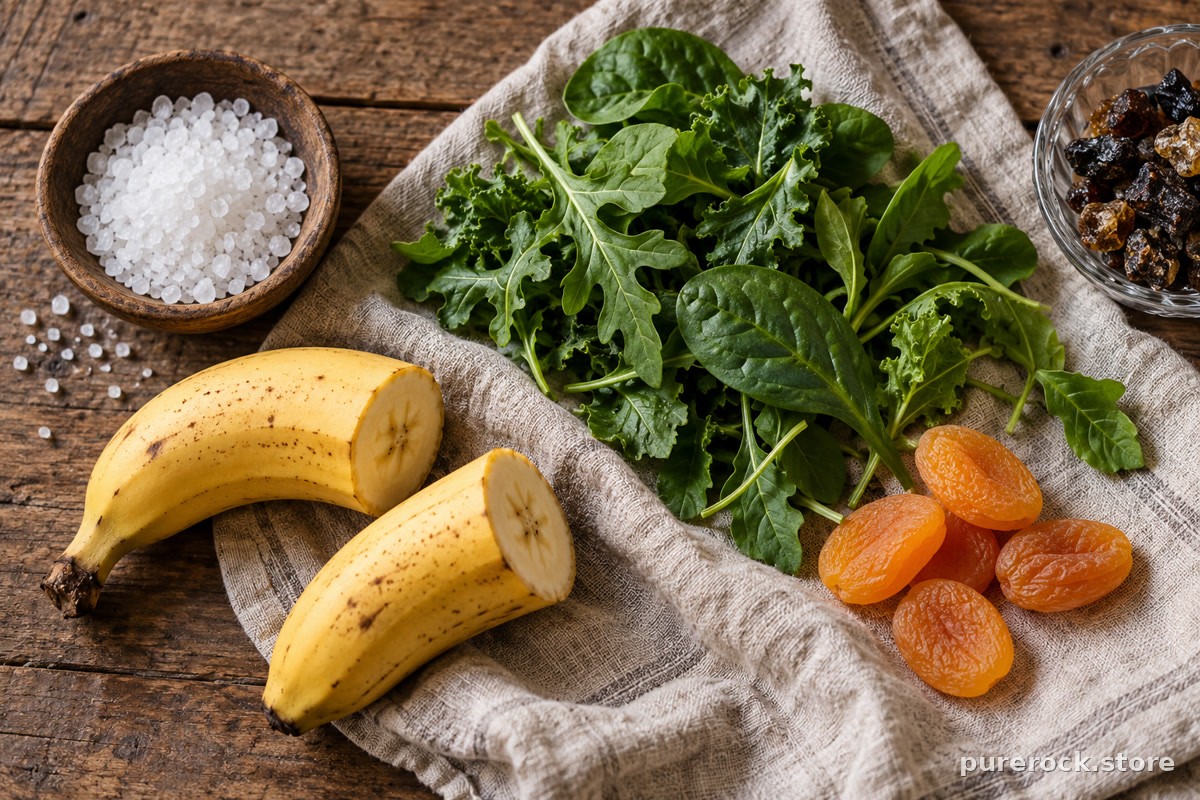
This is where the theoretical interaction concern is strongest. A 2025 chemical analysis of one native Himalayan sample in ACS Omega (Basavaraja et al.) found potassium to be the most abundant element, followed by calcium and magnesium. The purified shilajit used in the 2023 hypertension trial reported 1.23% potassium, about 12 mg per gram. One sample or product doesn’t describe every jar, but shilajit clearly isn’t mineral-neutral.
- Potassium and certain medications. According to the NIH Office of Dietary Supplements, ACE inhibitors and ARBs (both common blood pressure drugs) reduce potassium lost in urine and “can make potassium levels too high, especially in people who have kidney problems.” Potassium-sparing diuretics such as spironolactone can also cause high potassium (hyperkalemia). A typical shilajit serving is small, so the added potassium is probably modest, but it’s rarely on the label and hasn’t been measured in a trial.
- Sodium. Also rarely printed on labels, and we couldn’t find a trial that measured it. Worth asking about if you’re on a sodium-restricted diet.
Ask the seller for a full mineral analysis, not just a heavy-metals panel, and bring it to your doctor if you have kidney disease or take an ACE inhibitor, ARB, or potassium-sparing diuretic.
Lead: The Most Concrete Blood Pressure Risk
A systematic review in Environmental Health Perspectives (Navas-Acien et al., 2007) concluded that “the evidence is sufficient to infer a causal relationship of lead exposure with hypertension.” In some studies it reviewed, associations appeared at blood lead levels below 5 µg/dL, so even fairly low exposure matters.
Contaminated traditional products are a documented source. A 2008 JAMA study (Saper et al.) analyzed 193 Ayurvedic medicines bought online and found 20.7% contained detectable lead, mercury, or arsenic; every metal-containing product exceeded at least one daily-intake standard, and 75% claimed Good Manufacturing Practices. That study covered Ayurvedic products broadly, not shilajit specifically, but shilajit picks up whatever is in its source rock. Even the traditionally purified shilajit used in the 2023 hypertension trial listed lead at 0.017% in its composition analysis, which works out to roughly 170 µg per gram. The most evidence-based step here is choosing a product with an independent certificate of analysis that reports measured lead values. Our guide to spotting fake or unpurified shilajit explains how to read those reports.
A Home-Cuff Protocol Before and After Starting
With published evidence this thin, your own readings are the most useful data you’ll have. The technique below follows the American Heart Association’s home-monitoring guidance:
- Use a validated, upper-arm cuff monitor. The AHA recommends an automatic upper-arm device and suggests checking validation status (for example at validatebp.org) or asking a pharmacist.
- Prepare the same way every time. No caffeine, smoking, or exercise in the 30 minutes before a reading. Empty your bladder, then sit quietly for five minutes.
- Sit correctly. Back supported, feet flat, arm resting at heart level, cuff on bare skin just above the elbow crease. Don’t talk or scroll during the reading.
- Take paired readings. Two readings one minute apart in the morning and two in the evening, at the same times each day.
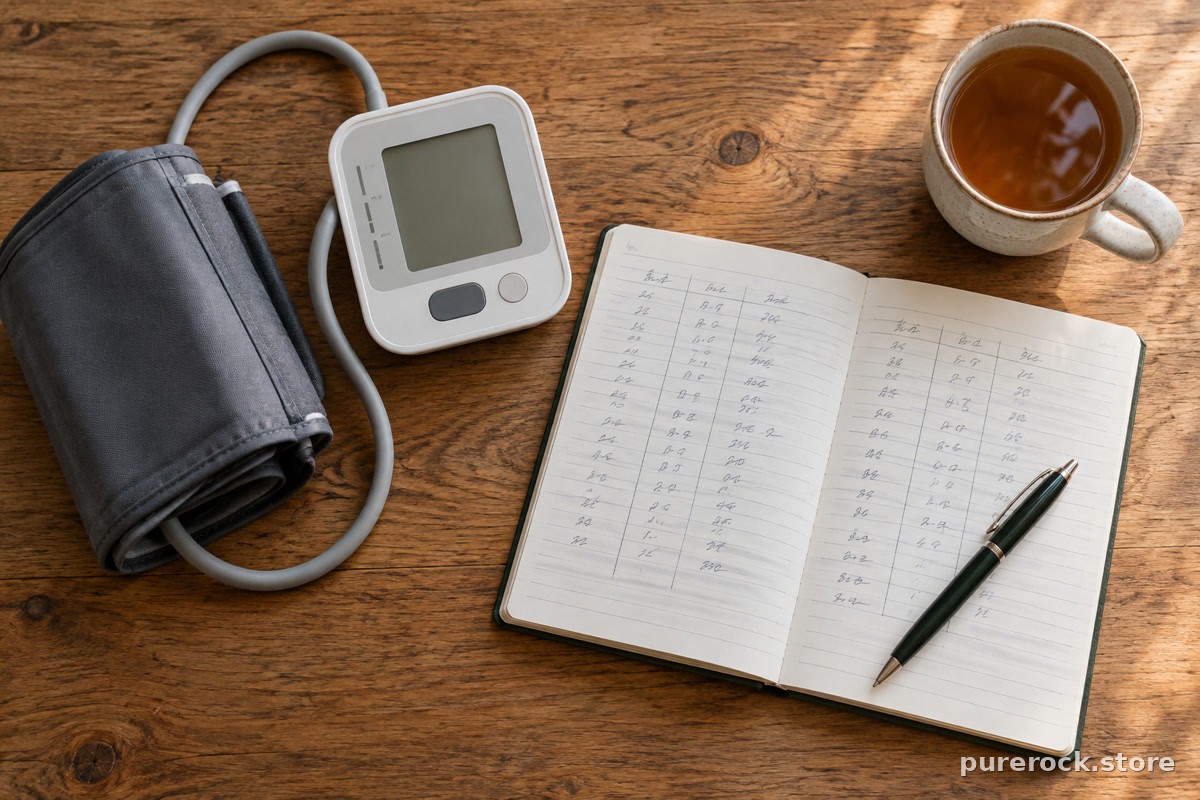
- Get a baseline first. Log at least a week of readings before you start shilajit, so you have something to compare against.
- Change one thing at a time. Don’t start shilajit alongside a new diet, exercise plan, or supplement, or you won’t know what caused a change.
- Keep logging for several weeks afterward at the same times of day, and note your dose and the product’s lot number.
If your readings rise or fall noticeably, or you get dizzy or lightheaded, stop the supplement and take your log to your clinician. Don’t adjust any prescribed medication based on your own readings. For commonly cited starting amounts, see our dosage guide.
Who Should Talk to a Doctor First
- Anyone taking blood pressure medication, especially ACE inhibitors, ARBs, or potassium-sparing diuretics, given the mineral-content question and the lack of interaction studies.
- People with kidney disease, who were excluded from the 2023 hypertension trial and are the group most vulnerable to potassium buildup.
- Anyone who is pregnant or breastfeeding. There’s no safety data, and lead exposure is a particular concern in pregnancy.
- Anyone with blood pressure that isn’t controlled yet. A supplement shouldn’t come before a proper diagnosis and treatment plan.
FAQ
Can I take shilajit if I have high blood pressure? There isn’t enough evidence to say it’s safe or unsafe for you. The one trial in people with hypertension ran only 30 days and reported no adverse events, but it’s far too small to settle the question. Talk to your doctor first, especially if you take medication or have kidney problems.
Does shilajit interact with lisinopril, losartan, or amlodipine? No formal interaction studies have been published for these drugs. The theoretical concerns are extra blood pressure lowering, which hasn’t been shown, and potassium content in combination with ACE inhibitors or ARBs, which has a stronger basis in theory. Your pharmacist can review this against your full medication list.
Will shilajit spike my blood pressure right after I take it? No study we found reports an acute spike. If you see one, recheck your technique, then stop and talk to your clinician.
Is the heavy-metal risk really relevant to blood pressure? Yes. A 2007 systematic review judged the link between lead exposure and hypertension to be causal. An independent lab report with measured lead values is the relevant safeguard, not a marketing claim of “purity.”
How long should I track my readings? At least a week before starting and several weeks after, at consistent times of day. Fewer readings make normal variation look like an effect.
Related Guides
- Shilajit side effects and safety: documented versus theoretical risks.
- Shilajit benefits, graded by evidence: every common claim and how much research backs it.
- Does shilajit work?: a trial-by-trial verdict.
Bottom Line
The research on shilajit and blood pressure is small, short, and mostly not about blood pressure. A 45-day study in healthy volunteers reported no significant change in blood pressure or pulse. A 30-day trial in older adults on antihypertensives found antioxidant changes, no vascular changes, and no adverse events, but no follow-up blood pressure comparison. Neither “lowers” nor “raises” is supported by what we found.
The better-evidenced risks are indirect: lead contamination, causally linked to hypertension, and unlabeled minerals for people on potassium-raising drugs or with kidney disease. Choose independently tested products, tell your doctor or pharmacist before starting if you take blood pressure medication, keep a home-cuff log, and never change a prescription based on a supplement.