 Purerock
format
Vegan Shilajit Gummies: How to Verify They're Plant-Based
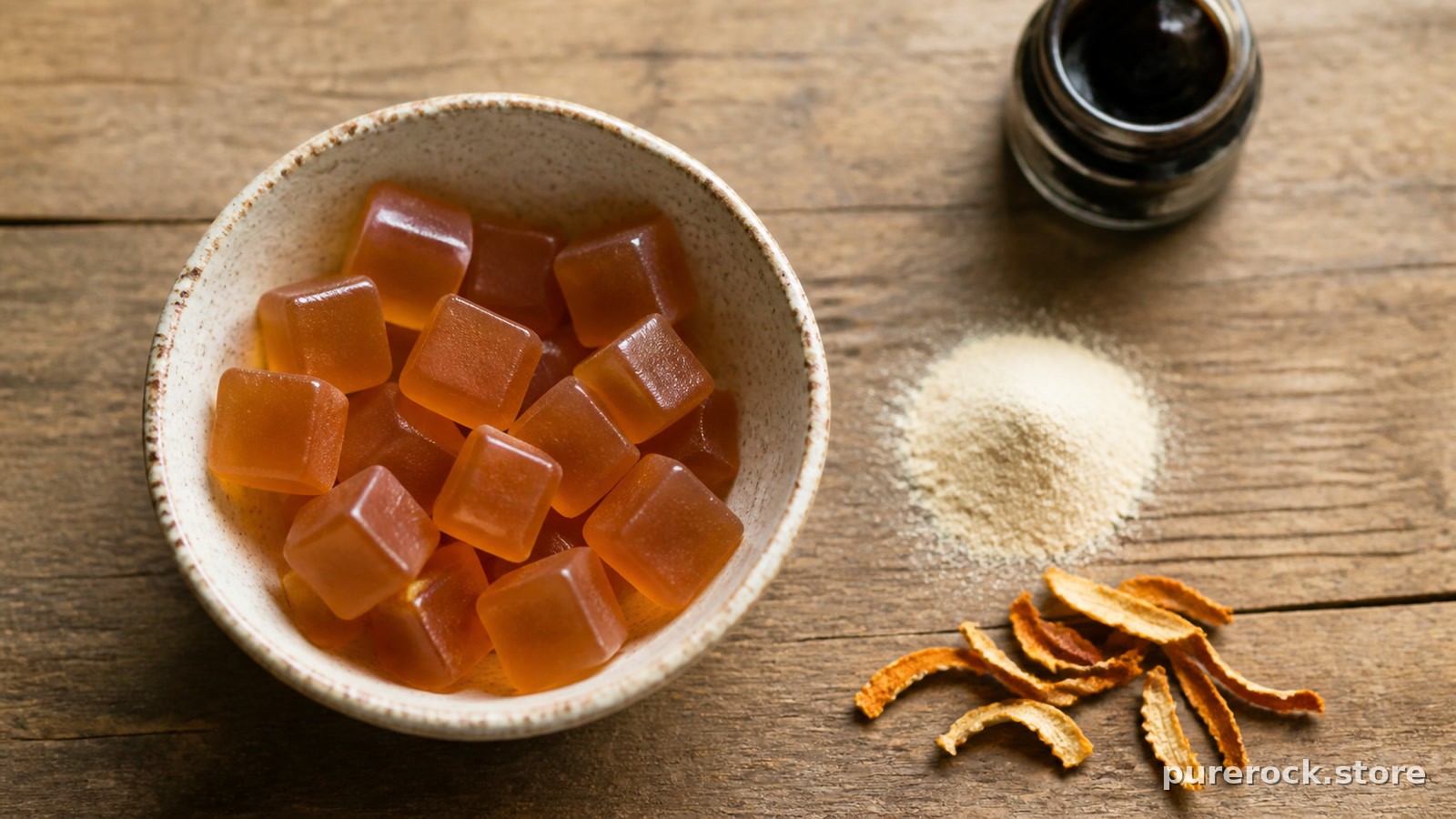
If you’ve assumed that a “gummy” is automatically plant-based because it looks like candy, you’re not alone — and you’re also not necessarily right. Gummies as a category default to gelatin, an animal-derived protein, unless the label explicitly says otherwise. That default catches a lot of vegans and vegetarians off guard, especially with supplements like shilajit gummies, where the marketing tends to emphasize “natural” and “ancient” far more than it emphasizes the gelling agent actually used. This guide walks through exactly what makes a shilajit gummy non-vegan by default, what the vegan alternatives are, whether that substitution changes anything about the product, and how to actually verify a vegan claim instead of taking it on faith.
Key takeaways
- Gelatin, the default gummy gelling agent, is animal-derived — a “vegan” label has to be explicit, since it’s never the assumed default for a gummy format.
- Beeswax coatings and unqualified glycerin sourcing are the two most commonly overlooked non-vegan ingredients, since both tend to appear as small line items rather than headline ingredients.
- Pectin, agar-agar, and carrageenan are the three plant-based gelling agents used in genuinely vegan shilajit gummies, each with a slightly different texture and manufacturing profile.
- Switching to a vegan gelling agent changes texture and shelf sensitivity, not the shilajit dose, fulvic acid content, or bioavailability of the active supplement itself.
- Third-party vegan certification marks are a stronger signal than a front-of-package “vegan-friendly” claim with no backing documentation.
Why most gummies aren’t vegan unless labeled otherwise
Gelatin is the default gelling agent across the gummy supplement and candy industry, for reasons that have nothing to do with shilajit specifically: it’s cheap, it sets predictably, it gives a familiar chewy texture, and manufacturers have decades of production infrastructure built around it. Gelatin is produced by boiling down collagen extracted from animal skin, bones, and connective tissue — most commonly from cattle or pigs. There is no plant-based version of gelatin; the word itself refers to a specific animal-derived protein.
That means unless a shilajit gummy product explicitly states “vegan,” “vegetarian,” or names a plant-based gelling agent on the label, the safest default assumption is that it contains gelatin. This isn’t a shilajit-specific quirk — it’s true of gummy vitamins, gummy bears, and gummy supplements generally — but it matters more here because shilajit is often marketed to a wellness-conscious, “natural living” audience that skews toward also caring about plant-based sourcing, and the two claims don’t automatically travel together.
The other hidden non-vegan ingredient: beeswax coatings
Gelatin gets most of the attention, but it isn’t the only animal-derived ingredient that can show up in a gummy. Some manufacturers apply a thin wax coating to gummies to reduce stickiness and prevent them from clumping together in the bottle. When that coating is beeswax (sometimes listed as “carnauba wax and beeswax” or simply “wax”), it makes the product non-vegan even if the gelling base itself is pectin or agar-agar.
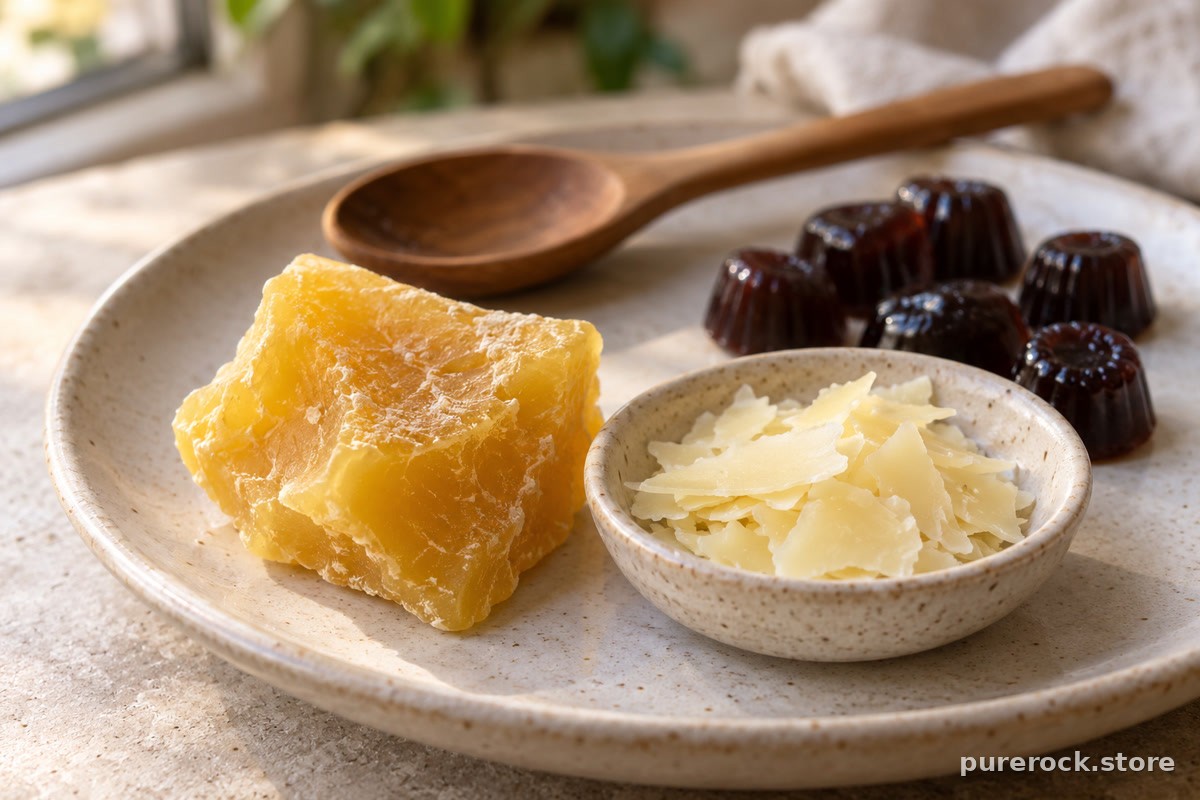
This is a genuinely easy thing to miss, because a coating is a small fraction of the product by weight and often isn’t emphasized anywhere in the marketing copy — it just shows up as one line in the ingredient list, sometimes near the bottom. Strict vegans checking a label should scan the full ingredient list, not just the first few prominent items, and look specifically for “beeswax,” “carnauba wax” (which is plant-derived and fine), or an unspecified “wax” that isn’t identified.
A less obvious one: glycerin sourcing
Vegetable glycerin is standard in most modern gummy production and is plant-derived, typically from palm, soy, or coconut oil. But glycerin can also be derived from animal fat (tallow), and a small share of global glycerin supply still comes from animal sources, particularly in regions or supply chains that haven’t standardized on vegetable glycerin. Most reputable supplement brands in North America and Europe use vegetable glycerin by default and will often say so explicitly, but a bare “glycerin” listing on a label — with no “vegetable” qualifier — technically leaves the source ambiguous.
In practice, this is a lower-risk item than gelatin or a beeswax coating, since the supplement industry has largely shifted to vegetable glycerin for cost and stability reasons. But if you’re being strict about it, an unqualified “glycerin” line is worth a quick email to the brand rather than an assumption either way.
What vegan shilajit gummies use instead
When a brand formulates a genuinely vegan gummy, the gelatin is swapped for one of a few plant-derived gelling agents:
- Pectin is the most common substitute. It’s extracted from the cell walls of fruit — typically citrus peels or apples — and is a byproduct of juice production, which makes it relatively cheap and widely available. Pectin gummies set with a firmer, slightly less elastic bite than gelatin gummies, and they’re generally more heat-sensitive during manufacturing, which is one reason vegan gummy lines sometimes cost a bit more to produce.
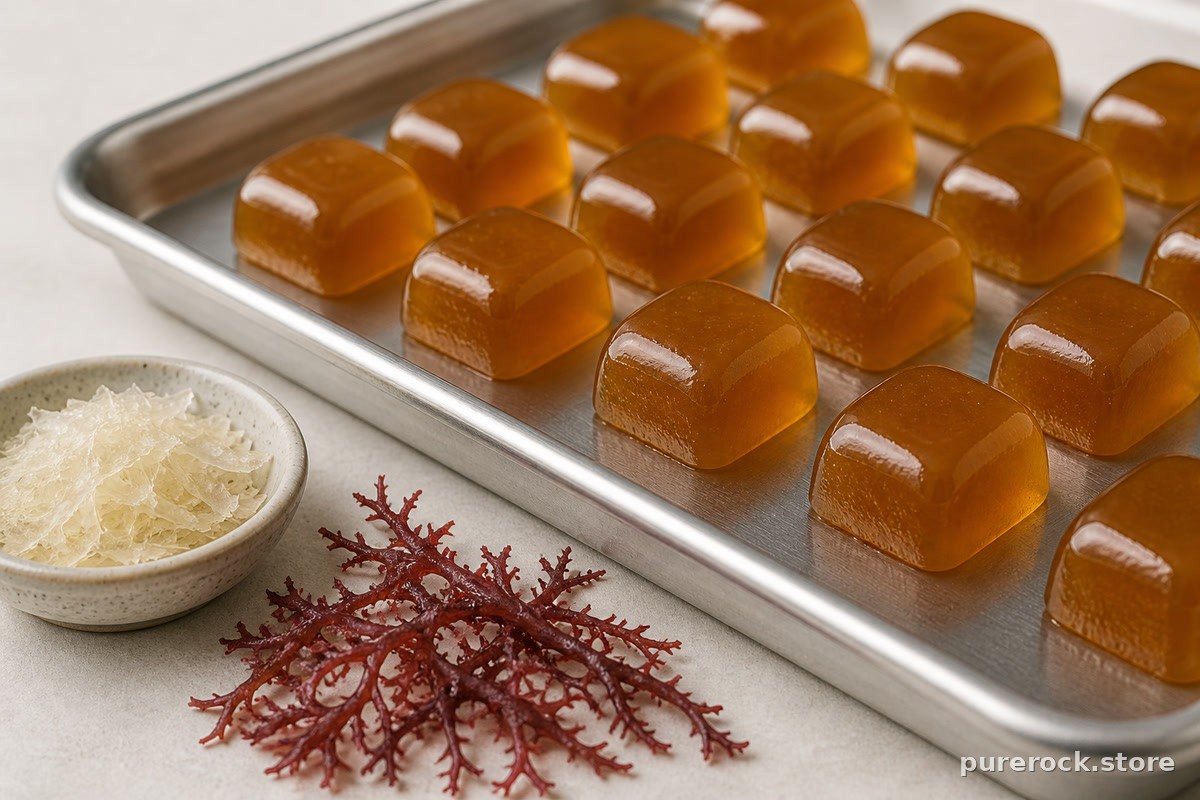
- Agar-agar, derived from red algae, is a stronger gelling agent by weight than either gelatin or pectin, which means less of it is needed. It sets at a lower temperature and produces a firmer, more brittle texture that some people describe as less “chewy” and closer to a firm jelly. It’s less commonly used than pectin in commercial shilajit gummies but does show up, particularly in products marketed heavily on their vegan credentials.
- Carrageenan, also derived from red seaweed, is another plant-based gelling option, though it’s less common in gummy supplements specifically and shows up more often in dairy-alternative and processed-food contexts. Some consumers avoid carrageenan due to ongoing (and still not fully resolved) research questions about its effects on gut inflammation at high processed doses — worth knowing if you’re already ingredient-conscious, though it’s a separate issue from the vegan question itself.
None of these substitutes are inherently “better” or “worse” than gelatin from a nutritional standpoint — the choice is almost entirely about dietary compatibility and, secondarily, texture preference. Cost is a secondary factor too: pectin is generally the cheapest of the three because it’s a byproduct of an already-established juice industry, which is part of why it’s the default choice for most vegan gummy lines rather than agar-agar or carrageenan, both of which typically require a dedicated seaweed-processing supply chain.
Does the vegan substitute change the gummy itself?
Yes, in a few small but noticeable ways, though none of them affect whether the shilajit inside is doing what it’s supposed to do.
Texture. Gelatin produces the classic soft, elastic “gummy bear” chew. Pectin gummies tend to be a touch firmer and less stretchy — some people prefer this, describing it as a cleaner bite, while others find gelatin gummies more pleasant to chew. Agar-based gummies are firmer still and can verge on a jelly-like snap rather than a chew. This is purely a mouthfeel difference and has no bearing on the shilajit content or its effects.
Dissolution and shelf stability. Pectin- and agar-based gummies are generally more sensitive to heat and humidity than gelatin gummies, which is part of why gelatin has historically dominated the category — it’s more forgiving in shipping and storage. A well-formulated vegan gummy accounts for this with appropriate packaging and storage guidance (commonly a note to keep the product away from direct heat or store in a cool, dry place), but it does mean vegan gummies left in a hot car or a humid bathroom cabinet are somewhat more likely to soften, stick together, or degrade in texture than their gelatin-based counterparts.
Manufacturing consistency. Because pectin and agar behave differently across different fruit or algae sources and require tighter temperature control to set correctly, batch-to-batch texture consistency can be slightly harder to nail down than with standardized gelatin. This is a manufacturing-quality consideration more than a consumer-facing one, but it’s part of why vegan gummy lines sometimes carry a modest price premium over the same brand’s standard formulation.
None of these differences affect the shilajit extract itself, its fulvic acid content, or its bioavailability — the gelling agent is structural, not active. A well-formulated vegan shilajit gummy should deliver the same dose of active compounds as a gelatin-based version from the same brand at the same stated potency.
How to actually verify a vegan claim on the label
A “vegan” label isn’t independently regulated the way, say, a USDA Organic claim is, so it’s worth knowing what to look for beyond the word itself:
- Third-party vegan certification marks, such as the Vegan Society’s trademark (a sunflower logo) or Vegan Action’s certified vegan logo. These require the brand to submit ingredient documentation to an outside body, which is a stronger signal than a brand simply printing “vegan-friendly” on the front of the bottle with no backing certification.
- The full ingredient list, not just the front-of-package claim. Read past the shilajit extract and gelling agent to check the sweetener, coating, and any flavoring or coloring agents. Natural red or pink colorants are occasionally derived from carmine (crushed cochineal insects) — rare in shilajit gummies specifically, but worth a scan if a product uses natural reddish coloring and doesn’t specify the source.
- Look for “vegetarian” being used as a substitute for “vegan.” These are not interchangeable. A vegetarian claim rules out gelatin (an animal flesh-derived product) but doesn’t necessarily rule out honey-derived ingredients or dairy-derived additives, neither of which are vegan.
- Contact the brand directly if the label is ambiguous. An unqualified “glycerin” or “natural flavors” line is common enough that a quick email asking for sourcing confirmation is a reasonable step before buying, especially for anyone strictly avoiding all animal-derived ingredients.
Other dietary considerations beyond “vegan or not”
Being vegan-compatible doesn’t automatically mean a gummy is otherwise “clean” by whatever standard you’re using, and it’s worth separating the vegan question from a few adjacent ones:
- Added sugar type. Vegan gummies still need a sweetener, and most use cane sugar, tapioca syrup, or a sugar alcohol blend — none of which relate to the vegan question but which matter if you’re managing sugar intake. Check the supplement facts panel for grams of added sugar per serving rather than assuming a “natural” or “vegan” claim implies low sugar.
- Artificial colors and flavors. Vegan status says nothing about whether a product uses artificial dyes or flavoring. If you’re avoiding synthetic additives specifically, that’s a separate line item to check, and some vegan-marketed gummies do still use artificial coloring for visual appeal.
- Common allergens in gummy bases. Pectin itself is not a common allergen, but citrus-derived pectin can occasionally trigger reactions in people with citrus sensitivities, and some gummy formulations include soy-derived ingredients (soy lecithin as an emulsifier, or soy-based vegetable glycerin) that matter for anyone with a soy allergy. Always check the allergen statement on the label rather than assuming a vegan product is automatically allergen-free.
- Manufacturing cross-contact. A vegan-formulated gummy can still be produced on shared equipment with gelatin-based products at the same facility. Strict vegans concerned about trace cross-contact should look for a facility statement addressing this, though for most dietary vegans (as opposed to those avoiding animal products for allergy reasons) this is a lower-priority concern than the ingredient list itself.
- Preservatives and citric acid. Most gummies include a small amount of citric acid for flavor balancing and mild preservation; this is plant-derived (typically fermented from corn or beet sugar) and not a vegan concern, but it’s worth noting for anyone checking a full ingredient list line by line, since an unfamiliar chemical-sounding name can otherwise read as a red flag when it isn’t one.


FAQ
Does “vegetarian” on a shilajit gummy label mean the same thing as “vegan”? No. Vegetarian rules out gelatin and other animal-flesh-derived ingredients, but it doesn’t automatically rule out honey, beeswax, or dairy-derived additives. A product can be honestly labeled vegetarian while still containing a beeswax coating, which would make it non-vegan. If a product only says “vegetarian,” treat it as a separate claim rather than a synonym for vegan and check the full ingredient list.
Are vegan shilajit gummies less effective than gelatin-based ones? No. The gelling agent is a structural ingredient, not an active one — it holds the gummy’s shape and texture but has no role in delivering the shilajit extract’s fulvic acid or trace minerals. A vegan gummy formulated at the same stated potency as a gelatin-based version from the same brand should deliver an equivalent dose of active compounds; any difference in perceived effect is more likely tied to the shilajit extraction quality or dosage per gummy than the gelling agent.
Why do vegan shilajit gummies sometimes cost more than gelatin-based versions? Pectin and agar-agar require tighter temperature control during manufacturing and are more sensitive to humidity, which can mean lower production yields and more careful batch handling than standardized gelatin processing. That added manufacturing complexity, along with generally smaller production runs for vegan lines, is typically reflected in a modest price premium rather than any difference in the shilajit content itself.
How can I tell if a gummy uses pectin or agar-agar without seeing the ingredient list first? You mostly can’t tell by look or feel with total confidence, though texture is a reasonable hint: pectin gummies tend to have a firmer, slightly less elastic chew than gelatin gummies, while agar-based gummies are firmer still and closer to a jelly snap. The only reliable way to know for certain is to check the ingredient list on the label or the brand’s product page, since texture alone can vary by formulation even within the same gelling agent.
Do vegan gummies need to be stored differently than gelatin-based ones? Generally yes, with a bit more caution. Because pectin- and agar-based gummies are more sensitive to heat and humidity, it’s worth keeping them somewhere cool and dry rather than in a hot car, a steamy bathroom cabinet, or direct sunlight. Gelatin gummies are somewhat more forgiving of these conditions, which is one practical tradeoff of the vegan substitution beyond taste and texture.
The bottom line
“Gummy” tells you almost nothing about whether a shilajit product is vegan — that depends entirely on the specific gelling agent, coating, and glycerin source used, none of which are guaranteed by the format itself. If avoiding animal-derived ingredients matters to you, the label needs to say so explicitly, ideally backed by a recognized third-party vegan certification, and it’s worth reading past the front-of-package claim into the full ingredient list before buying. The good news is that a genuinely vegan shilajit gummy — one using pectin or agar-agar in place of gelatin — delivers the same active shilajit content as its gelatin-based counterpart; the substitution changes texture and shelf sensitivity, not the supplement’s actual composition.
Related Guides
- Shilajit gummies: do they work?: the umbrella guide to the format.
- How to choose the best shilajit: a brand-free checklist.
- What is in shilajit: minerals, fulvic acid and lab variability.